Join us on a literary world trip!
Add this book to bookshelf
Grey
Write a new comment Default profile 50px
Grey
Subscribe to read the full book or read the first pages for free!
All characters reduced
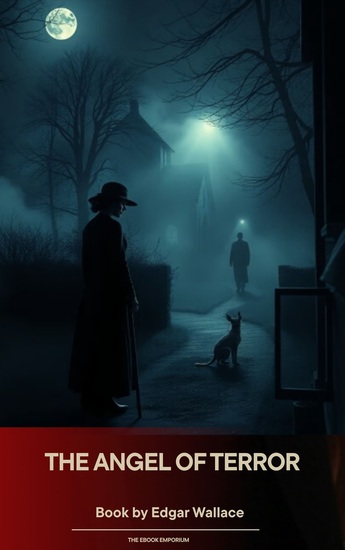
The Angel of Terror - cover

The Angel of Terror

Edgar Wallace

Publisher: The Ebook Emporium

  • 1
  • 0
  • 0

Summary

"She had the face of an angel and the heart of a serpent."

Meet Jean Briggerland. To the world, she is a vision of ethereal beauty and innocence. To those who know her secrets, she is the "Angel of Terror"—a cold, calculating murderess who orchestrates the deaths of those around her to secure a massive fortune. When a young millionaire is framed and executed for a crime he didn't commit, his friend, the sharp-witted lawyer Jack Glover, vows to bring the beautiful monster to justice.

A Battle of Wits and Wills: In a deadly game of cat and mouse, Glover must navigate a world of forged wills, poisoned atmospheres, and narrow escapes. Jean Briggerland is unlike any villain of her era; she doesn't kill out of passion, but with the clinical precision of a master strategist. As Glover peels back the layers of her deception, he finds himself in the crosshairs of a woman who has never known failure—or mercy.

The Master of the "Twist": Edgar Wallace, the creator of King Kong and a pioneer of the modern thriller, delivers a fast-paced narrative filled with his trademark suspense. The Angel of Terror stands out for its chilling portrayal of a sociopathic antagonist who uses her societal standing and physical beauty as a shield. It is a quintessential British mystery that explores the thin line between civilization and savagery.

Experience the darker side of the Jazz Age. Purchase "The Angel of Terror" today and see if you can outsmart the deadliest woman in London.
Available since: 01/05/2026.
Print length: 159 pages.

Other books that might interest you

  • Stephen Archer - From their pens to your ears genius in every story - cover

    Stephen Archer - From their pens...

    George MacDonald

    • 0
    • 0
    • 0
    George MacDonald was born on December 10th 1824 at Huntly, Aberdeenshire, Scotland.  
    The MacDonald family had proud and long historical roots. His father, was a farmer, was a direct descendant of one of the families that suffered in the infamous massacre of 1692 when the Campbells set upon the MacDonalds. 
    George grew up with the Congregational Church, with its atmosphere of Calvinism to which George never really attached himself. A story often told is that the young George on hearing that life was already mapped out and pre-destined burst into tears and was only comforted by the re-assurance that he was one of the elect. 
    When he was only 8, his mother Helen died. His father re-married 7 years later in 1839. The next year George was successful in obtaining a bursary to study at King’s College in Aberdeen and from which he also received his M.A.  
    In 1846 George was first published, anonymously, but his poem was there in print in the Scottish Congregational Magazine. 
    In 1848 he attended Highbury Theological College to study for the Congregational ministry.  That same year he became engaged to Louisa Powell. An enduring relationship that would see them as life long companions coupled with a marriage of over fifty years. 
    By 1850 George was appointed as the pastor of Trinity Congregational Church in Arundel. His sermons were however sometimes at odds with the Church and their more segmented views.  
    It is also at this time that George’s health becomes a major concern.  In November he suffered what would be termed ‘a severe haemorrhage’.  However Louisa was by his side and her support and nursing ensured his recovery. 
    On March 8th 1851 George and Louisa married.  As a Christmas gift to friends later that year he had printed his translation of Twelve of the Spiritual Songs of Novalis. 
    The year of 1852 started on a very bright note with the birth of his daughter on January 4th – Lilia.  
    Meanwhile George preached that with God’s universal love and the possibility that none would, ultimately, fail to unite with God were deemed to be almost heretical by the Church elders and as a punishment his salary was cut in half in June of 1852. 
    In May 1853 George could no longer reconcile with the Church’s demands and he resigned from the pulpit. Interestingly in his later novels, such as Robert Falconer and Lilith, there is common theme for distaste at the idea that God's electing love is limited to some and denied to others running through. 
    Happier news for 1853 was the birth of his daughter Mary Josephine born on July 23rd. 
    And with this the family decided to move to Manchester where he continued his ministerial work but his health again deteriorated. Another daughter, Caroline Grace was born on September 16th 1854.  In 1855 his collection of poems ‘Within and Without’ was published.  
    On 20th January 1856 his son Greville was born. The year brought further good news when Lady Byron decided to become his patron. However his health once more deteriorated and the family moved to Algiers to recuperate over the winter. 
    The following spring he was back in London and teaching at the University of London. 
    On August 31st 1857 a fourth daughter, Irene, was born and the family decided to settle in Hastings. 
    1858 brought bitter sweet times. His brother and Father both died but another daughter, Winifrid Louisa was born and his classic work ‘Phantastes’ was published. 
    The following year, 1859, George returned again to London and became the Professor of English Literature at Bedford College. 
    The following few years brought several more children into the ever growing family and a growing literary reputation. 
    In 1869 George accepted the editorship of Good Words for the Young and embarked on a lecture tour of Scotland. 
    In 1871 ‘At the Back of the North Wind’ was published followed by such other classics as Wilfrid Cumbermede, The Princess and the Goblin and in 1876, Exotics. 
    In 1877 came the beginning of a new chapter in
    Show book
  • Tobermory - From their pens to your ears genius in every story - cover

    Tobermory - From their pens to...

    Saki Saki

    • 0
    • 0
    • 0
    Hector Hugh Munro, more familiarly known by his pen-name ‘Saki’ was born in what was then Akyab in British Burma on 18th December 1870. His father was an Inspector General for the Indian Imperial Police, and his mother the daughter of a Rear Admiral. 
    When he was 2 his mother died and he and his siblings were sent back to England to be raised by their grandmother and paternal maiden aunts in a strict, puritanical household near Barnstaple, Devon. Educated by governesses Saki used many of these women as character models for his later writing. 
    At 17 his father retried and returned to England and then embarked on a series of European travels with Saki and his siblings. 
    After a short stint working in Burma with the Indian Imperial Police Saki decided to move to London to make a living as a writer. Initially he wrote as a journalist for a number of newspapers and magazines before attempting an historical study, ‘The Rise of the Russian Empire’, whose real value lay in directing him to writing short stories instead, the first of which, ‘Dogged’, he published in 1899. 
    From here it was a short stab of the pen to writing political satire before in 1902 he became the foreign correspondent for The Morning Post, first in the Balkans, then Russia, Paris and back to London in 1908, where 'the agreeable life of a man of letters with a brilliant reputation awaited him.'  
    Collections of his short stories full of witty, mischievous and often macabre stories that satirized Edwardian society and two novels now appeared in the years up to the Great War.  At its’ outbreak he was 43 but managed to join as an ordinary trooper. More than once he returned to the battlefield when officially too sick or injured.  
    On 14th November 1916 Hector Hugh Munro was sheltering in crater during the Battle of the Ancre, when he was shot and killed by a German sniper. According to several sources, his last words were "Put that bloody cigarette out!"
    Show book
  • Toy Fights - A Boyhood - cover

    Toy Fights - A Boyhood

    Don Paterson

    • 0
    • 0
    • 0
    For fans of Douglas Stuart and Nick Hornby comes an uproarious, tenderhearted memoir of growing up in working-class Dundee in the 1970s and 1980s. 


    Don Paterson is one of our most acclaimed contemporary poets, possessed of "an infinite sensitivity to the world" (Zadie Smith). But his current standing gives few hints of his hilariously misspent youth. An indifferent student prone to obsessions (with girls at school and . . . origami), Paterson nevertheless made clear early on his immense gift for observation. In Toy Fights, he vividly re-creates the customs of the Scottish working class, from the titular childhood game ("basically twenty minutes of extreme violence without pretext") to the virtues of the sugary sweet known as tablet. When American pop culture arrived, Paterson fell hard for the so-called outlaw sound; by his teens, he was traveling with his father, a Stetson-wearing "country" musician, and becoming guitar-mad himself. A memoir of family, music, and highly inventive profanity, Toy Fights is an unforgettable account of the years we all spend in rehearsal for real life.
    Show book
  • All Soul's Eve - From their pens to your ears genius in every story - cover

    All Soul's Eve - From their pens...

    Dora Sigerson Shorter

    • 0
    • 0
    • 0
    The bookshelves of British literature are incredible collections that have gathered together centuries of very talented authors.  From these Isles their fame spread and whilst among their number many are now forgotten or neglected their talents endure.  Among them is Dora Sigerson Shorter.
    Show book
  • True Crime Case Histories - Volume 18 - 12 Disturbing True Crime Stories of Murder Deception and Mayhem - cover

    True Crime Case Histories -...

    Jason Neal

    • 0
    • 0
    • 0
    Journey into the darkest corners of the human psyche with twelve meticulously researched accounts of unspeakable crimes that shocked communities and challenged our understanding of evil. 
    From sprawling estates to quiet small towns, these cases reveal how murderous intent can hide behind the most ordinary facades—sometimes in places we least expect. 
    You'll hear about The Butcher of Aberdeen, where a troubled woman's violence escalates to an act so grotesque that even veteran police officers are left traumatized. Discover The House on Langworthy Road, where a desperate teenage girl endures seven horrifying days at the mercy of sadistic tormentors. Learn about The Unraveling, where a young mother's forty-four-year-old cold case finally reveals its shocking truth through a forgotten clue. 
    Other chilling stories include The Dark Web Assassin, where cryptocurrency payments lead to a Minnesota murder plot far more shocking than anyone imagined, and The Greek Pilot, whose fairy-tale promises to his teenage bride mask a monster hiding in plain sight. 
    You'll also hear about Apartment 9, where a college student's secure life becomes a nightmare of blood and bleach, and The Bedroom Basher, whose reign of terror continued while an innocent man paid the price for police failures. 
    These cases expose the depths of human depravity—glimpses into the abyss of pure evil. While we may never fully comprehend what drives killers to commit such heinous acts, studying these histories provides valuable insights into the darkest capabilities of the human mind.
    Show book
  • The Magic Shop - cover

    The Magic Shop

    H. G. Wells

    • 0
    • 0
    • 0
    Out for a walk in London one day, Gip and his father happen upon a magic shop. At Gip's urging, the two go in — and things grow more and more curious by the minute. Counters, store fixtures, and mirrors seem to move around the room, and the shopkeeper is most mysterious of all. Gip is thrilled by all he sees, and his father is at first amused, but when things become stranger and sinister father is no longer sure where reality ends and illusion begins.
    Show book