Join us on a literary world trip!
Add this book to bookshelf
Grey
Write a new comment Default profile 50px
Grey
Subscribe to read the full book or read the first pages for free!
All characters reduced
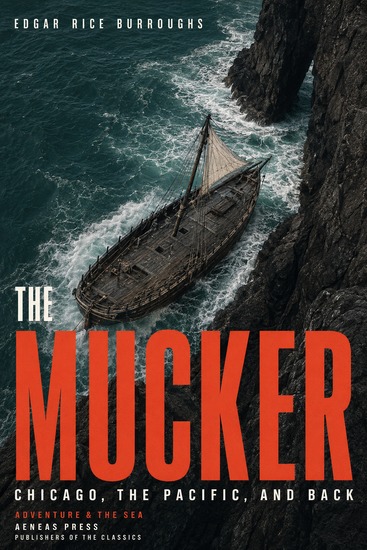
The Mucker - Chicago the Pacific and Back - cover

The Mucker - Chicago the Pacific and Back

Edgar Rice Burroughs

Publisher: Aeneas Press

  • 0
  • 0
  • 0

Summary

A Chicago street tough is shanghaied aboard a ship sent to kidnap an heiress, and the voyage takes them to a lost Japanese island and a headhunters' village — after which the real trouble is Chicago. Burroughs wrote it in 1914, between Tarzan and Mars, and gave the brute a conscience he never asked for; the second half, in which the mucker comes home, is better than the first. Sixty plates of gulls, breakers, and coming storms by George Bellows and James McNeill Whistler give the sea voyage the weather it deserves.
Available since: 07/22/2026.
Print length: 334 pages.

Other books that might interest you

  • The Lock and Key Library The most interesting stories of all nations American - cover

    The Lock and Key Library The...

    Julian Hawthorne

    • 0
    • 0
    • 0
    When Poe wrote his immortal Dupin tales, the name "Detective" stories had not been invented; the detective of fiction not having been as yet discovered. And the title is still something of a misnomer, for many narratives involving a puzzle of some sort, though belonging to the category which I wish to discuss, are handled by the writer without expert detective aid. Sometimes the puzzle solves itself through operation of circumstance; sometimes somebody who professes no special detective skill happens upon the secret of its mystery; once in a while some venturesome genius has the courage to leave his enigma unexplained. But ever since Gaboriau created his Lecoq, the transcendent detective has been in favor; and Conan Doyles famous gentleman analyst has given him a fresh lease of life, and reanimated the stage by reverting to the method of Poe. Sherlock Holmes is Dupin redivivus, and mutatus mutandis; personally he is a more stirring and engaging companion, but so far as kinship to probabilities or even possibilities is concerned, perhaps the older version of him is the more presentable. But in this age of marvels we seem less difficult to suit in this respect than our forefathers were.The fact is, meanwhile, that, in the riddle story, the detective was an afterthought, or, more accurately, a deus ex machina to make the story go. The riddle had to be unriddled; and who could do it so naturally and readily as a detective? The detective, as Poe saw him, was a means to this end; and it was only afterwards that writers perceived his availability as a character. Lecoq accordingly becomes a figure in fiction, and Sherlock, while he was as yet a novelty, was nearly as attractive as the complications in which he involved himself. Riddle-story writers in general, however, encounter the obvious embarrassment that their detective is obliged to lavish so much attention on the professional services which the exigencies of the tale demand of him, that he has very little leisure to expound his own personal equation—the rather since the attitude of peering into a millstone is not, of itself, conducive to elucidations of oneself; the professional endowment obscures all the others. We ordinarily find, therefore, our author dismissing the individuality of his detective with a few strong black-chalk outlines, and devoting his main labor upon what he feels the reader will chiefly occupy his own ingenuity with,— namely, the elaboration of the riddle itself. Reader and writer sit down to a game, as it were, with the odds, of course, altogether on the latters side,—apart from the fact that a writer sometimes permits himself a little cheating. It more often happens that the detective appears to be in the writers pay, and aids the deception by leading the reader off on false scents. Be that as it may, the professional sleuth is in nine cases out of ten a dummy by malice prepense; and it might be plausibly argued that, in the interests of pure art, that is what he ought to be. But genius always finds a way that is better than the rules, and I think it will be found that the very best riddle stories contrive to drive character and riddle side by side, and to make each somehow enhance the effect of the other.—The intention of the above paragraph will be more precisely conveyed if I include under the name of detective not only the man from the central office, but also anybody whom the writer may, for ends of his own, consider better qualified for that function. The latter is a professional detective so far as the exigencies of the tale are concerned, and what becomes of him after that nobody need care,—there is no longer anything to prevent his becoming, in his own right, the most fascinating of mankind.
    Show book

  • The Voice - From their pens to your ears genius in every story - cover

    The Voice - From their pens to...

    Bernard Capes

    • 0
    • 0
    • 0
    Bernard Edward Joseph Capes was born on the 30th August 1854 in London.  He was one of 11 children. 
    His early work was as a journalist and this developed into writing many short stories for the periodicals of the time including Blackwood's, Cassell's, Cornhill Magazine, Illustrated London News, Macmillan's Magazine, Mall Magazine, Pearson's Magazine, The Idler, and The Queen. 
    It took him many years to decide that writing full-time could be a sustainable career path.  His initial success came with ‘The Mill of Silence’.  As well as being published it garnered second prize at a competition sponsored by the Chicago Record.  He exceeded that by winning it the following year with ‘The Lake of Wine’.   
    Capes quickly became both prolific and popular.  As well as his stories and articles for the periodicals he wrote around 40 volumes across novels, poetry, history as well as romance and mystery novels. 
    Bernard Capes died on 2nd November 1918 in the flu epidemic.
    Show book
  • The Eye of the Camera - From their pens to your ears genius in every story - cover

    The Eye of the Camera - From...

    Fred M. White

    • 0
    • 0
    • 0
    Richard Bernard Heldmann was born on 12th October 1857, in St Johns Wood, North London.  
    By his early 20’s Heldmann began publishing fiction for the myriad magazine publications that had sprung up and were eager for good well-written content.  
    In October 1882, Heldmann was promoted to co-editor of Union Jack, a popular magazine, but his association with the publication ended suddenly in June 1883.  It appears Heldman was prone to issuing forged cheques to finance his lifestyle.  In April 1884 he was sentenced to 18 months hard labour. 
    In order to be well away from the scandal and the damage that this had caused to his reputation Heldmann adopted a pseudonym on his release from jail.  Shortly thereafter the name ‘Richard Marsh’ began to appear in the literary periodicals.  The use of his mother’s maiden name as part of it seems both a release and a lifeline. 
    A stroke of very good fortune arrived with his novel ‘The Beetle’ published in 1897.  This would turn out to be his greatest commercial success and added some much-needed gravitas to his literary reputation.   
    Marsh was a prolific writer and wrote almost 80 volumes of fiction as well as many short stories, across many genres from horror and crime to romance and humour.   His unusual characters, plotting devices and other literary developments have identified his legacy as one of the best British writers of his time.   
    Richard Marsh died from heart disease in Haywards Heath in Sussex on 9th August 1915.  He was 57.
    Show book
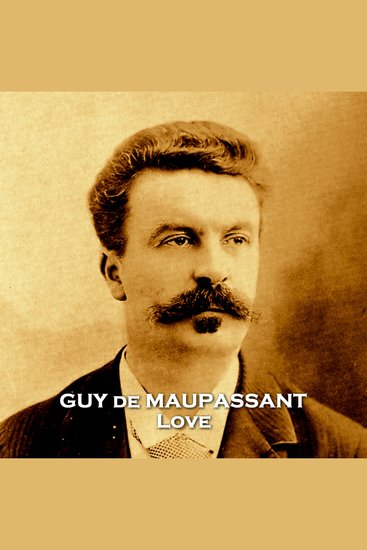
  • Love - From their pens to your ears genius in every story - cover

    Love - From their pens to your...

    Guy de Maupassant

    • 0
    • 0
    • 0
    Henri René Albert Guy de Maupassant was born on August 5th, 1850 near Dieppe in France.  
    Maupassant’s early life was badly torn when at age 11 (his younger brother Hervé was then five) his mother, Laure, a headstrong and independent-minded woman, risked social disgrace in order to obtain a legal separation from her husband. 
    After the separation, Laure kept custody of her two boys. With the father now forcibly absent, Laure became the most influential and important figure in the young boy's life.   
    Maupassant’s education was such that he rebelled against religion and other societal norms but a developing friendship with Gustave Flaubert began to turn his mind towards creativity and writing. 
    After graduation he volunteered for the Franco-Prussian war. With its end he moved to Paris to work as a clerk in the Navy Department.  Gustave Flaubert now took him under his wing.  Acting as a literary guardian to him, he guided the eager Maupassant to debuts in journalism and literature.  For Maupassant these were exciting times and the awakening of his creative talents and ambitions. 
    In 1880 he published what is considered his first great work, ‘Boule de Suif’, (translated as as ‘Dumpling’, ‘Butterball’, ‘Ball of Fat’, or ‘Ball of Lard’) which met with a success that was both instant and overwhelming.  Flaubert at once acknowledged that it was ‘a masterpiece that will endure.’ Maupassant had used his talents and experiences in the war to create something unique.  
    This decade from 1880 to 1891 was to be the most pivotal of his career.  With an audience now made available by the success of ‘Boule de Suif’ Maupassant organised himself to work methodically and relentlessly to produce between two and four volumes of work a year.  The melding of his talents and business sense and the continual hunger of sources for his works made him wealthy. 
    In his later years he developed a desire for solitude, an obsession for self-preservation, and a fear of death as well as a paranoia of persecution caused by the syphilis he had contracted in his youth.  
    On January 2nd, 1892, Maupassant tried to commit suicide by cutting his throat.  Unsuccessful he was committed to the private asylum of Esprit Blanche at Passy, in Paris.  It was here on July 6th, 1893 that Henri René Albert Guy de Maupassant died at the age of only 42.
    Show book
  • Mansfield Park - cover

    Mansfield Park

    Jane Austen

    • 0
    • 0
    • 0
    Jane Austen's Mansfield Park is one of her most complex and morally searching novels, a powerful story of family obligation, social ambition, personal integrity, and quiet endurance.
    Fanny Price is sent as a child to live with wealthy relatives, where she grows up in comfort but never as an equal. Shy, observant, and often underestimated, she occupies a delicate place within the household: dependent on others, yet inwardly guided by a strong sense of right and wrong. Around her, vanity, flirtation, selfishness, and careless privilege shape the lives of those who believe themselves more confident and more worldly.
    When the charming Crawford siblings arrive, they bring excitement, wit, and disruption into the family circle. Their presence exposes hidden desires, weak principles, and fragile relationships, forcing Fanny to defend her values even when doing so leaves her isolated. As affection, ambition, temptation, and social expectations collide, Austen examines the cost of remaining true to oneself in an environment that rewards beauty, status, and performance.
    Unlike the sparkling comedy of Pride and Prejudice or the playful irony of Northanger Abbey, this novel offers a deeper, more restrained study of character and conduct. It explores education, marriage, wealth, moral judgment, family hierarchy, and the difference between appearance and substance. Fanny Price may be one of Austen's quietest heroines, but her strength lies in patience, perception, and conviction.
    Elegant, intelligent, and emotionally layered, Mansfield Park remains essential reading for anyone interested in classic English literature, Regency society, literary realism, and the enduring questions of conscience, love, and social responsibility.
    Show book
  • The Crown of Life - A Young Man in London from '86 Onward - cover

    The Crown of Life - A Young Man...

    George Gissing

    • 0
    • 0
    • 0
    A man who hates the arms trade loves the daughter of the man who profits from it, and the courtship runs from a Thames-side suburb to a Russia on the edge of war. Gissing's academic career ended at eighteen when he was caught stealing to support a young prostitute he was trying to save, and he married her; this late novel of 1899 is his most explicit about empire and the coming catastrophe, and he was right about it. Fifty-seven plates by painters from Whistler to Shishkin carry the river, the field and the forge through the London years and the Russian journey.
    Show book