¡Acompáñanos a viajar por el mundo de los libros!
Añadir este libro a la estantería
Grey
Escribe un nuevo comentario Default profile 50px
Grey
Suscríbete para leer el libro completo o lee las primeras páginas gratis.
All characters reduced
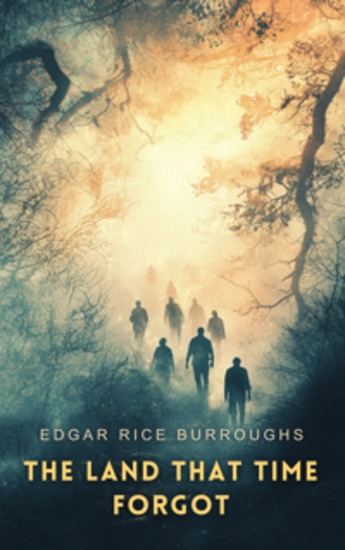
The Land That Time Forgot - cover

The Land That Time Forgot

Edgar Rice Burroughs

Editorial: Interactive Media

  • 0
  • 0
  • 0

Sinopsis

The Land That Time Forgot is a novel by Edgar Rice Burroughs that tells the story of a group of people who are transported to a mysterious land where time has stopped. The people must struggle to survive in this strange place, and they must also find a way to return home.
Disponible desde: 08/04/2022.
Longitud de impresión: 102 páginas.

Otros libros que te pueden interesar

  • F Scott Fitzgerald - A Short Story Collection - A wonderful collection from the legendary American author of The Great Gatsby - cover

    F Scott Fitzgerald - A Short...

    F. Scott Fitzgerald

    • 0
    • 0
    • 0
    Francis Scott Key Fitzgerald was born on September 24th 1896 in Saint Paul, Minnesota, to an upper-middle-class family. His early years in Buffalo, New York showed him to be a boy of high intelligence and drive with a thirst for literature.  
     
    In 1908, his father was fired from Procter & Gamble, and the family returned to Minnesota. Here Fitzgerald attended St. Paul Academy, in St. Paul, until 1911. At 13 he was published in the school newspaper, it was, of all things, a detective story. In 1911, aged 15, he was sent to the prestigious Newman School, in Hackensack, New Jersey. And, after graduating in 1913, he decided to continue at Princeton University. Here he firmly dedicated himself to writing. Unfortunately his writing pursuits came at the expense of his coursework. In 1917 he dropped out to join the U.S. Army.  
     
    However this service to his country came with the very real fear that he might perish in the trenches of Western Europe with his literary dreams not yet begun. So he spent the weeks before reporting for duty at work on a novel entitled The Romantic Egotist.  Fitzgerald was assigned to Camp Sheridan, in Alabama. It was there that Fitzgerald met the love of his life; Zelda Sayre, the "golden girl," of Montgomery youth society.  
     
    The war ended before Fitzgerald could be deployed, and he moved to New York City hoping to start a career in advertising that would be lucrative enough to convince Zelda to marry him. Unable to convince her that his means were enough to support her she broke off the engagement. Fitzgerald returned to his parents in St. Paul, to revise The Romantic Egoist, now recast as This Side of Paradise. His revised novel was accepted by Scribner's and published in 1920 becoming an instant success.  
     
    It launched Fitzgerald's career as a writer and provided a steady income suitable for Zelda's ambitions. The engagement resumed and they married at St. Patrick's Cathedral in New York. Frances Scott "Scottie" Fitzgerald, their only child, was born on October 26, 1921. 
     
    Inspired by the parties he had attended visiting Long Island's north shore Fitzgerald began planning the greatest of his novels, The Great Gatsby, in 1923, wanting to produce "something new—something extraordinary and beautiful and simple and intricately patterned."  Published in April 1925, The Great Gatsby received mixed reviews and sold poorly; only 20,000 in its first year.  Today, it is considered a literary classic and one of a small circle vying for the title "Great American Novel".  
     
    Fitzgerald continued to supplement his income by writing short stories for magazines and to sell his stories and novels to Hollywood. He called this "whoring".  
     
    In February 1932, Zelda was hospitalized with schizophrenia. Fitzgerald rented a house nearby and worked on his latest book, Tender Is the Night, and finally published it in 1934.  
     
    Fitzgerald's heavy and excessive drinking had now developed into alcoholism and with recurring financial difficulties, the emotional toll of Zelda's mental illness, this meant several difficult years.  
     
    In 1937, Fitzgerald moved to Hollywood. His income improved and he began to work in the film industry. He found movies beneath his talents, but was once again in perilous financial straits, and so spent the second half of the 1930s in Hollywood, working on a triangle of short stories, scripts for MGM, and his final novel, The Love of the Last Tycoon.   
     
    In 1939, MGM ended the contract, and Fitzgerald became a writer for hire. Still an alcoholic, he now became estranged from Zelda and developed a relationship with Sheilah Graham, the Hollywood gossip columnist. They quickly became lovers.  
     
    In this last period of his life his alcoholism had left him physically wrecked. After suffering a heart attack, in Schwab's Drug Store, he was ordered to avoi
    Ver libro
  • The Lightning-Rod Man - cover

    The Lightning-Rod Man

    Herman Melville

    • 0
    • 0
    • 0
    After spending the summer of 1853 in the Berkshire Mountains, where he supposedly had a real life encounter with a lightning-rod salesman, Melville published “The Lightning-Rod Man." At the end of this short story, the lightning-rod salesman is exposed for the fraud that he is. However, that will not keep his successors from fanning out to the Middle West, where lightning storms abound and farmers were gullible. On another level, the story can be interpreted as a confrontation between Good and Evil. Through description and diction, the narrator is understood as a follower of God, someone who believes in The Almighty watching over him. On the other hand, the lightning-rod man is seen as a negative character, someone who only has faith in the product he's peddling.
    Ver libro
  • Country Landlords - cover

    Country Landlords

    L.M. Spooner

    • 0
    • 0
    • 0
    The young lovers Gertrude Fitzhammons and Anarawd Gwynne are caught between their fathers' mutual antagonism. Eventually, Gertrudes' adoptive father, the retired sea captain Ricardo Lewis, is forced to flee Britain due to the machinations of old squire Gwynne and Lewis's mortal enemy, Lord Morlif. At the same time, Anarawd is sent abroad in the hope that he forgets his sweetheart.
    
    
    After several years apart, their separate fates lead them to meet again in Naples during the spring revolutions of 1848. After Lewis's betrayal to his death on the republican barricades, a broken-hearted Gertrude returns to her Welsh home. Will Anarawd follow her or seek his fortune abroad in the British Army?
    
    
    Loosely inspired by social and agricultural advancements in the district around the author's home in Porthmadog, Country Landlords (1860) looks at the relationship between the landed gentry and ordinary country population in the early nineteenth-century.
    
    
    The first republication of this novel since 1860, following on from the successful Honno republication of Spooner's first novel, Gladys of Harlech in 2017.
    
    
    • An informative introduction contextualizes Louisa Matilda Spooner's life and writings.
    
    
    • An example of mid-century novels by female authors from Wales dealing with contemporary issues, such as land improvement, nationalism, and empire.
    
    
    • A social novel in the style of a romance inspired by the villages and landed estates of rural west Wales and their links with the wider world.
    Ver libro
  • Northanger Abbey - Full Cast Drama - cover

    Northanger Abbey - Full Cast Drama

    Jane Austen

    • 0
    • 0
    • 0
    Jane Austen's "Northanger Abbey" stands as a unique gem among her body of work. Published posthumously in 1817, the novel offers a delightful departure from Austen's more conventional romantic tales, instead serving as a sharp satire of the gothic novel genre that was popular in her time. 
     
    The story revolves around Catherine Morland, an earnest and imaginative young woman who is introduced to the world of society and courtship during her stay in Bath, England. As Catherine embarks on her own romantic adventures, Austen uses her character to playfully deconstruct the conventions of gothic literature, which was characterized by eerie castles, mysterious secrets, and dark, brooding heroes. 
    Through Catherine's vivid imagination and penchant for reading gothic novels, Austen takes the opportunity to mock the sensationalism and melodrama of the genre. Catherine's expectations of intrigue and danger are repeatedly thwarted by the mundane realities of everyday life. Her tendency to view her surroundings through the lens of her favorite novels leads to humorous misunderstandings and serves as a commentary on the dangers of allowing fiction to overly influence one's perception of reality. 
     
    Austen employs irony and humor throughout "Northanger Abbey" to highlight the contrast between Catherine's fanciful expectations and the ordinary events she encounters. The novel's satirical tone gently pokes fun at the excesses and absurdities of gothic literature while simultaneously celebrating the power of imagination and the importance of distinguishing between fiction and reality.
    Ver libro
  • The House of Mapuhi - cover

    The House of Mapuhi

    Jack London

    • 0
    • 0
    • 0
    Despite the heavy clumsiness of her lines, the Aorai handled easily in the light breeze, and her captain ran her well in before he hove to just outside the suck of the surf. The atoll of Hikueru lay low on the water, a circle of pounded coral sand a hundred yards wide, twenty miles in circumference, and from three to five feet above high-water mark. On the bottom of the huge and glassy lagoon was much pearl shell, and from the deck of the schooner, across the slender ring of the atoll, the divers could be seen at work. But the lagoon had no entrance for even a trading schooner. With a favoring breeze cutters could win in through the tortuous and shallow channel, but the schooners lay off and on outside and sent in their small boats.
    Ver libro
  • Gone With The Wind - cover

    Gone With The Wind

    Margaret Mitchell

    • 0
    • 0
    • 0
    The classic novel, 'Gone With The Wind' is a very captivating story, which takes place during American Civil War in Georgia. Originally published in 1936, became an instant best-seller, earning Margaret Mitchell the 1937 Pulitzer Prize as a first-time novelist. Later, the novel was adapted into a 1939 American film, which won various Academy Awards. 
    Gone With The Wind tells the story of the Southern belle, privileged Scarlett O'Hara who fought for survival during the War and Reconstruction Period in the eighteen century. A story of love, passion, hope, and loss. With unforgettable characters that have captured the readers' hearts for over eighty years.
    Ver libro