Join us on a literary world trip!
Add this book to bookshelf
Grey
Write a new comment Default profile 50px
Grey
Subscribe to read the full book or read the first pages for free!
All characters reduced
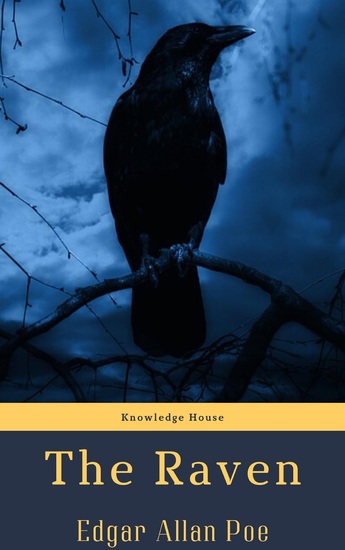
The Raven - cover

The Raven

Edgar Allan Poe, knowledge house

Publisher: knowledge house

  • 0
  • 0
  • 0

Summary

"The Raven" is a narrative poem by the American writer and poet Edgar Allan Poe. It was published for the first time on January 29, 1845, in the New York Evening Mirror. Noted for its musicality, stylized language and supernatural atmosphere, it tells of the mysterious visit of a talking raven to a distraught lover, tracing his slow descent into madness.
Available since: 10/15/2022.
Print length: 46 pages.

Other books that might interest you

  • Petrarch's Canzoniere - Scattered Rhymes - A New Verse Translation - cover

    Petrarch's Canzoniere -...

    Francesco Petrarch

    • 0
    • 0
    • 0
    Francesco Petrarch's Canzoniere (translated in English as 'Scattered Rhymes') is a collection of 14th century poems famed for their deep exploration of love, grief, spirituality and nature. Written over the course of forty years (approximately between 1328-1368), this collection includes 317 sonnets, 29 canzoni, 9 sestine, 4 madrigals and 7 ballate. 
    These Scattered Rhymes almost always return to Laura, a women who Petrarch loves deeply, whom he first saw on a Good Friday. On this same day, some years later, Laura died. But Petrarch's love does not wane, in fact at points it burns brighter. Il Canzoniere also serves as a valuable contemporary insight into 14th century religion and the role of the papacy in Christendom. 
    Petrarch's work is one of civilization's most immaculate achievements. Michael R. G. Spiller regards Il Canzoniere as 'the single greatest inspiration for the love poetry of Renaissance Europe until well into the seventeenth century'. 
    Following his acclaimed translation of Dante's Inferno, which 'immediately joins ranks with the very best available in English' (Dr Richard Lansing), Peter Thornton brings the poetry of Petrarch to the 21st Century in direct and luminous verse. 
    Here's a madrigal, number 52 in the sequence. 
    52 
    However much Diana may have pleasedthe lover who by like chance spied her bareamid the frigid water, I no less 
    delighted in the shy hill shepherdesswashing a wisp of veil to keep her hair,glinting with gold, protected from the breeze.  
    And even now, when the sky burns above,she makes me shiver with a chill of love.
    Show book
  • The Snow Storm - cover

    The Snow Storm

    Ralph Waldo Emerson

    • 0
    • 0
    • 0
    The storm arrives, unbidden yet unstoppable, sculpting the world in reckless white. The north wind, a faceless mason, works without plan or patience—bastions rise, wreaths drape, roads vanish. No symmetry, no restraint, only the wild hand of winter shaping chaos into fleeting grandeur.
    By dawn, the architect is gone. What remains is a frozen wonder, a masterpiece of whim and force, too perfect to last, too wild to be remade.
    Show book
  • Tropic of Squalor - Poems - cover

    Tropic of Squalor - Poems

    Mary Karr

    • 0
    • 0
    • 0
    A new volume of poetry from the New York Times bestselling and esteemed author of The Liar’s Club and Lit. 
    Long before she earned accolades for her genre-defining memoirs, Mary Karr was winning poetry prizes. Now the beloved author returns with a collection of bracing poems as visceral and deeply felt and hilarious as her memoirs. In Tropic of Squalor, Karr dares to address the numinous—that mystery some of us hope towards in secret, or maybe dare to pray to. The ""squalor"" of meaninglessness that every thoughtful person wrestles with sits at the core of human suffering, and Karr renders it with power—illness, death, love’s agonized disappointments. Her brazen verse calls us out of our psychic swamplands and into that hard-won awareness of the divine hiding in the small moments that make us human. In a single poem she can generate tears, horror, empathy, laughter, and peace. She never preaches. But whether you’re an adamant atheist, a pilgrim, or skeptically curious, these poems will urge you to find an inner light in the most baffling hours of darkness.
    Show book
  • Ashes in the Milk - A Poetic Memoir - cover

    Ashes in the Milk - A Poetic Memoir

    Valerie Johns

    • 0
    • 0
    • 0
    "Ashes in the Milk" will remind readers that their greatest path to healing lies within—all they must do is walk down a path of self-discovery with curiosity, open mindedness and willingness. 
    Valerie Johns, MA, MFT, is a prolific poet, author, and therapist who is passionate about helping others heal from their deepest wounds.  She began writing Ashes in the Milk during the pandemic, identifying a need where readers were looking for guidance on their journey of trauma healing and to get inspiration for their own work by exploring their stories and dreams on an intimate, creative level.
    Show book
  • Poems of Parenting - cover

    Poems of Parenting

    Loryn Brantz

    • 0
    • 0
    • 0
    A must-have book for all parents, this collection of tender, funny, radically honest poems about parenthood, based on a series of popular Instagram posts, is the perfect baby shower or Mother’s Day gift. 
    Modern parenthood can feel indescribable. This poignant collection of poetry and art chronicles the ups and downs of a rollercoaster ride that every parent will recognize. Capturing the joys and frustrations that come with each fleetingly precious (or interminable) stage of development, Poems of Parenting will be a balm to the soul of weary parents. 
    From fresh baby snuggles to terrible tantrums, and everything in-between, artist Loryn Brantz has touched on something unique and universal in her debut poetry collection based on her popular Instagram series. Poems of Parenting is the perfect companion on any parent’s journey through the uncertain terrain of raising cherished children in extraordinary times.
    Show book
  • Which Seeds Will Grow? - Poems - cover

    Which Seeds Will Grow? - Poems

    Andrew Calis

    • 0
    • 0
    • 0
    A new collection of poems by Palestinian-American Catholic poet Andrew Calis, Which Seeds Will Grow? ​finds hope in the Holy Land.
    Grappling with his identity as a Christian Palestinian American, Andrew Calis recalls his father who saw Israeli jets swoop over his house in Jerusalem and a military helicopter fire bullets into his front yard. The same father who wouldn't teach his children Arabic, for fear that they would have accented English, who kept his past close to his chest—unknown to his son. He recounts the death of his grandfather, a grandfather who would beat his father, and for whom he could not fully mourn because Arab men don't cry.
    Andrew Calis digs through the pain of his family and of his homeland to find the fragile seed of contained life and delicate hope for the Holy Land—and reflects on how tenderly that seed must be nurtured.
    Steeped in wonder, Which Seeds Will Grow? explores the past and the present, from ancient Jerusalem to Baltimore's gardens and alleys through the lens of a Palestinian American. The poems are patient, waiting for seasons to end, waiting for space to expand outward, and waiting for light to touch the earth. Despite the difficulty of waiting, readers will find hope in hopelessness and comfort in the contemplation of the world and its sacred mysteries.
    From Which Seeds Will Grow?
    Planting a Garden 
    
    Stealing clippings from neighbors' yards
    
    And smiling as they grew their own blooms
    
    In the safe and hidden rooms where we
    
    Keep watch on them like they are our children.
    
    ***
    
    Nothing grew. We knew this was
    
    A possibility, had read
    
    It sometimes takes two years,
    
    And we hoped in spite of only dirt
    
    For the green that could be anything.
    Perhaps we dug too shallow or too close
    
    To the shade, or stepped where we had already planted,
    
    Either crushing roots or breaking their curled
    
    First shoots before they broke the surface.
    
    ***
    
    So when one survived, wove a green line
    
    Of its own, thinly sprouting something unknowable, I ran
    
    Inside and for a moment felt
    
    What John must have felt
    
    Leaving Peter, old and unsteadily running,
    
    And running breathlessly
    
    To tell everyone —
    
    Everyone
    
    What had happened
    
    And how you wouldn't believe your eyes.
    Show book