¡Acompáñanos a viajar por el mundo de los libros!
Añadir este libro a la estantería
Grey
Escribe un nuevo comentario Default profile 50px
Grey
Suscríbete para leer el libro completo o lee las primeras páginas gratis.
All characters reduced
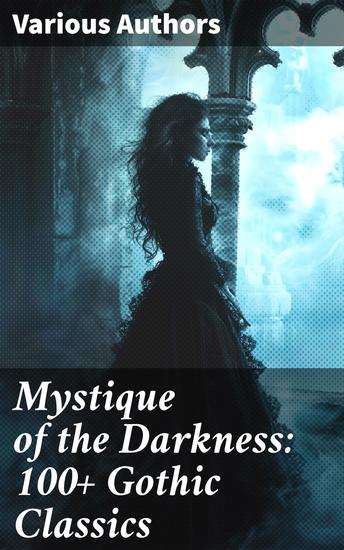
Mystique of the Darkness: 100+ Gothic Classics - Exploring the Shadows: A Treasury of Gothic Tales - cover

Mystique of the Darkness: 100+ Gothic Classics - Exploring the Shadows: A Treasury of Gothic Tales

Charles Dickens, Friedrich Schiller, Oscar Wilde, Robert Louis Stevenson, Edgar Allan Poe, William Hope Hodgson, Joseph Sheridan Le Fanu, George MacDonald, Percy Bysshe Shelley, Bram Stoker, Charlotte Brontë, Emily Brontë, William Godwin, Henry James, Victor Hugo, Théophile Gautier, Arthur Conan Doyle, Joseph Conrad, Guy Boothby, Jane Austen, Mayne Reid, John Meade Falkner, Guy de Maupassant, George Eliot, Samuel Taylor Coleridge, Robert Hugh Benson, Horace Walpole, Frederick Marryat, Thomas Love Peacock, Washington Irving, Nathaniel Hawthorne, Gaston Leroux, Grant Allen, Arthur Machen, Wilkie Collins, Thomas Peckett Prest, James Malcolm Rymer, Robert Browning, Walter Hubbell, Marie Corelli, Charles Brockden Brown, James Hogg, William Blake, Charlotte Perkins Gilman, John Keats, Richard Marsh, Clara Reeve, Charles Robert Maturin, John William Polidori, Lord Byron, W. W. Jacobs, E.F. Benson, M.R. James, E. T. A. Hoffman, George W. M. Reynolds, William Thomas Beckford, Christina Rossetti, Tobias Smollett, Nikolai Gogol, Mary Shelley, Edward Bulwer-Lytton, Ann Radcliffe, Matthew Gregory Lewis, Eliza Parsons, Eleanor Sleath, Emile Erckmann, Alexandre Chatrian

Traductor C.J. Hogarth, Samuel Henley, Isabel F. Hapgood

Editorial: Good Press

  • 0
  • 0
  • 0

Sinopsis

Mystique of the Darkness: 100+ Gothic Classics is an unparalleled anthology that delves deep into the shadowy corridors of the Gothic tradition. Encompassing a vast spectrum of literary styles, from the hauntingly romantic to the chillingly sinister, this collection explores the themes of human folly, supernatural dread, and the fragile boundaries between life and death. Etching a tapestry of fear and fascination, the anthology includes pieces that, while crafted by different hands, collectively evoke a shivering intimacy with the unknown'Äîhighlighted by tales of gothic horror and melancholic beauty that hook the reader from the first sentence. The collection is a testament to the collective genius of its contributors, including luminaries such as Charles Dickens, Edgar Allan Poe, and Mary Shelley, all of whom have left an indelible mark on gothic literature. Their careers span a wide arc of literary movements, from Romanticism to Victorian anxiety, each contributing threads to the pattern that defines the Gothic genre. Diverse in voice and rich in historical context, these authors provide a multifaceted exploration of the uncanny and the sublime, grounded in the specific fears and fantasies of their times. Scholars, literary enthusiasts, and casual readers alike are invited to embark on this journey through "Mystique of the Darkness." This carefully curated volume offers a unique portal into the depths of the dark, allowing readers to immerse themselves in the beauty of linguistic expression and thematic insight. As you traverse the myriad worlds within, be prepared for an enlightening experience that nourishes the intellect and stirs the soul, showcasing the timeless allure of these gothic masterpieces. Whether for educational pursuit or sheer appreciation of the arts, this anthology promises to enrich every reader's literary landscape.
Disponible desde: 29/12/2023.
Longitud de impresión: 18745 páginas.
Otros libros que te pueden interesar

  • Milton Hershey - More Than Chocolate - cover

    Milton Hershey - More Than...

    Janet Benge, Geoff Benge

    • 0
    • 0
    • 0
    'We've done more than our share to see you right, but you're a Hershey, a true son of a dreamer,' Milton's Uncle Abraham said. 'You'll never stick with anything long enough to make it work for you.' Milton gulped. He'd already suspected that his relatives had given up on him succeeding as a candy maker, but the words still stung. When Milton Hershey's famous Hershey Bars debuted in 1905, few people knew of the hard work, dedication, and sacrifice preceding the triumph. Debt, lack of support, and fatigue had been constant companions for the famous chocolatier and philanthropist -- a man with a fourth-grade education. Despite comparisons to his wandering father, Milton never gave up. Learning from his mistakes, he spent a lifetime creating sweet things to eat -- first caramel, then chocolate. As his company soared, Milton used his wealth to care for others, founding a town for Hershey workers, a school for children in need, and a foundation dedicated to education, culture, and health care.
    Ver libro
  • Socrates - Socrates Philosophy and the Examined Life - cover

    Socrates - Socrates Philosophy...

    Hector Davidson

    • 0
    • 0
    • 0
    Socrates stands as one of the most influential figures in the history of philosophy, a thinker whose ideas and methods continue to shape intellectual inquiry. Born in Athens around 469 BCE, he never wrote a single philosophical text, yet his impact endures through the works of his students, particularly Plato. His approach to philosophy was rooted in dialogue, questioning, and an unwavering commitment to seeking truth. Unlike the Sophists of his time, who often prioritized rhetorical skill and persuasion, Socrates believed that wisdom was not about appearing knowledgeable but about recognizing one’s own ignorance. His method of relentless questioning, now known as the Socratic Method, remains a cornerstone of critical thinking and philosophical discourse. 
    Socrates lived during a period of great political and social upheaval in Athens. The city had emerged from the Peloponnesian War weakened and uncertain about its future. In this context, Socrates became both an admired and controversial figure. His insistence on questioning authority and challenging conventional beliefs made him a target for those who saw his influence as destabilizing. He did not align himself with any particular political faction but instead sought to examine the moral and ethical foundations of society. His discussions often exposed the contradictions in the reasoning of politicians, poets, and fellow citizens, leading many to view him as a disruptive force. 
    His trial in 399 BCE remains one of the most significant moments in philosophical history. Accused of corrupting the youth and impiety, Socrates defended himself in a manner that was both defiant and deeply philosophical. In The Apology, Plato’s account of the trial, Socrates argues that he was fulfilling a divine mission by encouraging people to think critically and examine their lives.
    Ver libro
  • Unmasking the Truth: Book summary & analysis - cover

    Unmasking the Truth: Book...

    Alexander Pike

    • 0
    • 0
    • 0
    This content is an independent and unofficial summary created for informational and educational purposes only. It is not affiliated with, authorized, approved, licensed, or endorsed by the original author or publisher. All rights to the original work belong to its respective copyright holders. This summary is not intended to substitute the original book, but to offer a concise overview and interpretation of its main ideas.


    Unmasking the Truth is a powerful journey into hidden realities, buried secrets, and the relentless pursuit of authenticity. In a world shaped by illusion and deception, this audiobook peels back the layers—revealing the raw, uncomfortable, and ultimately liberating truths that lie beneath the surface.
     
    Through riveting narratives and emotional insight, listeners are drawn into stories of revelation, justice, and transformation. Whether it's exposing personal lies, institutional cover-ups, or inner denial, each chapter explores what it means to confront what we’ve long avoided—and the freedom that follows.
    Ver libro
  • The Soil of Leadership - Cultivating the Conditions for Transformation - cover

    The Soil of Leadership -...

    Dr. Britt Yamamoto

    • 0
    • 0
    • 0
    In The Soil of Leadership, Dr. Britt Yamamoto presents a unique and memorable perspective on leadership that challenges conventional wisdom for guiding others. Drawing from his extensive global leadership experience—working closely with leaders and organizations from all over Africa, Latin America, Asia-Pacific, the Middle East, and North America—Dr. Yamamoto introduces a timely framework that places paramount importance on holistic well-being and a profound understanding of the intricate systems critical for effective and sustainable leadership. 
    Inviting us to “dig where we stand,” The Soil of Leadership seamlessly weaves evocative metaphors and captivating narratives from Dr. Yamamoto’s life as both a sustainable farmer and organizational leader. Through these vivid examples, he illuminates the profound notion that genuine leadership doesn’t solely emerge from visible accomplishments; rather, it thrives within the hidden roots that allow our true potential to flourish. 
    The Soil of Leadership serves as a compelling call to action, encouraging us to reevaluate our connections, not only with ourselves, but also with others. It inspires a transformative shift in our perception of time and space, fostering continuous reflection on our assumptions, perspectives, and purposes. This journey guides us toward a leadership ethos that unifies rather than divides, marking a significant milestone on the path to a brighter and more interconnected future. 
    Ver libro
  • King Hancock - The Radical Influence of a Moderate Founding Father - cover

    King Hancock - The Radical...

    Brooke Barbier

    • 0
    • 0
    • 0
    Americans are more familiar with his signature than with the man himself. In this spirited account of John Hancock's life, Brooke Barbier depicts a patriot of fascinating contradictions—a child of enormous privilege who would nevertheless become a voice of the common folk; a pillar of society uncomfortable with radicalism who yet was crucial to independence. 


    Orphaned young, Hancock was raised by his merchant uncle, whose business and vast wealth he inherited—including household slaves, whom Hancock later freed. By his early thirties, he was one of New England's most prominent politicians, earning a place on Britain's most-wanted list and the derisive nickname King Hancock. While he eventually joined the revolution against England, his ever moderate—and moderating—disposition would prove an asset after 1776. Barbier shows Hancock appealing to southerners and northerners, Federalists and Anti-Federalists. He was a famously steadying force as president of the fractious Second Continental Congress. As governor of Massachusetts, Hancock convinced its delegates to vote for the federal Constitution and calmed the fallout from the shocking Shays's Rebellion. An insightful study of leadership in the revolutionary era, King Hancock traces a moment when passion was on the side of compromise and accommodation proved the basis of profound social and political change.
    Ver libro
  • Samurai! - cover

    Samurai!

    Saburo Sakai

    • 0
    • 0
    • 0
    Samurai! is the gripping autobiography of Saburō Sakai, one of Japan’s most renowned fighter pilots during World War II. Co-written with Fred Saito and Martin Caidin, the book chronicles Sakai’s rise from a poor rural upbringing to becoming an elite Zero pilot in the Imperial Japanese Navy. With vivid detail and unflinching honesty, he recounts harrowing dogfights, the horrors of war, and his legendary 1,000-mile flight back to base after being grievously wounded. More than just a war memoir, Samurai! offers rare insight into the mindset, discipline, and honor of a warrior shaped by both tradition and global conflict.
    Ver libro