Join us on a literary world trip!
Add this book to bookshelf
Grey
Write a new comment Default profile 50px
Grey
Subscribe to read the full book or read the first pages for free!
All characters reduced
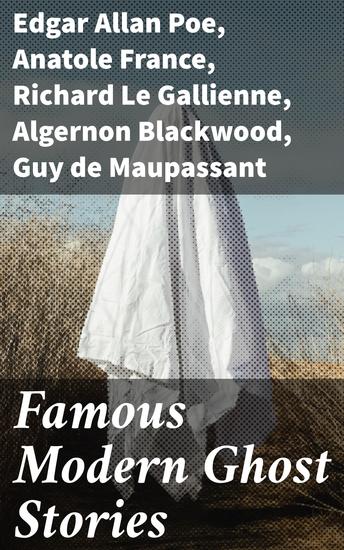
Famous Modern Ghost Stories - Exploring the Depths of Haunted Tales and Supernatural Stories - cover

Famous Modern Ghost Stories - Exploring the Depths of Haunted Tales and Supernatural Stories

Edgar Allan Poe, Anatole France, Richard Le Gallienne, Algernon Blackwood, Guy de Maupassant, Ambrose Bierce, Leonid Andreyev, Arthur Machen, Mary Eleanor Wilkins Freeman, Fitz-James O'Brien, Robert W. Chambers, Wilbur Daniel Steele, Olivia Howard Dunbar, William Fryer Harvey, Myla Jo Closser

Publisher: Good Press

  • 0
  • 0
  • 0

Summary

Famous Modern Ghost Stories is an anthology that delves into the eerie and the supernatural with a breadth of literary styles and haunting narratives. While capturing the spirit of the late 19th and early 20th-century fascination with ghost stories, this collection traverses a spectrum from the subtly eerie to the truly chilling. The anthology serves as a testament to the diversity and significance of ghostly tales, including standout pieces that explore the thin line between reality and the supernatural. This selection reflects both the psychological depth and the cultural beliefs surrounding death and the afterlife. The collection features the writings of literary giants and innovators such as Edgar Allan Poe and Guy de Maupassant, alongside lesser-known yet compelling voices like Myla Jo Closser. These authors contributed significantly to the gothic and supernatural literary movements, each offering a unique cultural perspective on the macabre. Drawing from varied backgrounds, spanning continents and eras, this anthology encapsulates a historical richness, revealing how varied personal and societal anxieties find expression through the universal theme of the ghostly. Readers will find Famous Modern Ghost Stories an invaluable resource for exploring the rich tapestry of themes and styles within supernatural literature. This anthology not only educates but also entertains, offering a multiplicity of perspectives and insights. It provides an opportunity to engage with the palpable tension and unsettling atmospheres these authors expertly weave. With its diverse voices, the collection fosters contemplation and dialogue on themes of mortality, fear, and the inexplicable, making it an essential volume for both literary enthusiasts and scholars seeking to understand the multifaceted nature of ghost stories.
Available since: 08/12/2023.
Print length: 230 pages.

Other books that might interest you

  • Lord Peter Views the Body - The Lord Peter Wimsey Mysteries Vol: 4 - cover

    Lord Peter Views the Body - The...

    Dorothy L. Sayers

    • 0
    • 0
    • 0
    "Lord Peter Views the Body" by Grapevine Press is a delightful collection of shorter adventures featuring the inimitable Lord Peter Wimsey. In this anthology, readers will accompany Lord Peter on a series of intriguing cases that highlight his brilliant deductive skills and quick wit. With each story, Dorothy L Sayers crafts a mini-mystery that captivates readers and showcases her mastery of the detective genre.From perplexing puzzles to clever solutions, these tales offer a taste of Sayers' storytelling finesse and the enduring charm of Lord Peter Wimsey. Whether you're a seasoned fan of the detective or new to his world of crime-solving, "Lord Peter Views the Body" provides a compelling and entertaining journey through the enigmatic and witty realms of Dorothy L Sayers.
    Show book
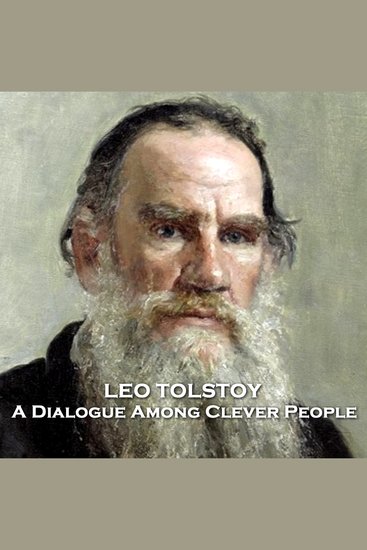
  • A Dialogue Among Clever People - From their pens to your ears genius in every story - cover

    A Dialogue Among Clever People -...

    Leo Tolstoy

    • 0
    • 0
    • 0
    Leo Tolstoy was born in 1828 in the Russian province of Tula to a wealthy noble family. As a child, he had private tutors but he showed little interest in any formal education. When he went to the University of Kazan in 1843 to study oriental languages and law, he left without completing his courses.  Life now was relaxed and idle but with some writing also taking place.  Gambling debts forced an abrupt change of path and he joined the army to fight in the Crimean War.  He was commended for his bravery and promoted but was appalled at the brutality and loss of life.  He recorded these and other earlier experiences in his diaries which formed the basis of several of his works. 
    In 1852 ‘Childhood’ was published to immediate success and was followed by ‘Boyhood’ and ‘Youth’. 
    His experience in the army and the horrors he witnessed resulted in ‘The Cossacks’ in 1862 and the trilogy ‘Sevastopol Tales’. After the war he travelled around Europe, visiting London and Paris and meeting such luminaries as Victor Hugo and Charles Darwin.  
    It was now that Tolstoy began his masterpiece, ‘War and Peace’. Published in 1869 it was an epic work that changed literature. He quickly followed this with ‘Anna Karenina’.  
    These successes made Tolstoy rich and helped him accomplish many of his dreams but also brought problems as he grappled with his faith and the lot of the oppressed poor. These revolutionary views became so popular that the authorities now kept him under surveillance.  
    He led a life of asceticism and vegetarianism and put his socialist ideals into practice by establishing numerous schools for the poor and food programmes. He also believed in giving away his wealth, which caused much discord with his wife.  
    His writing continued to bring forth classics such as ‘The Death of Ivan Ilyich’ and many brilliant and incisive short stories such as ‘How Much Land Does A Man Need’.  
    In 1901 Tolstoy was excommunicated from the Church and controversially deselected for the Nobel Prize for Literature. 
    Whilst undertaking a pilgrimage by train in October 1910 with his daughter Aleksandra he caught pneumonia in the nearby town of Astapovo.  Leo Tolstoy died on November 9th, 1910, he was 82.
    Show book
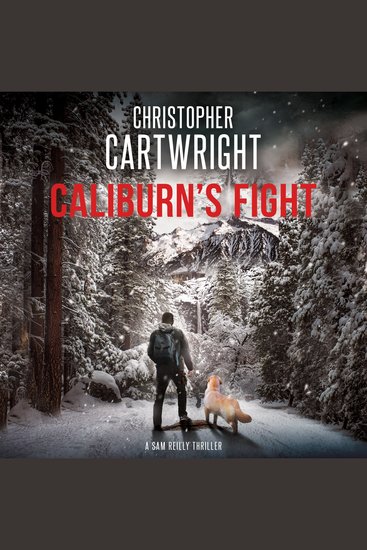
  • Caliburn's Fight - cover

    Caliburn's Fight

    Christopher Cartwright

    • 0
    • 0
    • 0
    The video was everywhere – a viral sensation sweeping across social media. 
    A golden retriever puppy in Bilbao, Spain. It was placed on a series of different rugs, its fur shifting in real time to match the colors and even the intricate patterns woven into the fabric. The internet was in a frenzy, with hundreds of thousands of comments debating whether it was an elaborate hoax, a genetic anomaly, or something else entirely. 
    But Sam Reilly knew the truth the moment he saw it. 
    This wasn’t a trick. 
    Caliburn, his dog, shared the same genetic trait. 
    The golden retriever was an engineered chimera infused with human and octopus DNA. He was originally designed as a classified military experiment rooted in the legendary craftsmanship of the blacksmith Merlin, who designed King Arthur’s greatest weapons – Excalibur and Caliburn. 
    If the puppy was real, then so too was the danger that followed it. 
    The hunt for Caliburn’s offspring leads Sam into the depths of a forgotten cave – where he stumbles upon an antique Basque Astrolabe that shouldn’t exist. The discovery sets off a chain reaction, dragging Sam into a deadly conflict with a Secret Society that has been protecting a hidden truth since the Lewis and Clark expedition of 1804. Meriwether Lewis was murdered to keep the secret buried. 
    The question remains, can Sam work out what to do with the truth, before it gets him killed too?
    Show book
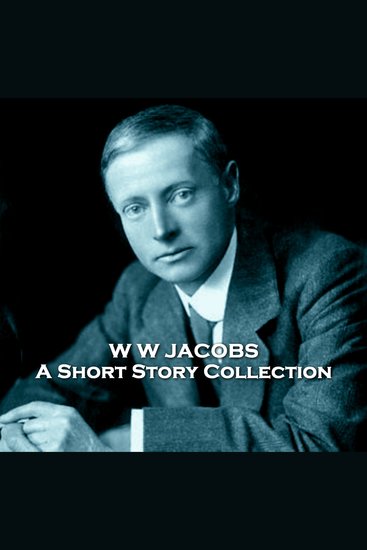
  • The Short Stories of W W Jacobs - Including the famed 'The Monkey's Paw' among his lesser known but equally impressive stories - cover

    The Short Stories of W W Jacobs...

    W Jacobs

    • 0
    • 0
    • 0
    William Wymark Jacobs was born on 8th September 1863 in Wapping, East London.  
     
    He was educated at a private school and then Birkbeck Literary and Scientific Institution, now part of the University of London. 
     
    In 1879, Jacobs began work as a clerk in the civil service, in the Post Office Savings Bank.  In 1885 his first short story was published but it was not until almost the turn of the century that he would abandon his post office career to that as a full-time writer. By then he was a very popular author, his collections selling extremely well and with an excellent income. 
     
    His best-known work is the macabre ‘The Monkey's Paw’ and he is also highly regarded for his ghost stories although much of his remaining short story output is streaked with humour.  His characters are immediately identifiable and we all know that life will take chunks out of them in no time at all.  
     
    Jacobs married the noted suffragette Agnes Eleanor Williams in 1900 at West Ham, Essex. They went on to have two daughters and three sons as they settled down to life.  
     
    By the outbreak of the First World War his literary output had declined and he now mainly spent his time rewriting his earlier stories for the stage.  In all he wrote 18 plays. 
     
    W W Jacobs died on 1st September 1943 at Hornsey Lane, Islington in London. He was 79. 
    01 - W W Jacobs - A Short Story Collection - An Introduction 
    02 - The Monkey's Paw by W W Jacobs 
    03 - Jerry Bundler by W W Jacobs 
    04 - Three Sisters by W W Jacobs 
    05 - Captain Rogers by W W Jacobs 
    06 - The Money Box by W W Jacobs
    Show book
  • The Light That Burns - cover

    The Light That Burns

    Karyne Norton

    • 0
    • 0
    • 0
    This is a tragedy. 
    It’s also a love story with threads of hope. 
    But it’s important that you go into it expecting a tragedy. 
    In The Half-Light Chronicles, nearly every book and story references Lovers’ Falls, a waterfall near the center of Vendaras inhabited by sprites. It’s named for the skeletons embracing at the cave’s entrance, and its origin is a favorite story among bards and storytellers because it can be tweaked to emphasize various morals, making it a warning or inspiration, depending on the audience’s need. 
    But this version is the true story, the one that tells just how the skeletons got there (hence the tragedy) and how their story connects to others you may know.
    Show book
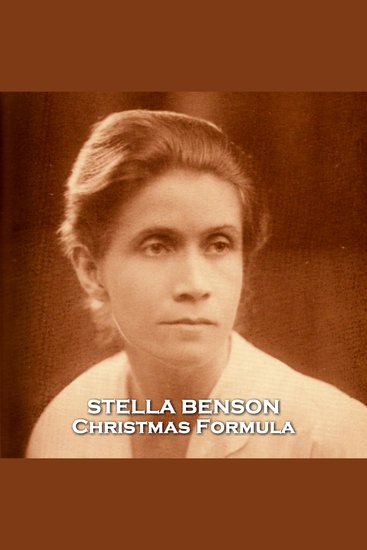
  • Christmas Formula - From their pens to your ears genius in every story - cover

    Christmas Formula - From their...

    Stella Benson

    • 0
    • 0
    • 0
    Stella Benson was born on the 6th January 1892 in Easthope, Shropshire to parents who were landed gentry. 
    Her early years involved frequent household moves which was difficult for the child as she suffered from ill-health.  Some of her early education was spent at schools in Germany and Switzerland and by 10 she had developed a lifelong habit of keeping a diary. 
    In the following years her parents separated, and she rarely saw her father. When she did, he encouraged to pause her writing until she had further experience and could better make sense of the world.  When he died, she learned he had been an alcoholic. 
    A winter spent in the West Indies provided material for her first novel ‘I Pose’ published the following year in 1915. 
    During the War years she became involved in the women's suffrage movement and dedicated time outside of writing to support the troops and help the poor. 
    In 1918 she decided to travel spending much time in California, where she also tutored at the University of California, and continued to write.  In China she met her future husband and after marrying in London, journeyed with him to his various Custom postings through Nanning, Beihai, and Hong Kong and the Far East. 
    The works continued to flow novels, short stories, travel essays all helped to build a deserved and burgeoning reputation. 
    Although her works are now in the forgotten and neglected department her writing style, characters, and narratives more than capably demonstrate her obvious talents.   
    Stella Benson died of pneumonia on the 7th December 1933, at Hạ Long in the Vietnamese province of Tonkin.  She was 40.
    Show book