Join us on a literary world trip!
Add this book to bookshelf
Grey
Write a new comment Default profile 50px
Grey
Subscribe to read the full book or read the first pages for free!
All characters reduced
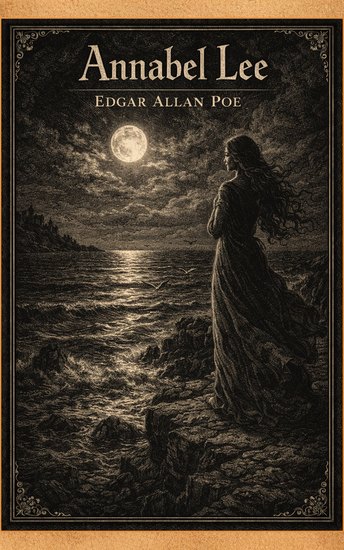
Annabel Lee - cover

Annabel Lee

Edgar Allan Poe

Publisher: CLXBX

  • 0
  • 0
  • 0

Summary

Annabel Lee by Edgar Allan Poe is one of the most hauntingly beautiful and emotionally powerful poems in American literature. First published in 1849, shortly after Poe's death, this lyrical masterpiece captures the intensity of youthful love, the pain of devastating loss, and the enduring power of memory.

Set in a "kingdom by the sea," the poem tells the story of a deep and passionate love between the narrator and the maiden Annabel Lee. Their love is portrayed as pure, innocent, and so powerful that it transcends earthly limitations. According to the narrator, their bond was so strong that even the angels in heaven grew envious. This jealousy, he believes, led to Annabel Lee's untimely death, taken from him by a chilling wind that swept her away.

Yet death does not diminish the narrator's devotion. Instead, his love becomes eternal, surpassing the boundaries of life and mortality. He insists that neither angels nor demons can sever his soul from that of Annabel Lee. Night after night, he lies beside her tomb by the sea, feeling her presence in the stars above and hearing her voice in the wind and waves. Through this devotion, Poe explores themes of undying love, grief, obsession, and the blurred line between romance and melancholy.

Written in musical, rhythmic language, Annabel Lee showcases Poe's mastery of sound, repetition, and atmosphere. The poem's flowing cadence and haunting refrains create a dreamlike quality that lingers long after the final line. Beneath its simple narrative lies a profound meditation on love's ability to endure beyond death—and on the fragile boundary between devotion and despair.

Deeply emotional and rich with gothic beauty, Annabel Lee remains one of Poe's most beloved works. It is a timeless reflection on love that refuses to fade, even in the face of loss, and a poignant reminder of the power of memory to keep the departed forever alive in the heart.
Available since: 02/24/2026.
Print length: 1 pages.
Other books that might interest you

  • Money Pursuits $ - The Money Collar - cover

    Money Pursuits $ - The Money Collar

    Mike Blake

    • 0
    • 0
    • 0
    Money Pursuit $ : The Money Collar. 
    This poem highlights the currencies that make up our money systems, and the pursuits of that money. 
    The many currencies that have been created for the original sole purpose of trade and goods exchange. 
    Now with the new Bitcoin revolution, how will money be applied in future and is it more corruptible than before. 
    Are people corrupt and greedy for the pursuit of money or simply self serving. Updates upto 5. Feb 14th 2025. 
    *NO A.I. has been used in the creation of this Poem. 
    Purely the Authors inspiration. * As for all his poems.* 
    To see more Poems by the same Author please click the Link HERE: 
    https://www.amazon.com/-/e/B00SG40RM8 
    To contact the Author: Please add me Mike Miko on Facebook & then message me, thanks. 
    www.facebook.com/wild.poetry.webs/https://www.facebook.com/wild.poetry.webs/ 
    I will then contact the Author your behalf. 
    Instagram: wild_poetrys / wild.poetry.webs 
    Tiktok: @wild_poetrys 
    FB: https://www.facebook.com/New.Poets.Corner
    Show book
  • Ghosts - cover

    Ghosts

    Henrik Ibsen

    • 0
    • 0
    • 0
    Henrik Ibsen's Ghosts is a powerful and provocative drama that dares to confront the hidden truths lurking beneath respectable society. First published in 1881, this groundbreaking play shocked audiences of its time with its fearless exploration of morality, duty, hypocrisy, and the haunting consequences of past actions. Today, it remains one of Ibsen's most compelling and widely studied works.
    
    Set in a remote Norwegian town, Ghosts centers on Mrs. Helene Alving, a widow preparing to open an orphanage in memory of her late husband, Captain Alving. To the outside world, the Captain was a pillar of the community—honorable, charitable, and morally upright. But beneath this carefully maintained façade lies a far darker truth. As the story unfolds over the course of a single day, long-buried secrets begin to surface, threatening to shatter the lives of everyone involved.
    
    Mrs. Alving has spent years protecting her son, Oswald, from the corruption and moral decay she associates with his father. Having sent him away to Paris to shield him from his father's influence, she hopes he will live a life free from the "ghosts" of the past. However, Oswald returns home carrying burdens of his own—both emotional and physical. His struggles reveal the devastating consequences of inherited guilt and societal repression.
    
    The play also features Pastor Manders, a well-meaning but rigid clergyman who represents the moral authority of society. Through his interactions with Mrs. Alving, Ibsen exposes the suffocating power of social expectations and the destructive force of blind adherence to tradition. Manders' concern for appearances over truth becomes a sharp critique of institutions that prioritize reputation above genuine compassion.
    
    Another key figure, Engstrand, a cunning and opportunistic carpenter, and his daughter Regina, who works in Mrs. Alving's household, further complicate the web of secrets. As relationships unravel and hidden connections are revealed, Ibsen masterfully builds tension toward a tragic and unforgettable conclusion.
    
    The title Ghosts operates on multiple levels. The "ghosts" are not literal spirits, but rather the lingering presence of past sins, outdated beliefs, and inherited ideologies that continue to shape the present. Ibsen suggests that individuals are haunted not only by personal mistakes but also by societal conventions that persist unquestioned across generations. These invisible forces exert a powerful influence, trapping characters in cycles of suffering and denial.
    
    At its core, Ghosts is a searing examination of truth versus illusion. Ibsen challenges the notion that maintaining appearances is more important than confronting reality. The play boldly addresses controversial themes such as venereal disease, illegitimacy, euthanasia, and the oppression of women—topics considered scandalous at the time of its release. Yet its enduring relevance lies in its exploration of universal human struggles: the tension between duty and freedom, love and responsibility, truth and comfort.
    
    Written in Ibsen's signature realist style, Ghosts strips away romanticism to reveal the stark complexities of human relationships. Its tightly constructed dialogue and psychological depth create a gripping drama that forces readers and audiences alike to question their own beliefs about morality, family, and societal norms.
    
    More than a century after its debut, Ghosts remains a timeless masterpiece—an unflinching portrayal of how the past shapes the present, and a profound reminder that the truths we avoid often return to confront us in the most devastating ways.
    Show book
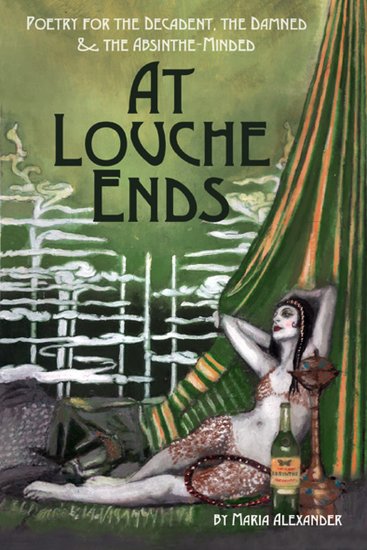
  • At Louche Ends: Poetry for the Decadent the Damned and the Absinthe-Minded - cover

    At Louche Ends: Poetry for the...

    Maria Alexander

    • 0
    • 0
    • 0
    Bitter herbs. Icy droplets. Saccharine morsels. Sapphire flames. This notorious libation of La Belle Époque swirls and clouds as an opalescent collection of verse so impassioned that to overindulge could be deadly. Read with care — and plenty of sugar cubes. 
     
    “Dark, visionary, and at times demonic, the poems in Maria Alexander’s AT LOUCHE ENDS, live up to the book’s subtitle: Poetry for the Decadent, the Damned and the Absinthe-Minded. Highly recommended for a fearsome late night read, but not for the faint of heart.” 
    –Bruce Boston, Bram Stoker Award author of Dark Matters 
     
    "Dark as night, sexy as hell, this collection of poetry is not one you will easily forget. 
    –Deborah P Kolodji, President, Science Fiction Poetry Association 
     
    "Acute and often painful, Maria Alexander's poetry speaks volumes to the heart of mankind and its eternal fears. At Louche Ends promises to be a timeless and rare collection." 
    –Corrine De Winter, Bram Stoker Award-winning author of The Women at the Funeral 
     
    "Maria Alexander’s At Louche Ends is an exercise in girding one’s broken heart and uncrossing one’s fishnetted legs with an Adam Ant-load of New Romantic firepower…" 
    –Gram Ponante, Fleshbot 
     
     "A narcotic for the senses." 
    –Hellnotes
    Show book
  • King of Alsander (Dramatic Reading) - cover

    King of Alsander (Dramatic Reading)

    James Elroy Flecker

    • 0
    • 0
    • 0
    First published in 1914, the King of Alsander is the only novel by James Elroy Flecker, best known as a poet, but also a noted scholar, linguist and diplomat.   Flecker's love of learning, language and travel, and his keen satirical insight into politics are all in evidence in this phantasmagoric tale.  As the author himself describes it:  Here is a tale all romance - a tale such as only a Poet can write for you, O appreciative and generous Public - a tale of madmen, kings, scholars, grocers, consuls, and Jews: a tale with two heroines, both of an extreme and indescribable beauty: a tale of the South and of sunshine, wherein will be found disguises, mysteries, conspiracies, fights, at least one good whipping, and plenty of blood and love and absurdity: a very old sort of tale: a tale as joyously improbable as life itself. - Summary by Algy PugCast list:Norman Price: Phil BensonJohn Oggs: Phil BensonLabourer: Phil BensonMrs Gaffekin: Michele EatonNancy: Michele EatonPeronella: Michele EatonMalsprita: Michele EatonGuard: Michele EatonCrowd: Michele EatonVicar: Patrick WallaceOld Man: Patrick WallaceWilliam Price: Patrick WallaceCanthrop: Patrick WallaceCesano: Patrick WallaceWizened Man: Patrick WallaceConsul: Patrick WallaceVorza: Patrick WallaceColonel: Patrick WallaceVicar’s Daughter: Eden Rea-HedrickWidow Prasko: Eden Rea-HedrickShopkeeper: Eden Rea-HedrickPresident: Eden Rea-HedrickArnolfo: Eden Rea-HedrickIanthe: Eden Rea-HedrickDrakina: Eden Rea-HedrickCuvas: Eden Rea-HedrickPeter Smith: Eden Rea-HedrickLady: Eden Rea-HedrickJohn Gaffekin: Alan WeymanKing: Alan WeymanButler: Alan WeymanDoctor: Alan WeymanClerk: Alan WeymanMakzelo: Alan WeymanFather Algio: Alan WeymanCaptain of the Guard: Alan Weyma
    Show book
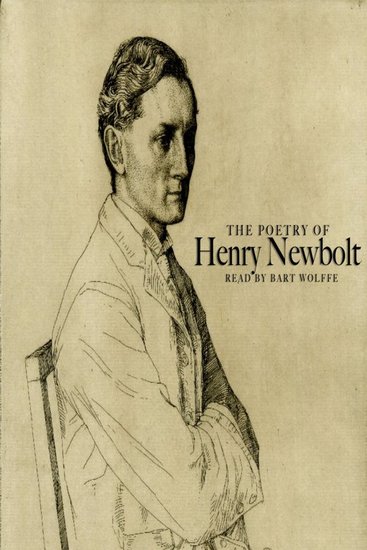
  • The Poetry of Henry Newbolt - cover

    The Poetry of Henry Newbolt

    Henry Newbolt

    • 0
    • 0
    • 0
    Henry Newbolt's finest poetry including Vitaï Lampada.
    Show book
  • One-Act Play Collection 005 - cover

    One-Act Play Collection 005

    Various

    • 0
    • 0
    • 0
    This collection of ten one-act dramas features plays by James M. Barrie, Hereward Carrington, Marjorie Benton Cooke, Alice Gerstenberg, Susan Glaspell and George Cram Cook, St. John Hankin, George Middleton, David Pinski, Frederik Pohl, and an unknown Japanese author. The plays were coordinated by Arielle Lipshaw, Availle, Chuck Williamson, Todd, Peter Yearsley, Caprisha Page, Charlotte Duckett, and Amanda Friday. (Summary by Arielle Lipshaw)
    Show book