Begleiten Sie uns auf eine literarische Weltreise!
Buch zum Bücherregal hinzufügen
Grey
Einen neuen Kommentar schreiben Default profile 50px
Grey
Jetzt das ganze Buch im Abo oder die ersten Seiten gratis lesen!
All characters reduced
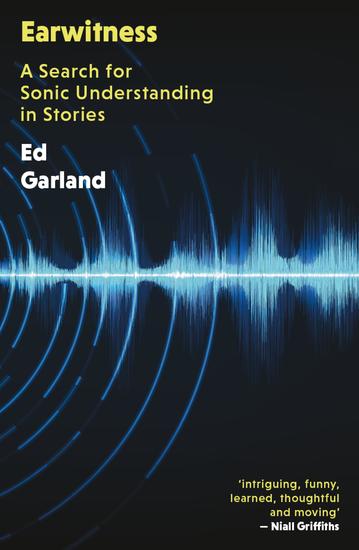
Earwitness - A Search for Sonic Understanding in Stories - cover

Earwitness - A Search for Sonic Understanding in Stories

Ed Garland

Verlag: Parthian Books

  • 0
  • 0
  • 0

Beschreibung

In his twenties, Ed Garland came close to suicide but later discovered reading to help him cope with hearing loss and tinnitus. In this unique blend of memoir and literary criticism, right at the cutting edge of research drawing on both the literary and the medical worlds, the author reveals his own journey – through music then fiction – towards an understanding of sonic loss and, ultimately, towards healing. A genre-busting mix of literary criticism, sound studies and memoir, the essays explore what fictional sonic experiences can tell us about sound in everyday life. Written with humorous honesty about the ups and downs – mostly downs – of a young man's mental health, this is a thoughtful and original exploration of recovey, and of literature's ability to challenge preconceptions.
The English-language fiction classics of Wales explored include the work of Margiad Evans, Bernice Rubens, and Deborah Kay Davies. The international titles are by Annie Proulx and Samuel Beckett. Earwitness amplifies the rich connections between literature, auditory perception and mental wellbeing.
Verfügbar seit: 01.08.2024.
Drucklänge: 72 Seiten.

Weitere Bücher, die Sie mögen werden

  • The Shocking Truth about Animal Rights - cover

    The Shocking Truth about Animal...

    Zoey Fraisers

    • 0
    • 0
    • 0
    The concept of animal rights is a deeply philosophical and ethical issue that challenges our views on how animals should be treated and regarded in society. At its core, animal rights is the belief that animals, like humans, have inherent value and deserve certain protections from harm, exploitation, and abuse. This perspective asserts that animals are sentient beings capable of experiencing pain, fear, and pleasure, and thus, they should not be subjected to unnecessary suffering or exploitation for human gain. 
    Historically, animals have been viewed largely as property or resources for human use, whether in agriculture, industry, or even entertainment. Over time, however, a growing awareness of animal sentience and the recognition of their complex emotional and cognitive abilities have led to significant shifts in how societies regard and treat animals. The modern animal rights movement can trace its origins to the mid-19th century, with the establishment of the first animal protection laws and the formation of advocacy groups dedicated to the welfare of animals. 
    The industrial revolution marked a turning point in the relationship between humans and animals, as it saw the rise of factory farming, animal testing for medical and cosmetic purposes, and the widespread use of animals in entertainment. These practices sparked widespread concern about the ethics of animal use, leading to the formation of various animal welfare organizations, including the American Society for the Prevention of Cruelty to Animals (ASPCA) in 1866. These groups campaigned for more humane treatment of animals, but it wasn’t until the 20th century that the concept of animal rights as a broader ethical movement began to take shape.
    Zum Buch
  • Alexander von Humboldt: A short biography - 5 Minutes: Short on time - long on info! - cover

    Alexander von Humboldt: A short...

    5 Minutes, 5 Minute Biographies,...

    • 0
    • 0
    • 0
    Alexander von Humboldt, explorer and universal genius: Life and works in a short biography! Everything you need to know, brief and concise. Infotainment, education and entertainment at its best!
    Zum Buch
  • Toni Morrison: A short biography - 5 Minutes: Short on time - long on info! - cover

    Toni Morrison: A short biography...

    5 Minutes, 5 Minute Biographies,...

    • 0
    • 0
    • 0
    Toni Morrison, Nobel prize laureate and exceptional writer: Life and works in a short biography! Everything you need to know, brief and concise. Infotainment, education and entertainment at its best!
    Zum Buch
  • CRITICAL THINKING - Think Smarter And Improve Your Decision Making And Problem Solving Skills - cover

    CRITICAL THINKING - Think...

    Phil Barton

    • 0
    • 0
    • 0
    Life skills are those skills that enable individuals to effectively face the demands and challenges of daily life. 
    Among these, critical thinking is one of the fundamental requisites for the emancipation and participation in the social life of every human being.  
     But what do we actually mean when we talk about critical thinking? Is it possible to think of building tools for the development and evaluation of critical thinking?  
    The volume intends to answer these questions through theoretical and operational material. This is a hands-on book focused on developing your intelligence and critical thinking skills to make decisions. This is not an abstract story about thinking and I assure you that after reading it you will not be the same person who is reading these words.  
    With the critical thinking tools and strategies that I will teach you in this book, you will learn not to be deceived by cunning techniques of argumentation, to be sane, to strive to understand and appreciate the points of view of others, to analyze the reasoning with which you do not necessarily agree and change your points of view when you are faced with a better reasoning. 
    Zum Buch
  • Outlining: Step-by-Step | Essential Chapter Outline Fiction and Nonfiction Outlining Tricks Any Writer Can Learn - cover

    Outlining: Step-by-Step |...

    Sandy Marsh

    • 0
    • 0
    • 0
    Is Your Novel Losing the Plot? 
    Sometimes we can be too close to a story to see clearly. If you find that you begin to change the plot midway, or struggle to think of one at all, this book deals specifically with keeping you on track to create compelling plot outlines your readers will love. 
    Breaks the Cage Mindset 
    Outlining is an invaluable tool for a writer. It helps the author to not feel confined by working to a plot summary and instead, demonstrates how, by following best practices, such a framework can liberate the writer to new levels of creativity. 
    Tricks Any Writer Can Learn 
    Arranged simply and effectively, this guide is divided into four concise and easy-to-read sections that will bring about fast results. These are: 
    The Basics of Making an Outline – considers the flow of ideas, how to present characters effectively against a developing storyline, and the way to refine major schemes & subplots that drive the story forward. 
    Fiction Outline – practical methods that inspire ideas in different ways, to help the sequencing of events unfold in a story & keep sight of the key points. 
    Non-Fiction Outline – four methods to arrange facts & research in a way that will not leave any gaps in the reader’s understanding. 
    Best Practices – tips to get to know your characters and story more deeply so that your reader will be fully-absorbed in the novel. Marsh describes ways of bringing in flexibility and simplicity to your outline. 
    Order Now!
    Zum Buch
  • The Urban-Rural Divide - Understanding Interactions and Impacts - cover

    The Urban-Rural Divide -...

    Lyric Vale

    • 0
    • 0
    • 0
    The urban-rural divide is a concept that encompasses the differences between urban and rural areas in terms of population, economy, infrastructure, social services, and quality of life. As the world has rapidly urbanized in the past few centuries, the divide has grown wider, shaping the way people experience and interact with the world around them. Understanding the urban-rural divide requires looking not just at geographical distinctions but also at the historical, social, and economic forces that have led to the creation of these disparities. 
    At its core, the urban-rural divide refers to the uneven distribution of resources, opportunities, and access to services. Urban areas, often characterized by their dense population, advanced infrastructure, and proximity to economic opportunities, tend to attract people from rural areas in search of better livelihoods. On the other hand, rural areas are often defined by their smaller populations, agricultural economies, and more limited access to healthcare, education, and technological advancements. Over time, this gap has widened as cities have grown into centers of global commerce, culture, and innovation, leaving rural communities to face challenges such as depopulation, economic stagnation, and a lack of essential services. 
    This divide is not just a modern phenomenon. Historically, the urban-rural relationship has been shaped by factors like industrialization, the rise of agriculture, and migration patterns. During the Industrial Revolution, for example, many people from rural areas flocked to cities in search of work, marking a key moment in the expansion of the urban-rural divide. These migration patterns have continued in the present day, with rural populations in many countries continuing to shrink as more people move to urban centers for better prospects.
    Zum Buch