

Join us on a literary world trip!
Add this book to bookshelf
Grey
Write a new comment Default profile 50px
Grey
Subscribe to read the full book or read the first pages for free!
All characters reduced
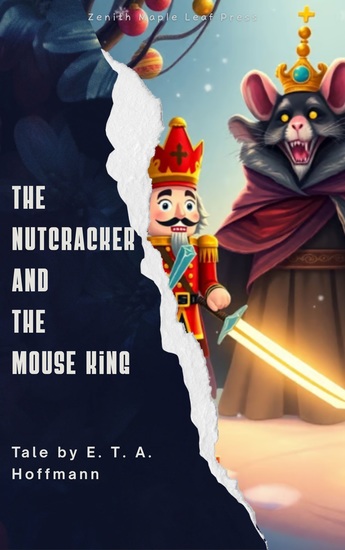
The Nutcracker and the Mouse King - E T A Hoffmann's Magical Christmas Classic - cover

The Nutcracker and the Mouse King - E T A Hoffmann's Magical Christmas Classic

E. T. A. Hoffman, Zenith Maple Leaf Press

Publisher: Zenith Maple Leaf Press

  • 0
  • 0
  • 0

Summary

The enchanting holiday tale that inspired Tchaikovsky's beloved ballet.

Step into a world of magic, wonder, and imagination with E. T. A. Hoffmann's timeless classic The Nutcracker and the Mouse King. First published in 1816, this fairy tale follows young Marie Stahlbaum, who receives a wooden nutcracker as a Christmas gift. But when the clock strikes midnight, the Nutcracker comes to life, battling the wicked Mouse King and leading Marie into a dazzling realm of fantasy and adventure.

đź’ˇ Why this story continues to captivate:

The inspiration behind Tchaikovsky's famous ballet The Nutcracker, beloved worldwide.

A magical blend of fantasy, childhood dreams, and Christmas wonder.

A heartwarming reminder of courage, loyalty, and the power of imagination.

A perfect holiday read for both children and adults.

🎄 Perfect for:

Families looking to share a classic Christmas story.

Fans of fairy tales, fantasy, and timeless holiday traditions.

Lovers of magical adventures and whimsical storytelling.

🚀 Relive the holiday magic and follow Marie into a world of wonder—Click "Buy Now" to add this Christmas classic to your library!
Available since: 08/19/2025.
Print length: 194 pages.

Other books that might interest you

  • Facing Down the Furies - Suicide the Ancient Greeks and Me - cover

    Facing Down the Furies - Suicide...

    Edith Hall

    • 0
    • 0
    • 0
    An award-winning classicist turns to Greek tragedies for the wisdom to understand the damage caused by suicide and help those who are contemplating suicide themselves 
     
    In Sophocles’ tragedy Oedipus the Tyrant, a messenger arrives to report that Jocasta, queen of Thebes, has killed herself. To prepare listeners for this terrible news, he announces, “The tragedies that hurt the most are those that sufferers have chosen for themselves.” Edith Hall, whose own life and psyche have been shaped by such loss—her mother’s grandfather, mother, and first cousin all took their own lives—traces the philosophical arguments on suicide, from Plato and Aristotle to David Hume and Albert Camus. 
     
    In this deeply personal story, Hall explores the psychological damage that suicide inflicts across generations, relating it to the ancient Greek idea of a family curse. She draws parallels between characters from Greek tragedy and her own relatives, including her great-grandfather, whose life and death bore similar motivations to Sophocles’ Ajax: both men were overwhelmed by shame and humiliation. 
     
    Hall, haunted by her own periodic suicidal urges, shows how plays by Sophocles and other Greek dramatists helped her work through the loss of her grandmother and namesake Edith and understand her relationship with her own mother. The wisdom and solace found in the ancient tragedies, she argues, can help one choose survival over painful adversity and offer comfort to those who are tragically bereaved. 
     
    Edith Hall is a professor in the Department of Classics and Ancient History at Durham University. She is the author of more than thirty books, including Aristotle’s Way: How Ancient Wisdom Can Change Your Life. She lives in Cambridgeshire, UK.
    Show book
  • To the Ghosts Who Are Still Living - cover

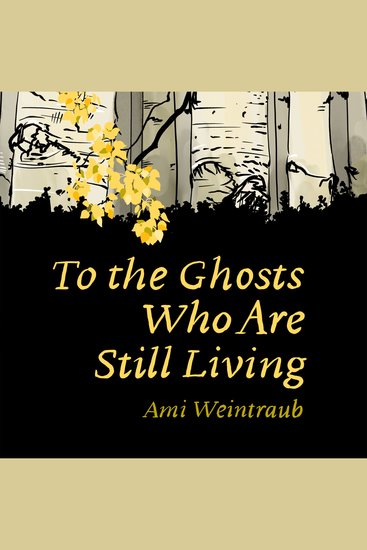
    To the Ghosts Who Are Still Living

    Ami Weintraub

    • 0
    • 0
    • 0
    The stories of our ancestors call to us all from across time, asking to be remembered. In retelling our ancestors’ experiences of love, tradition, loss, and sorrow, we not only honor their lives, but we come to better understand our own. 
    In this collection of remarkable essays, Ami Lev Weintraub guides us on a journey to meet the ghosts of his Jewish ancestors—a people whose struggles and stories sometimes whisper and sometimes scream to be shared. Ami examines challenging questions of heartbreak, memory, restitution, and self-discovery. From Eastern Europe to the Tree of Life shooting, these stories illuminate the historical and contemporary impact of facism on Jewish communities while honoring the ongoing legacy of Jewish resistance. We explore how listening to the earth can restore relationships to lands that carry pain, how the struggles of our people can coexist with their joys, and how we can build lives of deep remembering.
    Show book
  • His Greatest Speeches - How Lincoln Moved the Nation - cover

    His Greatest Speeches - How...

    Diana Schaub

    • 0
    • 0
    • 0
    An expert analysis of Abraham Lincoln's three most powerful speeches reveals his rhetorical genius and his thoughts on our national character. 


    Abraham Lincoln, our greatest president, believed that our national character was defined by three key moments: the writing of the Constitution, our declaration of independence from England, and the beginning of slavery on the North American continent. His thoughts on these landmarks can be traced through three speeches: the Lyceum Address, the Gettysburg Address, and the Second Inaugural. The latter two are well-known, enshrined forever on the walls of the Lincoln Memorial. The former is much less familiar to most, written a quarter century before his presidency, when he was a twenty-eight-year-old Illinois state legislator. 


    In His Greatest Speeches, professor Diana Schaub offers a brilliant line-by-line analysis of these timeless works, placing them in historical context and explaining the brilliance behind their rhetoric. The result is a complete vision of Lincoln's worldview that is sure to fascinate and inspire general audiences and history buffs alike. This book is a wholly original resource for considering the difficult questions of American purpose and identity, questions that are no less contentious or essential today than they were over two hundred years ago.
    Show book
  • Understanding the Hillbilly Thomist - The Philosophical Foundations of Flannery O'Connor's Narrative Art - cover

    Understanding the Hillbilly...

    Damian Ference

    • 0
    • 0
    • 0
    Flannery O’Connor is one of the greatest writers of the twentieth century. Her novels and short stories—shockingly violent, absurdly comic, spiritually potent—continue to entertain, beguile, and transform readers of all backgrounds to this day.  For many encountering them for the first time, O’Connor’s stories of backwoods prophets and outcasts feel strangely nihilistic and dark. Others familiar with her letters and essays appreciate the deep Catholic understanding of sin and grace that animates them. In this new book, Fr. Damian Ference proposes a more precise lens for decoding Flannery O’Connor’s narrative art, one that originates in O’Connor’s own words about herself: Hillbilly Thomism. The author examines the various ways in which St. Thomas Aquinas and the philosophical tradition of Thomism shaped not only O’Connor’s view of reality but also the stories she told to help us see and know it.    Featuring an impressive array of biographical and literary evidence and extended analysis of her short stories “The River,” “Parker’s Back,” and “The Displaced Person,” Understanding the Hillbilly Thomist is an important look at the intersection of medieval philosophy and modern fiction in one of the most treasured artists of the American South. 
    Show book
  • Henrietta Szold - Hadassah and the Zionist Dream - cover

    Henrietta Szold - Hadassah and...

    Francine Klagsbrun

    • 0
    • 0
    • 0
    Award-winning author Francine Klagsbrun reveals the complex life and work of Henrietta Szold, founder of Hadassah and a Zionist trailblazer 


    Henrietta Szold (1860–1945) is renowned as the founder of Hadassah, the Women's Zionist Organization of America, which quickly became one of the most successful of all Zionist groups. In her work with Hadassah, Szold used a combined ethical and pragmatic approach aimed at improving the lives of both Jews and Arabs. She later moved to Mandate Palestine to help shape education, health, and social services there. The pinnacle of her career came in her seventies, when she took on the task of directing the Youth Aliyah program, which rescued thousands of young people from the Nazis and resettled them in Palestine. 


    Using Szold's copious letters, diaries, and essays, along with other archival documents, Francine Klagsbrun traces Szold's life and legacy with an eye to uncovering the person behind the Zionist icon. She reveals Szold as a complex human being who had to cope with controversy and criticism, a workaholic with an outsized sense of duty, and an idealist who fought for her beliefs even as she questioned her own abilities. With deep insight, Klagsbrun introduces listeners to this extraordinary woman, whose impact on women's lives as well as on education and health systems still resonates.
    Show book
  • Light in Bandaged Places - Healing in the Wake of Young Betrayal - cover

    Light in Bandaged Places -...

    Liz Kinchen

    • 0
    • 0
    • 0
    Light in Bandaged Places shows us the harm done when an older man in a position of power convinces a child that sex with him is alright because he loves her. This poignant story takes us through the long-term wounding of such abuse, and the multifaceted path of healing. 
    As a lonely girl coming of age in the 1970s, Liz has every reason to believe her 8th-grade teacher is in love with her. Because the sex isn’t physically violent and is wrapped in a message of love, she learns to exchange sex for attention. But years later, as an adult, emotional closeness eludes Liz. Even after marrying a sensitive, caring man, she is walled off. Struggling through confusing years, she believes something is deeply wrong with her. 
    Healing begins when an unexpected event takes Liz back to those formative years, and she sees for the first time that what happened to her was not love but abuse. As she begins to understand how her relationship with her former teacher destroyed her innocence and self-worth, she begins a spiritual and psychological journey that sets her free. 
    Now a meditation teacher and Buddhist practitioner, Liz offers her story in hope of helping others along their own paths of discovery and healing.
    Show book
