
Join us on a literary world trip!
Add this book to bookshelf
Grey
Write a new comment Default profile 50px
Grey
Subscribe to read the full book or read the first pages for free!
All characters reduced
First Lensman - cover

First Lensman

E. Smith

Publisher: Delhi Open Book

  • 0
  • 0
  • 0

Summary

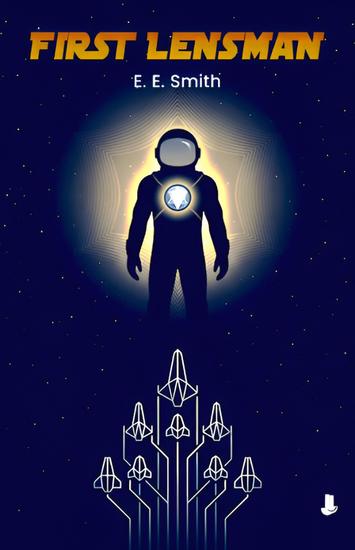
The story is set in a vast future galactic civilization where advanced technology, space travel, and interplanetary politics shape the fate of entire star systems. It follows Virgil Samms, a key figure in the founding of the Galactic Patrol and the creation of the Lensmen corps. A central element of the novel is the "Lens," a powerful psychic device given only to individuals who demonstrate exceptional moral integrity and mental strength. It allows telepathic communication and symbolizes authority, responsibility, and trust. The plot focuses on the early development of the Galactic Patrol as it confronts rising criminal organizations and hidden threats that span multiple worlds. It establishes the ideological foundation of the Lensmen: the idea that absolute power must be matched with absolute ethical discipline.
Available since: 05/28/2024.
Print length: 358 pages.

Other books that might interest you

  • The Toys of Peace and Other Papers - The Last Sketches of Saki - cover

    The Toys of Peace and Other...

    Saki Saki

    • 0
    • 0
    • 0
    Complete and unabridged, with 58 full-page plates by Spencer Gore, William Orpen and Walter Sickert. The last stories, published after the author was killed on the Somme - the nephews who turn a present of peaceful toys into a massacre, the wolves of Cernogratz, a bread-and-butter miss, and a Christmas Eve spent locked in a cow-house. Saki's cruelty is intact and the timing is perfect throughout. This edition is bound with a gallery of 58 plates, among them paintings by William Powell Frith, Walter Sickert and Godfrey Douglas Giles.
    Show book
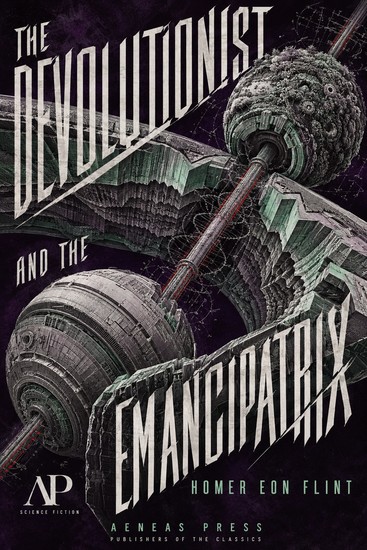
  • The Devolutionist and the Emancipatrix - Two Interplanetary Romances - cover

    The Devolutionist and the...

    Homer Eon Flint

    • 0
    • 0
    • 0
    Complete and unabridged, with 58 full-page plates by Johan Christian Dahl, John Martin and Edvard Munch. A scientist's mind is projected into a body on a distant world where the ruling class has bred the workers into something less than human, and then into a second world where the women rule and the men are kept. Flint left school at fourteen and sold these to All-Story in the 1910s, before Gernsback had named the genre; he died at thirty-six under strange circumstances, at the bottom of a canyon in a stolen car. Fifty-eight plates, from Munch to Johan Christian Dahl, gather moonlit harbours, castles and valleys into a single nocturnal world of the kind these two romances keep circling.
    Show book
  • Viking tales - cover

    Viking tales

    Jennie Hall

    • 0
    • 0
    • 0
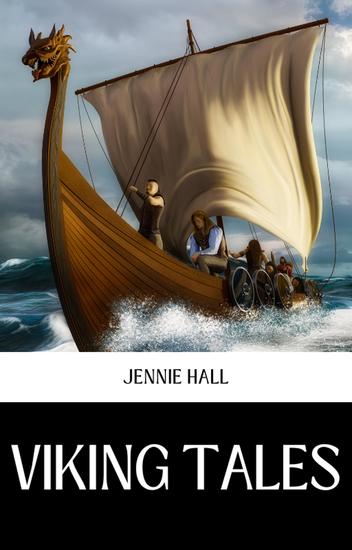
    When they reached the top of the hill they looked back. Far below was a soft, green valley. In front of it the sea came up into the land and made a fiord. On each side of the fiord high walls of rock stood up and made the water black with shadow. All around the valley were high hills with dark pines on them. Far off were the mountains. In the valley were Halfdans houses around their square yard...FROM THE BOOK.
    Show book
  • The End Of The Tether - cover

    The End Of The Tether

    Joseph Conrad

    • 0
    • 0
    • 0
    Henry Whalley is an aging but once-famous merchant captain in Southeast Asia. He made a name for himself in the age of sail, when he commanded clipper ships and even made some minor geographical discoveries. When a banking crash wipes out his life savings, he retires with enough funds to sail on his own small ship. He is, however, forced to sell this ship when his daughter writes asking for financial aid. To provide for himself and his daughter, he enlists as captain of a dubious steamer under a three-year contract. Meanwhile, the owner of the steamer is a compulsive gambler looking for ways to take over the captain's assets. Whalley is now near the end of his contract, with one final run to complete. Joseph Conrad included The End of the Tether as part of Youth, a Narrative and Two Other Stories , a collection published in 1902. While less famous than Heart of Darkness (also part of that collection, though first published three years earlier as a serial), The End of the Tether is notable for its central themes of money, industrial development, and retirement. Joseph Conrad (died 1924) was a major literary figure of the early 20th century. Their work has endured across generations and continues to be read and studied worldwide. As a work of classic literary fiction, The End Of The Tether exemplifies the narrative craft and social insight that defined great storytelling of its era. Literary fiction of this period was characterized by careful attention to character psychology, social milieu, and the moral questions that animated public discourse.
    Show book
  • Ten Indians - cover

    Ten Indians

    Ernest Hemingway

    • 0
    • 0
    • 0
    This audiobook is narrated by an AI Voice. 
    Driving home from town on the Fourth of July, a boy and the farm family he has ridden with count nine drunken Indians lying by the roadside in the dust. The family teases him about a tenth: the Indian girl he has been seeing all summer. 
     
    At home his father has supper waiting for him and a piece of news about that girl, passed along lightly, the way a man tells his son something he thinks will not matter much. The boy eats, goes to bed, and lies in the dark listening to the wind. 
     
    First published in Men Without Women in 1927, Ten Indians is one of the Nick Adams stories and one of Ernest Hemingway’s most perfectly judged pieces of short fiction: a few pages about northern Michigan, a family supper and a boy’s first heartbreak, in which everything that hurts is left unsaid. 
     
    Listen to the complete, unabridged audiobook of this classic American short story.
    Show book
  • The Murder On The Links - cover

    The Murder On The Links

    Agatha Christie

    • 0
    • 0
    • 0
    The Murder on the Links is Agatha Christie's second Poirot novel, featuring the brilliant Belgian detective and his sidekick, Captain Hastings. In this characteristic whodunit, Poirot is summoned to a seaside town in northern France by a desperate letter from a rich businessman, who fears that he is being stalked. Poirot arrives to find the businessman already dead, his body lying facedown in an open grave on a golf course, a knife in his back—the victim of a mysterious murder. Over the coming days Poirot clashes wits with an arrogant Parisian detective, Giraud, while Hastings finds himself pining after a beautiful but shadowy American expatriate known to him only as "Cinderella." Together, Poirot and Hastings unravel the intricate web of mystery and deceit behind the murder. Christie based this mystery after a real-life French murder case, and it's believed that this is the first detective novel to use the phrase "the scene of the crime." Agatha Christie (died 1976) was a significant literary figure of the 20th century. Their work has endured across generations and continues to be read and studied worldwide. As a work of classic literary fiction, The Murder On The Links exemplifies the narrative craft and social insight that defined great storytelling of its era. Literary fiction of this period was characterized by careful attention to character psychology, social milieu, and the moral questions that animated public discourse.
    Show book