Join us on a literary world trip!
Add this book to bookshelf
Grey
Write a new comment Default profile 50px
Grey
Subscribe to read the full book or read the first pages for free!
All characters reduced
Howards End - cover

Howards End

E. M. Forster

Publisher: DigiCat

  • 0
  • 0
  • 0

Summary

Howards End, a novel published in 1910 by E. M. Forster, intricately weaves the lives of the Wilcox, Schlegel, and Basts families against the backdrop of early 20th-century England. Through lush prose and vivid characterization, Forster explores themes of class division, social responsibility, and the interconnectedness of human lives. The narrative is notable for its keen social commentary, which deconstructs the era's capitalist ethos while emphasizing the moral imperatives of empathy and understanding. The emblematic phrase, "Only connect," encapsulates Forster's artistic vision, urging readers to bridge the gaps between divergent social classes and personal identities. E. M. Forster was an astute observer of human relationships and societal structures, shaped by his experiences in an increasingly industrialized Britain. His personal encounters with both the aristocracy and the burgeoning middle class informed his critique of societal norms. The author's own struggles with homosexuality and a desire for authentic connection further illuminate the novel's themes, revealing a profound yearning for unity amidst social fragmentation. Forster's Howards End is essential reading for those interested in early 20th-century literature and its exploration of social issues that remain relevant today. With its rich thematic depth and complex characterizations, this novel invites readers to reflect on the nature of human connections and the responsibilities we hold towards one another. A remarkable blend of narrative and philosophy, it is a timeless exploration that deserves a place on every thoughtful reader's shelf.
Available since: 09/16/2022.
Print length: 311 pages.

Other books that might interest you

  • Herland - Classic Tales Edition - cover

    Herland - Classic Tales Edition

    Charlotte Perkins Gilman

    • 0
    • 0
    • 0
    Legends tell of a hidden, exotic civilization entirely populated with women. Three overly confident, and overly masculine, explorers plan to discover and overtake the land. What could go wrong?  Charlotte Perkins Gilman also wrote the short story "The Yellow Wallpaper". She was raised by her three aunts, one of whom was Harriet Beecher Stowe.
    Show book
  • The Legend of Sleepy Hollow - cover

    The Legend of Sleepy Hollow

    Washington Irving

    • 0
    • 0
    • 0
    Washington Irvine’s tale of an awkward and lanky schoolmaster who comes to Sleepy Hollow is brought to life with sound effects and original thematic music. 
    Written in 1819, the short story is set in about 1790 and describes the events that unfold when Ichabod Crane comes to Sleepy Hollow to teach school in the small Dutch settlement. Ichabod is a firm believer of the tales of ghosts and witchcraft he has heard and read, including the local legend of the Headless Horseman who haunts the area. 
    As Ichabod begins to court Katrina Van Tassel, the daughter of a wealthy farmer, he incurs the rath of Brom Bones, a jealous rival for Katrina’s affections who often plays cruel tricks on the awkward schoolmaster. 
    Late one night as Ichabod rides home after a party at Katrina’s home, he comes face to face with the headless horseman and is never seen again.
    Show book
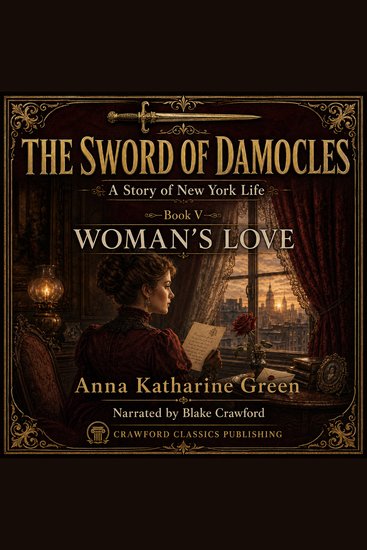
  • Sword of Damocles The: A Story of New York Life — Book V: Woman’s Love - A final test of devotion sacrifice and the saving power of love - cover

    Sword of Damocles The: A Story...

    Anna Katharine Green

    • 0
    • 0
    • 0
    The concluding volume brings Anna Katharine Green’s dramatic tale to its emotional resolution. As the consequences of past actions come fully into view, love, courage, and moral conviction are tested against secrecy and suffering. Book V reveals whether mercy can overcome judgment, and whether the sword that has hung over the story from the beginning will finally fall—or be stayed by the force of a woman’s love.
    Show book
  • The Mystery of the Semi-Detached - cover

    The Mystery of the Semi-Detached

    E. Nesbit

    • 0
    • 0
    • 0
    The Mystery of the Semi-Detached was first published in 1893 in E. Nesbit's "Grim Tales", a collection of romantic horror stories.     A young man is perplexed when his lover fails to show up for a half-clandestine meeting and passes her house on the way home. Upon arrival, he finds the front door ajar and the suburban semi-detached in eerie darkness. Nothing could have prepared him for the sight that awaited him in his sweetheart's bedroom.
    Show book
  • George Orwell 1984+ - cover

    George Orwell 1984+

    George Orwell

    • 0
    • 0
    • 0
    It was George Orwell's early writing that helped shape his worldview and writing style. Here we focus on his works "The Spike" and "A Hanging," and his time as a police officer in Burma. Orwell's first published work was an essay titled "The Spike," which appeared in 1931. The essay is a vivid and harrowing account of his time spent in a homeless shelter in London. Orwell, who was struggling financially at the time, chose to experience a homeless shelter firsthand, and his account is an indictment of the dehumanizing conditions he encountered. In "The Spike," Orwell describes the brutal reality of life in the shelter, where men were treated like animals and forced to endure hunger, cold, and violence. "Shooting An Elephant" is too tragically eye-opening.This would later inform his political views and writing, particularly his belief in the importance of social justice and his struggle against oppression. In his essay "How the Poor Die," Orwell describes his observations of the poor and their struggle with illness and death. He portrays a society where the poor are neglected and left to suffer in silence and without dignity. This essay is another example of Orwell's commitment to social justice and his belief in the importance of empathy and compassion. In 1931, Orwell joined the Indian Imperial Police in Burma, where he served for five years. There he witnessed the brutal realities of colonialism and oppression. In his essay A Hanging," (1931), Orwell recounts the experience of attending the execution of a prisoner. Orwell describes the prisoner's final moments with empathy and his account of the execution is a moving critique of the dehumanizing effects of state-sanctioned violence.Orwell's experiences with poverty oppression and violence informed his later political and social beliefsAs read by Emmy-nominated actor Geoffrey Giuliano. With a full biography of Orwell and selected quotations.
    Show book
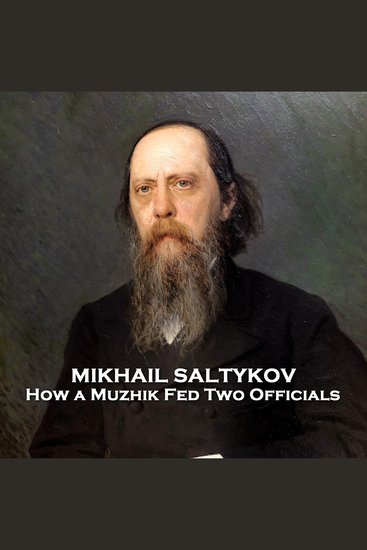
  • How a Muzhik Fed Two Officials - From their pens to your ears genius in every story - cover

    How a Muzhik Fed Two Officials -...

    Mikhail Saltykov

    • 0
    • 0
    • 0
    The bookshelves of European literature are incredible collections that have gathered together centuries of very talented authors.  From this continent their fame spread and whilst among their number many are now forgotten or neglected their talents endure.  Among them is Mikhail Saltykov.
    Show book