Join us on a literary world trip!
Add this book to bookshelf
Grey
Write a new comment Default profile 50px
Grey
Subscribe to read the full book or read the first pages for free!
All characters reduced
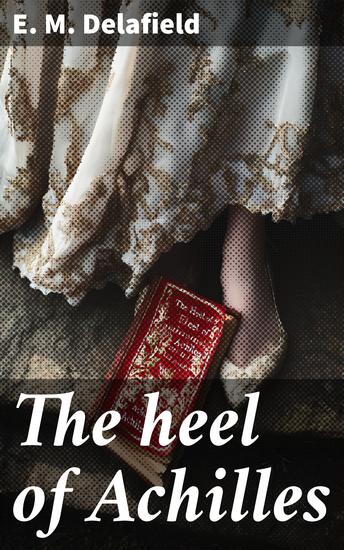
The heel of Achilles - cover

The heel of Achilles

E. M. Delafield

Publisher: Good Press

  • 0
  • 0
  • 0

Summary

In "The Heel of Achilles," E. M. Delafield presents a sharp critique of societal norms through the lens of her protagonist, Lady Frances, who navigates the restrictive contours of early 20th-century British society. Delafield employs a blend of wit and keen observational humor, reminiscent of her contemporaries in the modernist movement, to explore themes of identity, gender, and the often suffocating expectations placed upon women. The narrative is steeped in a rich literary context marked by the tensions of post-war society, where traditional roles clash with burgeoning modern ideas, making the book both a reflection and a rebellion against societal standards of the time. E. M. Delafield, known for her acute social commentary, drew upon her own experiences as a woman in a patriarchal society to craft this engaging work. Raised in a family of notable intellects and plagued by the limitations imposed on her gender, the author's insights on the complexities of female existence resonate throughout the text. Her own struggles with identity and societal adherence strongly influenced Lady Frances's journey, infusing the novel with authenticity. For readers interested in the intersections of feminism, society, and literature, "The Heel of Achilles" is an essential read. Delafield's ability to merge humor with poignant observations allows for a multifaceted exploration of its themes, making this work both an enjoyable and thought-provoking experience that invites reflection on the enduring challenges of women in society.
Available since: 03/02/2025.
Print length: 150 pages.

Other books that might interest you

  • White Fang - cover

    White Fang

    Jack London

    • 0
    • 0
    • 0
    It was the she-wolf who had first caught the sound of men's voices and the whining of the sled-dogs; and it was the she-wolf who was first to spring away from the cornered man in his circle of dying flame. The pack had been loath to forego the kill it had hunted down, and it lingered for several minutes, making sure of the sounds, and then it, too, sprang away on the trail made by the she-wolf. Running at the forefront of the pack was a large grey wolf—one of its several leaders.    It was he who directed the pack's course on the heels of the she-wolf. It was he who snarled warningly at the younger members of the pack or slashed at them with his fangs when they ambitiously tried to pass him. And it was he who increased the pace when he sighted the she-wolf, now trotting slowly across the snow. She dropped in alongside by him, as though it were her appointed position, and took the pace of the pack. He did not snarl at her, nor show his teeth, when any leap of hers chanced to put her in advance of him.    On the contrary, he seemed kindly disposed toward her—too kindly to suit her, for he was prone to run near to her, and when he ran too near it was she who snarled and showed her teeth. Nor was she above slashing his shoulder sharply on occasion. At such times he betrayed no anger. He merely sprang to the side and ran stiffly ahead for several awkward leaps, in carriage and conduct resembling an abashed country swain. This was his one trouble in the running of the pack; but she had other troubles.    On her other side ran a gaunt old wolf, grizzled and marked with the scars of many battles. He ran always on her right side. The fact that he had but one eye, and that the left eye, might account for this. He, also, was addicted to crowding her, to veering toward her till his scarred muzzle touched her body, or shoulder, or neck. As with the running mate on the left, she repelled these attentions with her teeth; but when both bestowed their attentions at the same time she was roughly jostled, being compelled, with quick snaps to either side, to drive both lovers away and at the same time to maintain her forward leap with the pack and see the way of her feet before her.    At such times her running mates flashed their teeth and growled threateningly across at each other. They might have fought, but even wooing and its rivalry waited upon the more pressing hunger-need of the pack. After each repulse, when the old wolf sheered abruptly away from the sharp-toothed object of his desire, he shouldered against a young three-year-old that ran on his blind right side. This young wolf had attained his full size; and, considering the weak and famished condition of the pack, he possessed more than the average vigour and spirit. Nevertheless, he ran with his head even with the shoulder of his one-eyed elder. When he ventured to run abreast of the older wolf (which was seldom), a snarl and a snap sent him back even with the shoulder again.    Sometimes, however, he dropped cautiously and slowly behind and edged in between the old leader and the she-wolf. This was doubly resented, even triply resented. When she snarled her displeasure, the old leader would whirl on the three-year-old. Sometimes she whirled with him. And sometimes the young leader on the left whirled, too. At such times, confronted by three sets of savage teeth, the young wolf stopped precipitately, throwing himself back on his haunches, with fore-legs stiff, mouth menacing, and mane bristling. This confusion in the front of the moving pack always caused confusion in the rear. The wolves behind collided with the young wolf and expressed their displeasure by administering sharp nips on his hind-legs and flanks. He was laying up trouble for himself, for lack of food and short tempers went together; but with the boundless faith of youth he persisted in repeating the manoeuvre every little while, though it never succeeded in gaining anything for him but discomfiture.
    Show book

  • A Nocturne - From their pens to your ears genius in every story - cover

    A Nocturne - From their pens to...

    Clotilde Graves

    • 0
    • 0
    • 0
    Clotilde Augusta Inez Mary Graves was born on the 3rd June 1863 at Buttevant Castle, Co. Cork, to parents with military backgrounds. 
    At age nine, the family moved to Southsea in England for yet another military posting.  Her father’s postings gave her valuable experiences that would be put to good use in later years in some of her literary works. 
    She was educated at a Catholic convent in Lourdes before returning to London in 1884 to study art in Bloomsbury.  She worked part-time at the British Museum and the Royal Female School of Art and generated further income by drawing little pen-and-ink grotesques for the comic papers.  
    A few years later a chance meeting found her writing extra lyrics for a pantomime version of Puss in Boots.  She followed up with several financially successful plays, both in London and New York, and gained a measure of notoriety in one with the comparison of marriage and prostitution.   
    Despite her dramatic success she published her first novel in 1911 under the pseudonym of Richard Dehan which she continued to use for later works.  As well as novels and plays she published collections of short stories which glow with talent and invention. 
    She was an unusual figure in London society, wearing her hair short, taking on a masculine manner and cut of clothing, and smoking cigarettes in public when such traits were considered eccentric at best.  Add to this her admired collection of Chinese and Japanese trophies, her enthusiasm for fly-fishing and her riding of a tricycle and you have a perfect image of this fascinating writer. 
    Clotilde Graves died at the convent of Our Lady of Lourdes at Hatch End in Middlesex, on the 3rd December 1932.  She was 69.
    Show book
  • Selected Short Stories - by F Scott Fitzgerald - cover

    Selected Short Stories - by F...

    F. Scott Fitzgerald

    • 0
    • 0
    • 0
    Selected Short Stories is a collection of some of F. Scott Fitzgerald's most memorable and thought-provoking works. Published in 1931, the collection includes several of his best-known stories, such as "The Diamond as Big as the Ritz," "Bernice Bobs Her Hair," and "The Curious Case of Benjamin Button." These stories explore themes of social class, love, loss, and the search for meaning in a rapidly changing world. Fitzgerald's writing style is characterized by its elegance, wit, and poetic language, making his stories both engaging and thought-provoking. 
     
    One of the recurring themes in Fitzgerald's stories is the tension between the individual and society. In many of his stories, the characters are struggling to find their place in a society that values wealth, status, and conformity. This is particularly evident in "Bernice Bobs Her Hair," in which the protagonist, Bernice, must decide whether to conform to the expectations of her wealthy cousin or to follow her own desires. Similarly, in "The Curious Case of Benjamin Button," the protagonist must come to terms with his unusual condition, which sets him apart from the rest of society. 
     
    Another important theme in Fitzgerald's stories is the fleeting nature of happiness and the inevitability of change. Many of his characters are searching for love, success, or fulfillment, but find that these things are elusive and ultimately fleeting. This is particularly evident in "The Diamond as Big as the Ritz," in which the protagonist discovers a hidden mountain of diamonds, only to realize that his wealth is meaningless in the face of the vastness of the universe. Fitzgerald's stories remind us that life is both beautiful and fragile and that the pursuit of happiness can be both exhilarating and heartbreaking. 
    Overall, Selected Short Stories is a testament to Fitzgerald's talent as a writer and his ability to capture the spirit of his time.
    Show book
  • Treasure Island | A Sleepy Story - A soothing reading for sleep and relaxation - cover

    Treasure Island | A Sleepy Story...

    Robert Stevenson

    • 0
    • 0
    • 0
    Step into the thrilling world of "Treasure Island," the classic adventure by Robert Louis Stevenson, narrated by the soothing voice of Elizabeth Grace and produced by Slumber Studios. 
    If restless nights or a wandering mind are keeping you awake, this audiobook is designed to gently lull you into a peaceful and restorative sleep. 
    Close your eyes, relax, and let Elizabeth Grace’s calming narration transport you to the high seas, where young Jim Hawkins embarks on a daring quest for buried treasure. Join him on a journey filled with swashbuckling pirates, mysterious maps, and the legendary Long John Silver—all while easing into a state of deep relaxation. 
    At Slumber Studios, we create tranquil content designed to help you unwind and drift off effortlessly. Our audiobooks features slow, gentle narration paired with soft background music, offering the perfect escape into dreamland. 
    If you’re looking for a soothing way to end your day, this is the perfect choice. Simply press play, get comfortable, and let Elizabeth’s serene voice carry you away on the adventure of "Treasure Island." Wake up feeling refreshed, with a sense of calm and wonder for the day ahead.
    Show book
  • The Sorrows of Young Werther - cover

    The Sorrows of Young Werther

    Johann Wolfgang von Goethe

    • 0
    • 0
    • 0
    Enter the tormented heart of a young man overwhelmed by passion, beauty, and the crushing pain of unreturned love. In The Sorrows of Young Werther, Goethe presents the personal letters of Werther, a tender, idealistic artist who falls deeply for Charlotte—an alluring woman already engaged to someone else. 
    As Werther’s admiration turns into fixation, his thoughts on love, nature, art, and suffering become more intense and consuming. Framed by the scenic beauty of the German countryside, his emotional journey unfolds into a moving exploration of yearning, heartbreak, and the blurry boundary between romantic idealism and emotional collapse. 
    A defining work of the Sturm und Drang era and a seminal piece of Romantic literature, The Sorrows of Young Werther is far more than a love story—it’s a raw, lyrical outpouring from a soul in turmoil. It moved a generation and shocked Europe with its emotional candor and heartbreaking conclusion. 
    Whether you see it as a tragic love story or a reflection of your own quiet desires, Werther’s voice will linger long after you’ve turned the last page.
    Show book
  • Helping Others (Unabridged) - cover

    Helping Others (Unabridged)

    Booker T. Washington

    • 0
    • 0
    • 0
    Booker Taliaferro Washington (April 5, 1856 - November 14, 1915) was an American educator, author, orator, and adviser to several presidents of the United States. Between 1890 and 1915, Washington was the dominant leader in the African American community and of the contemporary black elite. Washington was from the last generation of black American leaders born into slavery and became the leading voice of the former slaves and their descendants. They were newly oppressed in the South by disenfranchisement and the Jim Crow discriminatory laws enacted in the post-Reconstruction Southern states in the late 19th and early 20th centuries.
    HELPING OTHERS: There are a few essential things in an institution of this kind that I think it is well for you to keep ever before you. This institution does not exist for your education alone; it does not exist for your comfort and happiness altogether, although those things are important, and we keep them in mind; it exists that we may give you intelligence, skill of hand, and strength of mind and heart; and we help you in these ways that you, in turn, may help others.
    Show book