Join us on a literary world trip!
Add this book to bookshelf
Grey
Write a new comment Default profile 50px
Grey
Subscribe to read the full book or read the first pages for free!
All characters reduced
Michael - cover

Michael

E. F. Benson

Publisher: DigiCat

  • 0
  • 0
  • 0

Summary

E. F. Benson's "Michael" is a captivating exploration of the complexities of love and personal identity framed within an early 20th-century English context. The narrative intertwines elements of romance and introspection, painted with Benson's trademark lyrical prose and keen psychological insight. Set against the picturesque backdrop of the English countryside, the novel delves into the lives of its characters, revealing their passions and vulnerabilities, while also reflecting on the societal norms of the time. Utilizing a rich tapestry of imagery and dialogue, Benson crafts a world that is both immersive and thought-provoking, inviting readers to ponder the nature of human connections. E. F. Benson, an accomplished author known for his keen observations of social manners and relationships, draws from his own experiences and the cultural milieu of his era to inform his writing. Growing up in a prominent family and being part of a vibrant literary circle, Benson was ideally positioned to critique and comment on the mores of his time. His diverse experiences, including his work in both journalism and literature, instilled in him a nuanced understanding of character and society, which shines through in "Michael". This novel is highly recommended for readers intrigued by early modernist literature and the exploration of themes such as love, acceptance, and personal growth. Benson's complex characters and poignant narrative make "Michael" an essential read that resonates with contemporary issues of identity and belonging, providing a rich, thoughtful engagement with the human experience.
Available since: 09/16/2022.
Print length: 252 pages.
Other books that might interest you

  • The Conscience Of A Conservative - cover

    The Conscience Of A Conservative

    Barry Goldwater

    • 0
    • 0
    • 0
    We rely on your support to help us keep producing beautiful, free, and unrestricted editions of literature for the digital age. Will you support our efforts with a donation ? U.S. Senator and future Republican presidential nominee Barry Goldwater's 1960 book The Conscience of a Conservative is a foundational work in the American conservative movement from the late 20th century and onward into the modern day. It lays out the conservative position on a number of topics including taxation, labor, welfare, education, and the general roles of state and federal government, and would prove highly influential to future conservative politicians in establishing their own platforms. Goldwater offers his case for a strict Constitutionalist government in which the role of the federal government is restricted to those things called out explicitly in the constitution, with all other matters being the responsibility of the states to manage independently. In the final chapter of the book, Goldwater describes his view of the stakes of the Cold War, and the importance of containing the spread of Communism broadly and the Soviet Union in particular. Barry Goldwater (died 1998) was a significant literary figure of the 20th century. Their work has endured across generations and continues to be read and studied worldwide. The nonfiction literature of previous centuries offers invaluable windows into the minds and preoccupations of earlier ages. The Conscience Of A Conservative combines the personal and the universal in ways that continue to resonate with contemporary readers seeking to understand both history and human nature.
    Show book
  • The Forsyte Saga - cover

    The Forsyte Saga

    John Galsworthy

    • 0
    • 0
    • 0
    Between 1906 and 1921 John Galsworthy published three novels chronicling the Forsyte family, a fictional upper-middle class family at the end of the Victorian era: The Man of Property , In Chancery , and To Let . In 1922 Galsworthy wrote two interconnecting short stories to bind the three novels together and published the whole as The Forsyte Saga . While the novels follow the Forsyte family at large, the action centers around Soames Forsyte—the scion of a nouveau-riche London tea merchant—his wife Irene, and their unhappy marriage. Soames and his sprawling family are portrayed as stereotypes of unhappy gilded-age wealth, their family having entered the industrial revolution poor farmers and emerged as wealthy bourgeoise. Their rise was powered by their capacity to acquire, won at the expense of their capacity for almost anything else. Thematically, the saga focuses on the mores of the wealthy upper-middle class, which was still a newish feature in the class landscape of England at the time; duty, honor, and love; and the rapidly growing differences across generations occurring in a period of war and social change. The characters are complex and nuanced, and the situations they find themselves in—both of their own making, and of the making of society around them—provide a rich field for analyzing the close of the Victorian age, the dawn of the Edwardian age, and the societal frameworks that were forged in that frisson. Galsworthy went on to win the Nobel Prize in Literature in 1932 for The Forsyte Saga , one of the rare occasions in which the Swedish Academy has awarded a prize for a specific work instead of for a lifetime of work.
    Show book
  • Laugh and Live - cover

    Laugh and Live

    Douglas Fairbanks

    • 0
    • 0
    • 0
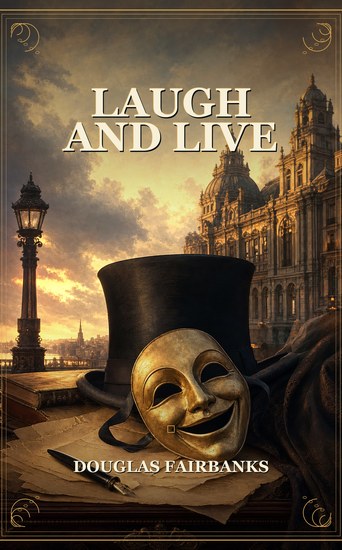
    Laugh and Live by Douglas Fairbanks is offered here in a clean English digital edition prepared for fluent ebook reading. The work stands within classics and gives modern readers direct access to a public-domain classic with navigable structure and a restrained typographic presentation. The opening pages establish the book's atmosphere with this first movement: There is one thing in this good old world that is positively sure—happiness is for all who strive to be happy—and those who laugh are happy. Everybody is eligible—you—me—the other fellow. Happiness is fundamentally a state of mind—not a state of body. And mind controls. Indeed it is possible to stan This edition is suited to readers who want a reliable, uncluttered version of the text for study, rediscovery, and sustained reading.
    Show book
  • The Old Bell-Ringer - From their pens to your ears genius in every story - cover

    The Old Bell-Ringer - From their...

    Vladimir Korolenko

    • 0
    • 0
    • 0
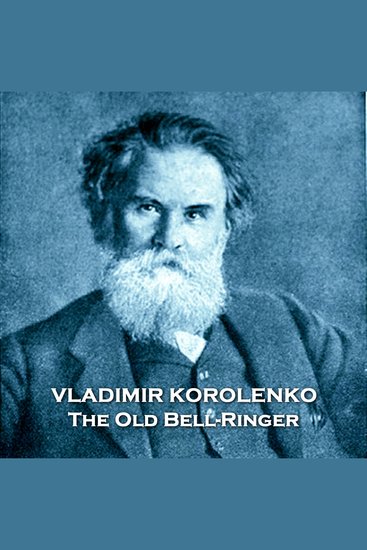
    Vladimir Galaktionovich Korolenko was born in Zhytomyr, Ukraine, then part of the Russian Empire on 27th July 1853. 
    His father died when he was 13 and life was then often struck with bouts of poverty, which resulted in his education being somewhat erratic.   A spell in exile at 23 was followed by another as the politics of the times opposed his volatile but heart-felt passions. 
    Writing was also coming to the fore and in 1879 his debut short story telling of a young Narodnik searching for social and spiritual identity, was published. 
    In 1881, Korolenko refused to swear allegiance to the new Russian Tsar and was again exiled, this time much farther afield.  He spent the next three years doing manual work, but took time to study local customs and history.  These impressions in exile provided rich material for his writings. 
    In 1885 he was allowed to settle in Nizhny, where again he repeatedly questioned the authorities.  That same year ‘Makar's Dream’ established his literary reputation and was part of his first collection ‘Sketches and Stories’, the following year. 
    In the early 1890’s when famine struck Central Russia, he went to work on relief missions, collecting donations, supervising the delivery and distribution of food, opening 45 free canteens, all this while writing the graphic reports that would later be published as ‘In the Year of Famine’ in 1893. 
    By 1896 despite some psychological disorders, he was well regarded amongst Russian writers and was even a member of the Russian Academy of Sciences.  Throughout his writing career Korolenko was a staunch advocate of human rights, putting that sacred activity above what he called his 'part-time-writing'. 
    In the Revolutionary year of 1905, under his editorship, Russkoye Bogatstvo published the Manifest by the Petersburg Soviet of the Workers' deputies. Korolenko was now repeatedly harassed by the authorities, had his flat raided many times and materials confiscated. 
    As a lifetime opponent of Tsarism, he guardedly welcomed the Revolution of 1917.  Once the nature of Bolshevism was established, he soon started to criticize it. During the Russian Civil War that ensued, he condemned both the Red Terror and the White Terror.  
    Despite suffering from a progressive heart disorder, he collected food packages for children in famine-stricken Moscow and Petrograd as well as organised orphanages and shelters for the homeless.  
    Vladimir Korolenko died in Poltava, Ukraine, of the complications of pneumonia on 25th December 1921.  He was 68.
    Show book
  • The Great Sermon Handicap - cover

    The Great Sermon Handicap

    P. G. Wodehouse

    • 0
    • 0
    • 0
    In the quiet villages of England, sport takes many forms. But none is as treacherous as a Sunday morning in church.
    The Great Sermon Handicap begins with an innocent enough idea and quickly drifts into that uniquely Wodehouseian territory where friendly competition becomes absurdly serious. Bertie Wooster soon discovers that even the calm rituals of village life can inspire rivalry, speculation, and chaos on a near-professional scale.
    Elegant, mischievous, and beautifully timed, this story showcases Wodehouse at his most playful — transforming ordinary social rituals into a masterpiece of comic escalation, where every polite conversation hides the possibility of complete catastrophe. 
    A brilliantly irreverent comedy of errors that proves that in Wodehouse's world, even a religious service is a perfectly valid reason for a spectacular disaster.
    Show book
  • The Valley of Fear - cover

    The Valley of Fear

    Arthur Conan Doyle

    • 0
    • 0
    • 0
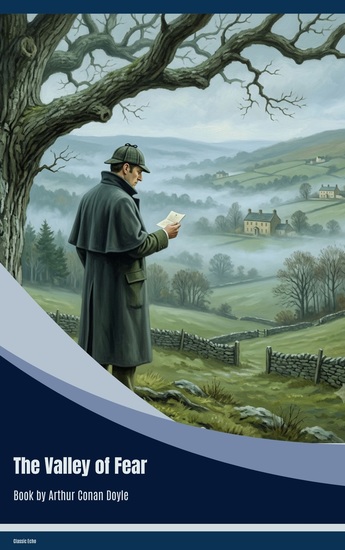
    A cryptic message. A shocking crime. A mystery that reaches far beyond the scene of the investigation.
    
    When an encrypted warning arrives at 221B Baker Street, Sherlock Holmes and Dr. John Watson are thrust into a complex investigation that challenges even Holmes's extraordinary powers of deduction. As hidden connections emerge and long-buried secrets begin to surface, every clue brings them closer to a truth that is far more intricate than it first appears.
    
    In The Valley of Fear, Sir Arthur Conan Doyle masterfully combines suspense, mystery, and psychological intrigue to create one of the most compelling adventures in the Sherlock Holmes canon. With its ingenious plotting, memorable characters, and steadily building tension, the novel keeps readers engaged as Holmes unravels a puzzle where nothing is quite as it seems.
    
    Rich in atmosphere and expertly paced, this classic detective novel showcases the qualities that have made Sherlock Holmes one of literature's most enduring icons. Doyle's skillful storytelling and sharp attention to detail continue to captivate readers, making The Valley of Fear an essential read for fans of mystery, crime fiction, and classic literature.
    
    For more than a century, Sherlock Holmes has inspired readers around the world with his unmatched intellect and unforgettable investigations. The Valley of Fear remains one of Sir Arthur Conan Doyle's finest novels, admired for its intricate mystery, compelling narrative, and lasting influence on detective fiction.
    
    Join Sherlock Holmes on another extraordinary investigation. Download The Valley of Fear today and experience a timeless mystery that continues to intrigue readers across generations.
    Show book