Join us on a literary world trip!
Add this book to bookshelf
Grey
Write a new comment Default profile 50px
Grey
Subscribe to read the full book or read the first pages for free!
All characters reduced
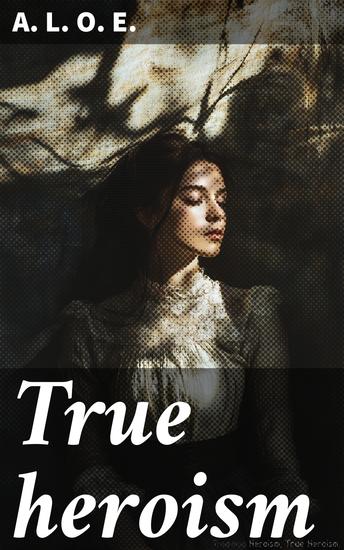
True heroism - cover

True heroism

E. A. L. O.

Publisher: Good Press

  • 0
  • 0
  • 0

Summary

In "True Heroism," A. L. O. E. explores the multifaceted nature of heroism through a series of vignettes that blend realism with moral allegory. Written in the Victorian era, the book employs an accessible yet poignant literary style that illuminates the ideals of bravery, sacrifice, and integrity. A. L. O. E. skillfully intertwines narrative and didactic elements, encouraging readers to reflect on the virtues of moral courage that transcend mere acts of physical valor. Through well-crafted characters and vivid settings, the author contextualizes heroism within the social mores of her time, presenting a critique of conventional notions while advocating for a deeper understanding of what it means to be truly heroic. A. L. O. E., or the renowned author Charlotte Maria Tucker, was a prolific writer driven by her commitment to social reform and moral instruction. This book reflects her engagement with contemporary debates regarding women's roles in society, education, and the moral fabric of the Victorian age. A passionate advocate for the power of literature to shape ethical awareness, A. L. O. E.'s works resonate with her belief that storytelling can cultivate a spirit of compassion and resilience against societal challenges. "True Heroism" is a compelling and thought-provoking read that invites readers to reconsider their perceptions of bravery. A. L. O. E.'s exploration of inner strength and moral fortitude provides a timeless commentary that remains relevant today. This book is highly recommended for individuals keen on understanding the deeper, often overlooked, virtues of heroism that inspire genuine acts of kindness and courage.
Available since: 03/02/2025.
Print length: 140 pages.
Other books that might interest you

  • A Thousand Deaths - From their pens to your ears genius in every story - cover

    A Thousand Deaths - From their...

    Jack London

    • 0
    • 0
    • 0
    John Griffith Chaney was born on January 12th, 1876 in San Francisco.   
    His father, William Chaney, was living with Flora Wellman when she became pregnant.  Chaney insisted she have an abortion.  Flora's response was to turn a gun on herself.  Although her wounds were not severe the trauma made her temporarily deranged. 
    In late 1876 his mother married John London and the young child was brought to live with them as they moved around the Bay area, eventually settling in Oakland where now, calling himself Jack, he completed grade school. 
    Jack worked hard at several jobs, sometimes 12-18 hours a day, but his dream was university.  He studied hard and borrowed the money to enrol in the summer of 1896 at the University of California in Berkeley. 
    In 1897, at 21, Jack searched out newspaper accounts of his mother's suicide attempt and for the name of his biological father. He wrote to Chaney, then living in Chicago, who claimed he could not be Jack’s father because he was impotent and casually asserted that London's mother had relations with other men.  Jack, devastated by the response, quit Berkeley and went to the Klondike. Other accounts suggest that his dire finances presented Jack with the excuse he needed to leave. 
    In the Klondike Jack began to gather material for his writing but also accumulated many health problems, including scurvy, which together with hip and leg problems he would carry for the rest of his life. 
    During the late 1890's Jack was regularly publishing short stories and by the turn of the century full blown novels. 
    By 1904 Jack had married, fathered two children and was now in the process of divorcing.  A stint as a reporter on the Russo-Japanese war of 1904 was equal amounts trouble and experience. But that experience was always put to good use in a continuing and remarkable output of work. 
    In 1905 he married Charmian Kittredge who at last was a soul and companion who brought him some semblance of peace despite his advancing alcoholism and his incurable wanderlust. 
    Twelve years later Jack had amassed both wealth and a literary reputation through such classics as ‘The Call of the Wild’, ‘White Fang’ and many others. He had a reputation as a social activist and was a tireless friend of the workers.   
    Jack London died suffering from dysentery, late-stage alcoholism and uremia, aged only 40, on November 22nd 1916 at his property in Glen Elen in California.
    Show book
  • Substance vs Shadow (Unabridged) - cover

    Substance vs Shadow (Unabridged)

    Booker T. Washington

    • 0
    • 0
    • 0
    Booker Taliaferro Washington (April 5, 1856 - November 14, 1915) was an American educator, author, orator, and adviser to several presidents of the United States. Between 1890 and 1915, Washington was the dominant leader in the African American community and of the contemporary black elite. Washington was from the last generation of black American leaders born into slavery and became the leading voice of the former slaves and their descendants. They were newly oppressed in the South by disenfranchisement and the Jim Crow discriminatory laws enacted in the post-Reconstruction Southern states in the late 19th and early 20th centuries.
    SUBSTANCE vs. SHADOW: You are here for the purpose of getting an education. Now, one of the results of an education is to increase a person's wants. You take the ordinary person who lives on a plantation, and so long as that person is ignorant, he is content to live in a cabin with one room, in which he has a skillet, a bedstead-or an apology for one-a table, and a few chairs or stools.
    Show book
  • White Fang - Audiobook - cover

    White Fang - Audiobook

    Jack London, Classic Audiobooks,...

    • 0
    • 0
    • 0
    White Fang is a powerful tale of survival, transformation, and the relationship between man and nature. The story follows the journey of a wild wolf-dog hybrid born in the harsh wilderness of the Yukon during the Klondike Gold Rush. Through brutal experiences and cruel masters, White Fang learns to survive by fear and violence, until he encounters a kind man who offers him love, patience, and trust.This novel explores the contrast between savagery and civilization, and the possibility of redemption through kindness. Jack London masterfully portrays the inner life of the animal, making White Fang a moving, thought-provoking reflection on instinct, loyalty, and what it means to belong.
    Show book
  • To Build a Fire - and Other Stories - cover

    To Build a Fire - and Other Stories

    Jack London, Henry James, Sir...

    • 0
    • 0
    • 0
    Dive into a world of classic literature with our meticulously curated digital audiobook collection, “To Build a Fire - and Other Stories.” This collection brings together four captivating short stories from some of the greatest authors in literary history, each narrated to perfection. 
     
    Featured Stories: 
     
    To Build a Fire by Jack London - Experience the harrowing tale of survival in the Yukon wilderness, where man’s struggle against nature is vividly brought to life. 
     
    Brooksmith by Henry James - Delve into the poignant story of a butler whose life is intertwined with the social circles of his employers, revealing the complexities of human relationships. 
     
    Gloria Scott by Sir Arthur Conan Doyle - Join Sherlock Holmes in one of his earliest cases, unraveling a mystery that sets the stage for his illustrious detective career. 
     
    The Stranger’s Latchkey by R. Austin Freeman - Follow the intriguing investigation of Dr. Thorndyke as he solves a perplexing case involving a mysterious key and a hidden secret.
    Show book
  • Ulysses - The Classic Tale - cover

    Ulysses - The Classic Tale

    James Joyce

    • 0
    • 0
    • 0
    Ulysses is a modernist novel by Irish writer James Joyce. It was first serialized in parts in the American journal The Little Review from March 1918 to December 1920 and then published in its entirety in Paris by Sylvia Beach on February 2, 1922, Joyce's 40th birthday. It is considered one of the most important works of modernist literature and has been called "a demonstration and summation of the entire movement."According to Declan Kiberd, "Before Joyce, no writer of fiction had so foregrounded the process of thinking". Ulysses chronicles the appointments and encounters of the itinerant Leopold Bloom in Dublin in the course of an ordinary day, 16 June 1904. Ulysses is the Latinised name of Odysseus, the hero of Homer's epic poem the Odyssey, and the novel establishes a series of parallels between the poem and the novel, with structural correspondences between the characters and experiences of Bloom and Odysseus, Molly Bloom, and Penelope, and Stephen Dedalus and Telemachus, in addition to events and themes of the early 20th-century context of modernism, Dublin, and Ireland's relationship to Britain. The novel is highly allusive and also imitates the styles of different periods of English literature. Since its publication, the book has attracted controversy and scrutiny, ranging from an obscenity trial in the United States in 1921 to protracted textual "Joyce Wars". The novel's stream of consciousness technique, careful structuring, and experimental prose—replete with puns, parodies, and allusions—as well as its rich characterization and broad humor, have led it to be regarded as one of the greatest literary works in history.
    Show book
  • A Little Woman - A man tries to appease a woman frustrated with him in true Kafkaesque fashion - cover

    A Little Woman - A man tries to...

    Franz Kafka

    • 0
    • 0
    • 0
    Franz Kafka was born on 3rd July 1883 in Prague, then in Bohemia, the eldest of 6, into a middle-class Jewish family. 
     
    Life for the young Kafka and his passion for literature was often made an ordeal by his over-bearing and domineering entrepreneur of a father.   
     
    In 1889 Kafka was sent to the Deutsche Knabenschule, an elementary school in Prague. His father would only allow him to be educated in German-speaking schools and even went so far as to limit visits to the synagogue to four a year. 
     
    In 1901 he graduated from the classics-oriented Altstädter Gymnasium. Kafka did well there and across a large range of subjects.  He now enrolled at the Charles Ferdinand University, to study chemistry, but quickly switched to law for which he obtained his degree in June 1906 and then performed the mandatory year of unpaid service as clerk at the civil and criminal courts. 
     
    A job at an Italian insurance company left him little time to write and after a year he took another job with the Worker's Accident Insurance Institute for the Kingdom of Bohemia where he stayed until ill health led to his resignation in 1922. 
     
    Although he saw work as a means to pay the bills and to allow him time to write, he received several promotions and was noted as a good employee. 
     
    By 1917 Kafka was suffering from tuberculosis, which required frequent periods of convalescence. Interspersed with this, were several intense affairs before he settled in Berlin with Dora Diamant, a 25-year-old kindergarten teacher who herself having left the ghetto now influenced Kafka's interest in the book of Jewish law, the Talmud. 
     
    Kafka’s on-going health was littered with problems. Apart from TB there were several other ailments, including migraines, insomnia, boils, depression, all usually brought on by excessive stresses and strains. He attempted to counteract all of this by naturopathic treatments, a vegetarian diet and consuming large quantities of unpasteurized milk. 
     
    His tuberculosis still worsened. He returned to Prague, where he died on 3rd June 1924. He was 40. 
     
    His literary works are few in number but towering in influence.  His masterpieces include ‘The Trial’, ‘The Metamorphosis’ as well as a number of short stories which reveal facets of humankind that truthfully could only be born from Kafka’s brain and pen.
    Show book