Join us on a literary world trip!
Add this book to bookshelf
Grey
Write a new comment Default profile 50px
Grey
Subscribe to read the full book or read the first pages for free!
All characters reduced
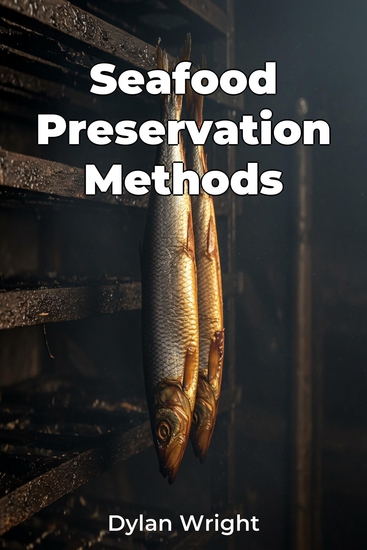
Seafood Preservation Methods - cover

Seafood Preservation Methods

Dylan Wright

Translator A AI

Publisher: Publifye

  • 0
  • 0
  • 0

Summary

Seafood Preservation Methods dives into the historical and cultural significance of traditional seafood preservation, arguing these age-old techniques offer valuable lessons for modern food security and sustainability. The book explores methods like drying, smoking, and fermentation, highlighting how these practices, developed in Nordic, Asian, and coastal cultures, not only preserve culinary heritage but also address contemporary concerns about waste reduction. For example, the book examines how fermentation, beyond its preservative qualities, creates unique flavors and textures in various Southeast Asian fish products. The book uniquely blends historical research, scientific studies, and ethnographic data to provide a comprehensive understanding.

 
It begins by outlining the fundamental principles of seafood preservation, explaining the science behind spoilage and how these methods inhibit it. Each subsequent section focuses on specific techniques – drying, smoking, and fermentation – detailing regional variations, types of fish used, environmental conditions, and the cultural importance attached to the final product. From Nordic stockfish to Japanese katsuobushi, the book traces the evolution and cultural context, illustrating how these practices have sustained communities for centuries.
Available since: 02/27/2025.
Print length: 88 pages.

Other books that might interest you

  • Drink Water and Mind Your Business - A Black Woman's Guide to Unlearning the BS and Healing Your Self-Esteem - cover

    Drink Water and Mind Your...

    Dr. Donna Oriowo

    • 0
    • 0
    • 0
    Society was not built with the needs of Black women in mind. As a result, we learn that the only way to feel good about ourselves is to prioritize everyone else's needs over our own. We find our value in being the perfect partner, mother, daughter, employee, and friend. But that is exhausting. Instead of feeling good about how dope we are, we only feel good about what we do for others. 


    Supremacy culture teaches us to hate Black people, to hate women, and to especially hate Black women . . . except when they need us. So in a world where our service is required for acceptance, how could we ever feel good about ourselves while also giving the middle finger to systems of power? How can we live our best lives? The answer: Self-esteem. Self-esteem has been gatekept by the white and male supremacist delusions for far too long. It's time to put power where it actually belongs. 


    In Drink Water and Mind Your Business, Dr. Donna Oriowo helps listeners understand the basic foundations of self-esteem and offers real, meaningful solutions to feel like the most glorious and badass versions of themselves. Based on years of research and Dr. Donna's career as a licensed sex and relationship therapist, this book will help you set boundaries, prioritize your needs, understand your immense worth, and pursue a life that brings you pleasure and joy.
    Show book
  • To the Last Ukrainian: An American War - The Story of a War Reporter - cover

    To the Last Ukrainian: An...

    Régis Le Sommier

    • 0
    • 0
    • 0
    "I'm here to put the internationals in order. I'm in charge here. Too many people showed up at the center and they had no business being there.” These are the words of an American instructor, met by Régis Le Sommier at the beginning of the war when all the media was minimizing the role of the United States in Ukraine.
    Régis Le Sommier is the only war reporter to have gone to both sides of the front line with the Ukrainian and Russian armies for a year. He worked for Paris-Match for 30 years and received several awards for his journalism. Odessa, Kherson, Zaporizhia, Mariupol, Donetsk, Lugansk, Donbass and Bakhmut—are all war zones where the journalist has captured the truth of the reality on the ground. This is a raw book, a book from the level of the men, far from the hazy analyses of armchair specialists.
    Show book
  • A Rare Recording of President Richard Nixon and Prime Minister Golda Meir - cover

    A Rare Recording of President...

    Golda Meir, President Richard Nixon

    • 0
    • 0
    • 0
    Richard Milhous Nixon (January 9, 1913 - April 22, 1994) was the 37th president of the United States, serving from 1969 to 1974. A member of the Republican Party, he previously served as a representative and senator from California and was the 36th vice president from 1953 to 1961 under President Dwight D. Eisenhower. His five years in the White House saw reduction of U.S. involvement in the Vietnam War, détente with the Soviet Union and China, the first crewed Moon landings, and the establishment of the Environmental Protection Agency and Occupational Safety and Health Administration. Golda Meir (May 3, 1898 - December 8, 1978) was an Israeli politician who served as the fourth Prime Minister of Israel from 1969 to 1974. She was Israel's first and only female head of government, the first female head of government in the Middle East, and the fourth elected female head of government or state in the world. She has been described as the "Iron Lady" of Israeli politics, with a reputation for being down-to-earth and a persuasive speaker.
    Show book
  • The Entanglement - How Art and Philosophy Make Us What We Are - cover

    The Entanglement - How Art and...

    Alva Noe

    • 0
    • 0
    • 0
    In The Entanglement, philosopher Alva Noë explores the inseparability of life, art, and philosophy, arguing that we have greatly underestimated what this entangled reality means for understanding human nature. 


    Life supplies art with its raw materials, but art, Noë argues, remakes life by giving us resources to live differently. Our lives are permeated with the aesthetic. Indeed, human nature is an aesthetic phenomenon, and art is the truest way of understanding ourselves. All this suggests that human nature is not a natural phenomenon. Neither biology, cognitive science, nor AI can tell a complete story of us, and we can no more pin ourselves down than we can fix or settle on the meaning of an artwork. Even more, art and philosophy are the means to set ourselves free, at least to some degree, from convention, habit, technology, culture, and even biology. In making these provocative claims, Noë explores examples of entanglement and examines a range of scientific efforts to explain the human. 


    Challenging the notions that art is a mere cultural curiosity and that philosophy has been outmoded by science, The Entanglement offers a new way of thinking about human nature, the limits of natural science in understanding the human, and the essential role of art and philosophy in trying to know ourselves.
    Show book
  • The Principal Speeches of Demosthenes - A Selection - cover

    The Principal Speeches of...

    Demosthenes

    • 0
    • 0
    • 0
    Demosthenes (384-322 BCE) is regarded as one of the greatest orators of Classical times. This view has persisted through the centuries even though his rousing speeches warning of the dangers of Macedonian expansion - firstly guided by Philip II and then Alexander the Great - failed to stem the course of continued military success. 
     
    A contemporary of Plato and Aristotle, it is said that Demosthenes undertook arduous measures to cure himself of a stammer by speaking with pebbles in his mouth and perfecting breath control. Starting as a speech writer, he made his mark at an unusually young age (for the time), delivering his first major public speech at the age of 30, advising Athens to build its naval fleet as a defence against the Persians. In fact, it was the ambition of Philip of Macedon that would prove the principal threat. This was recognised by Demosthenes, as shown by the main speeches included in this collection. 
     
    In the 'Three Olynthiac Orations', Demosthenes outlined the tactics of Philip’s aggression towards Olynthus, an ally of Athens. He urged support for the smaller state, but his words went unheeded until it was too late. Demosthenes’s increasingly unrestrained language - at one point he calls Philip ‘a barbarian’ - did not endear him to the Macedonian regime. 
     
    The 'Olynthiac Orations' are followed by the 'Three Philippics', which chart further military activity by the aforementioned Philip. In between the second and third 'Philippics' comes ‘On the Peace’: a speech given during a short diplomatic space engineered by Philip, but which Demosthenes clearly highlighted as an armistice rather than anything permanent. This ‘Philip’ section ends with ‘The Oration on the Letter'. Philip sent a letter to Athens, which implied that war, again, was imminent. Demosthenes responded with characteristic boldness. 
     
    The final speech on this recording is ‘On the Crown’, addressing a very different matter. The Athenian statesman Ctesiphon proposed that Demosthenes should be honoured with the ‘golden crown’ for his service to the city. This was opposed by Aeschines, a long-standing enemy of Demosthenes in Athenian politics. In the court case that followed (330 BCE), Demosthenes successfully defended Ctesiphon in a speech later described as ‘the greatest speech of the greatest orator in the world'. 
     
    Each of the orations in this collection is preceded with an introduction setting the scene, and outlining the context in which they were delivered. This also gives a concise picture of Athens at this difficult point in its history. Eight years later, when in danger of being captured and imprisoned by the young Alexander who was angered by decades of eloquent and unrestrained opposition, Demosthenes committed suicide. All the speeches are prefaced by the historical setting. Translations by Arthur Wallace Pickard and Charles Rann Kennedy.
    Show book
  • Highland American Empires - Kingdoms in the Clouds (3 in 1) - cover

    Highland American Empires -...

    Rolf Hedger

    • 0
    • 0
    • 0
    Highland American Empires: Kingdoms in the Clouds (3 in 1) explores the rise, achievements, and legacies of three remarkable civilizations that flourished in the rugged highlands of South America: Tiwanaku, the Wari Empire, and the Tairona Civilization. These cultures adapted to extreme altitudes, developing sophisticated cities, engineering feats, and complex societies that influenced later Andean and Mesoamerican civilizations.   
    Journey into the world of Tiwanaku, a spiritual and political center near Lake Titicaca, known for its massive stone structures, intricate carvings, and advanced understanding of agriculture and irrigation. Its influence spread across the Andean region, shaping cultural and religious traditions that endured for centuries.   
    Discover the Wari Empire, one of the first true imperial powers of the Andes, which established extensive road networks, administrative centers, and urban planning techniques that prefigured the later Inca civilization. Their mastery of terraced farming and state organization allowed them to dominate the region for hundreds of years.   
    Uncover the Tairona Civilization, a lesser-known yet sophisticated society that thrived in the mountainous regions of present-day Colombia. Renowned for their breathtaking gold craftsmanship, elaborate stone cities, and harmonious integration with the surrounding environment, the Tairona left a legacy that still resonates among their modern descendants, the Kogi people.   
    From sacred temples to vast road systems, these highland empires demonstrated remarkable resilience and ingenuity. This book is perfect for history enthusiasts seeking to explore the hidden civilizations that once ruled the mountain landscapes of the Americas.
    Show book