Join us on a literary world trip!
Add this book to bookshelf
Grey
Write a new comment Default profile 50px
Grey
Subscribe to read the full book or read the first pages for free!
All characters reduced
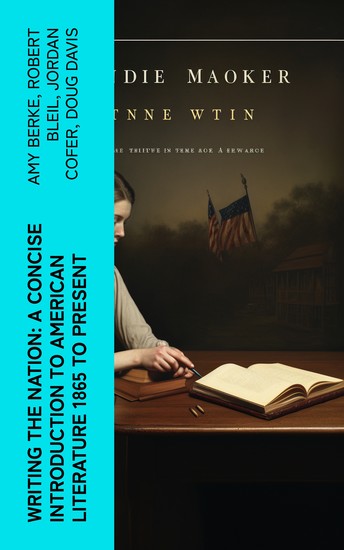
Writing the Nation: A Concise Introduction to American Literature 1865 to Present - cover

Writing the Nation: A Concise Introduction to American Literature 1865 to Present

Doug Davis, Amy Berke, Robert Bleil, Jordan Cofer

Publisher: e-artnow

  • 0
  • 0
  • 0

Summary

Writing the Nation displays key literary movements and the American authors associated with the movement. Topics include late romanticism, realism, naturalism, modernism, and modern literature. Contents:  Late Romanticism (1855-1870)  Realism (1865-1890) Local Color (1865-1885)  Regionalism (1875-1895)  William Dean Howells  Ambrose Bierce  Henry James  Sarah Orne Jewett  Kate Chopin  Mary E. Wilkins Freeman  Charles Waddell Chesnutt  Charlotte Perkins Gilman  Naturalism (1890-1914)  Frank Norris  Stephen Crane  Turn of the Twentieth Century and the Growth of Modernism (1893 - 1914)  Booker T. Washington  Zane Grey  Modernism (1914 - 1945)  The Great War  Une Generation Perdue… (a Lost Generation)  A Modern Nation  Technology  Modernist Literature  Further Reading: Additional Secondary Sources  Robert Frost  Wallace Stevens  William Carlos Williams  Ezra Pound  Marianne Moore  T. S. Eliot  Edna St. Vincent Millay  E. E. Cummings  F. Scott Fitzgerald  Ernest Hemingway  Arthur Miller  Southern Renaissance – First Wave  Ellen Glasgow  William Faulkner  Eudora Alice Welty  The Harlem Renaissance  Jessie Redmon Fauset  Zora Neale Hurston  Nella Larsen  Langston Hughes  Countee Cullen  Jean Toomer  American Literature Since 1945 (1945 - Present)  Southern Literary Renaissance - Second Wave (1945-1965)  The Cold War and the Southern Literary Renaissance  Economic Prosperity  The Civil Rights Movement in the South  New Criticism and the Rise of the MFA Program  Innovation  Tennessee Williams  James Dickey  Flannery O'Connor Postmodernism  Theodore Roethke  Ralph Ellison  James Baldwin  Allen Ginsberg  Adrienne Rich  Toni Morrison  Donald Barthelme  Sylvia Plath  Don Delillo  Alice Walker  Leslie Marmon Silko  David Foster Wallace
Available since: 12/21/2023.
Print length: 957 pages.

Other books that might interest you

  • Gettysburg and Vicksburg: The Civil War Turning Points of 1863 - cover

    Gettysburg and Vicksburg: The...

    Editors Charles River

    • 0
    • 0
    • 0
    Without question, the most famous battle of the American Civil War took place outside of the small town of Gettysburg, Pennsylvania, which happened to be a transportation hub, serving as the center of a wheel with several roads leading out to other Pennsylvanian towns. From July 1-3, Robert E. Lee’s Confederate Army of Northern Virginia tried everything in its power to decisively defeat George Meade’s Union Army of the Potomac, unleashing ferocious assaults that inflicted nearly 50,000 casualties in all.  
    	Day 1 of the battle would have been one of the 25 biggest battles of the Civil War itself, and it ended with a tactical Confederate victory. But over the next two days, Lee would try and fail to dislodge the Union army with attacks on both of its flanks during the second day and Pickett’s Charge on the third and final day. Meade’s stout defense held, barely, repulsing each attempted assault, handing the Union a desperately needed victory that ended up being one of the Civil War’s turning points.  
    	The Confederates had lost control of several important states throughout 1862, and after New Orleans was taken by the Union, the North controlled almost all of the Mississippi River, which Confederate general James Longstreet called “the lungs of the Confederacy”. By taking control of that vital river, the North would virtually cut the Confederacy in two, putting the South in a dire situation.  
    The only domino left to fall was the stronghold of Vicksburg, and both sides knew it. The Union Army of the Tennessee, led by Ulysses S. Grant, would spend months trying to encircle the army and eventually force John Pemberton’s Confederate army to surrender. Grant eventually succeeded on July 4, 1863, but since it came a day after the climactic finish of the Battle of Gettysburg, Vicksburg was (and still is) frequently overlooked as one of the turning points of the Civil War. 
    Show book
  • Summary: How to Be an Adult in Relationships - The Five Keys to Mindful Loving by David Richo: Key Takeaways Summary & Analysis Included - cover

    Summary: How to Be an Adult in...

    Brooks Bryant

    • 0
    • 0
    • 0
    DISCLAIMER: THIS IS NOT THE OFFICIAL BOOK. 
    THIS IS A SUMMARY & IT DOES NOT ACCOMPANY THE OFFICIAL. 
    In this summary book, readers will find a detailed guide to fostering and nurturing meaningful relationships through "How to Be an Adult in Relationships: The Five Keys to Mindful Loving" by psychotherapist David Richo. The work encapsulates vital strategies and principles necessary for building strong, mature, and empathetic relationships.
    Show book
  • Homegrown Radicals - A Story of State Violence Islamophobia and Jihad in the Post-9 11 World - cover

    Homegrown Radicals - A Story of...

    Youcef Soufi

    • 0
    • 0
    • 0
    In 2007, three Muslim university students left the Canadian Prairies, seemingly without a trace. In the ensuing months, their disappearance raised fears that the men had become "radicalized," posing a grave threat to national security. From presidential briefings and targeted drone assassinations to a politically charged trial, the men's story sheds new light not only on the figure of the "radical," but also on the "moderate" Muslim, represented by a community forever changed by the men's departure. 


    Homegrown Radicals offers a case study of the complex entanglements of the radical and moderate Muslim in post-9/11 North America. Youcef Soufi brings these figures together, providing insight into how state violence has inextricably tied them together. Focusing on the radicalization of the three students, the book traces the general sense of affective injury among North American Muslims over the loss of Muslim life in Western military campaigns overseas. In this context, a new theory of jihad rooted in a Muslim utopian imagination emerged, marking a significant rupture with premodern Islamic thought. The three "radicals" were among thousands of Anglophone Muslims who found this new theory compelling as both a diagnosis and a solution to the violence unleashed in the War on Terror. The book examines how and why this theory resonated, as well as its consequences.
    Show book
  • The Great Famine of the 14th Century - Europe's Population Crisis - cover

    The Great Famine of the 14th...

    Sarah Willards

    • 0
    • 0
    • 0
    The Great Famine of the 14th century did not erupt suddenly; it was the result of a long-simmering crisis deeply rooted in environmental, agricultural, and demographic factors. Europe, by the early 1300s, was already teetering on the edge of unsustainability. For decades, the continent had experienced a population boom, pushing communities to cultivate every inch of arable land. Marginal lands—forests, wetlands, and rocky hills—were cleared to make room for crops, but the soil was thin and poorly suited for long-term farming. This overuse exhausted the land, reducing yields and straining food supplies even in stable years. 
    At the same time, Europe entered a period of climatic deterioration now known as the Little Ice Age. Beginning in the early 14th century, temperatures across the continent began to drop slightly but consistently. This seemingly minor shift had devastating effects on agriculture. Cooler, wetter summers shortened the growing season and increased rainfall, which flooded fields and rotted seeds before they could sprout. Harsh winters extended well into the spring, delaying planting and shrinking the harvest window. These erratic weather patterns culminated in a series of catastrophic crop failures between 1315 and 1317. 
    Adding to these environmental pressures was a demographic crisis. By the turn of the century, Europe’s population had grown to levels unseen in centuries. Villages were packed, and food demand had reached unprecedented highs. Yet agricultural output could not keep pace. The productivity of medieval farming methods had plateaued, and innovations were slow to arrive. The result was a fragile system stretched beyond its limits. Even a single poor harvest could lead to hunger; multiple bad years spelled disaster.
    Show book
  • Pax Romana: A Captivating Guide to Ancient Rome during the Roman Peace Period - cover

    Pax Romana: A Captivating Guide...

    Captivating History

    • 0
    • 0
    • 0
    Did you know that the biggest territorial expansion in ancient Rome took place during the reign of its first emperor, who also ruled the longest out of all of the rulers prior to the fall of the Western Roman Empire? 
    The Roman Empire reached its zenith within the first two centuries of the fall of the Roman Republic, expanding its territory and spreading its influence well beyond the borders of Europe. During that time, a sort of global peace was achieved, which historians call the Pax Romana. But what exactly is the Pax Romana, and how does one delve into this huge, ever-expanding subject? 
    Like many other segments of Roman history, the Pax Romana is riddled with murky areas, contradictory information from contemporary sources, and fascinating archaeological finds. In this book, you’ll discover what made Rome tick during those roughly two hundred years of relative peace. 
    Throughout the pages of this tome, you’ll get brief glimpses of the reigns of many emperors who made the Pax Romana into what it was. Discover the Pax Romana’s long-term effects and how it managed to cement the Roman Empire as the go-to empire for many later civilizations to try and emulate. 
    Among other things, you’ll gain new knowledge on the following facts:How the empire evolved from the former republic and who the men were that brought about the changes What made the reign of each emperor uniqueWho the best emperors during the Pax Romana were, and which ones were considered the worstWhat role the provinces and territorial expansion played in the growth and development of the empireHow the imperial Romans were stratifiedWhat societal changes came about with the abolition of the republic and the return to a monarchic model 
    Scroll up, and give that “add to cart” button a click to learn more about the Pax Romana!
    Show book
  • The Golden Girls - Tales from the Lanai - cover

    The Golden Girls - Tales from...

    Taylor Cole Miller, Jr. Alfred...

    • 0
    • 0
    • 0
    The Golden Girls: Tales from the Lanai is an accessible collection that explores the cultural, industrial, and historical impact of that beloved American sitcom. Edited by Taylor Cole Miller and Alfred L. Martin, Jr., this anthology brings together a diverse range of voices that model different media studies approaches to researching and critically analyzing television texts. The Golden Girls reclaims the production history and development of the show, opens new conversations about audiences—especially Black, queer, and female audiences—and provides new insight into the meteoric rise in popularity of The Golden Girls as a 2020s cultural phenomenon. With twelve original chapters and extensive original interviews offering listeners rare insights behind the scenes, the book is a long day's journey into the marinara of The Golden Girls—an immersive, engaging opportunity for listeners to learn more about the show. It truly is the golden age of The Golden Girls.
    Show book