Join us on a literary world trip!
Add this book to bookshelf
Grey
Write a new comment Default profile 50px
Grey
Subscribe to read the full book or read the first pages for free!
All characters reduced
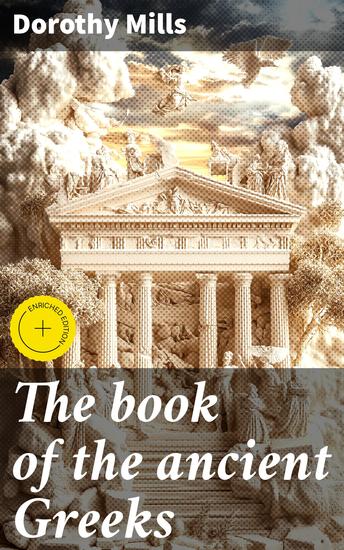
The book of the ancient Greeks - Enriched edition An introduction to the history and civilization of Greece from the coming of the Greeks to the conquest of Corinth by Rome in 146 BC - cover

The book of the ancient Greeks - Enriched edition An introduction to the history and civilization of Greece from the coming of the Greeks to the conquest of Corinth by Rome in 146 BC

Dorothy Mills

Publisher: Good Press

  • 0
  • 0
  • 0

Summary

In "The Book of the Ancient Greeks," Dorothy Mills presents a meticulously crafted exploration of ancient Greek civilization, weaving together historical narratives, mythology, and cultural practices. This work is distinguished by its engaging prose and accessible style, making complex ideas readily understandable for a broad audience. Mills contextualizes ancient Greek life through its literature, art, and philosophy, illuminating the profound influence these elements continue to exert on contemporary society. The book serves not only as a historical account but also as an insightful reflection on the morals, values, and beliefs of the Greeks, framed within the wider tapestry of Western literature. Dorothy Mills was a notable American historian and author whose deep interest in historical narrative and culture significantly informed her writing. Her academic background, coupled with a lifelong fascination with ancient civilizations, guided her to create this important work. Mills sought to bring the richness of ancient Greek culture to life, encapsulating her extensive knowledge in a manner designed to captivate readers. Her enthusiasm for the subject shines through, reflecting her ambition to elevate the field of classical studies in the public eye. This book is highly recommended for anyone interested in the foundations of Western civilization, whether they are students, educators, or general readers seeking to deepen their understanding of ancient cultures. Mills' engaging narrative style and clear exposition make "The Book of the Ancient Greeks" an essential addition to any library, promising an enlightening journey into the lives and thoughts of the ancient Greeks.

In this enriched edition, we have carefully created added value for your reading experience:
- Hand‐picked Memorable Quotes shine a spotlight on moments of literary brilliance.
- Interactive footnotes clarify unusual references, historical allusions, and archaic phrases for an effortless, more informed read.
Available since: 08/21/2022.
Print length: 269 pages.
Other books that might interest you

  • From Shattered to Restored - Recovering Hope Discovering Purpose - cover

    From Shattered to Restored -...

    Nanette V Larson

    • 0
    • 0
    • 0
    In this stunningly transparent memoir, Nanette Larson shares her journey from a life of constant hopelessness and despair, deep depression, crippling anxiety, and suicidality to one full of victorious hope and purpose. Realizing that she had allowed the labels that had been pasted upon her by medical professionals and society alike to define who she was, Nanette changed her perspective by seeing herself through the eyes of her Maker. Taking control of her thoughts was only the first step of a winding road to wellness, however. As a mental health professional herself, Nanette now shares with her readers the techniques that helped her address every part of her being - spirit, soul, and body. From distressed patient to nationally recognized deputy director and ambassador of Wellness and Recovery Services for the Illinois Division of Mental Health, Nanette is living proof that full recovery from mental health issues is, indeed, possible, and a successful, happy, healthy life can be found on the other side of the struggle.
    Show book
  • Anxiety - A Very Short Introduction - cover

    Anxiety - A Very Short Introduction

    Jason Freeman, Daniel Freeman

    • 0
    • 0
    • 0
    Are we born with our fears or do we learn them? Why do our fears persist? What purpose does anxiety serve? How common are anxiety disorders, and which treatments are most effective? What's happening in our brain when we feel fear? And what are Colombian worry dolls? 


    This Very Short Introduction draws on the best scientific research to offer a highly accessible explanation of what anxiety is, why it is such a normal and vital part of our emotional life, and the key factors that cause it. Insights are drawn from psychology, neuroscience, genetics, epidemiology, and clinical trials. Providing a fascinating illustration of the discussion are two interviews conducted specifically for the book, with the actor, writer, director, and television presenter Michael Palin and former England football manager Graham Taylor. 


    The book covers in detail the six major anxiety disorders: phobias; panic disorder and agoraphobia; social anxiety; generalized anxiety disorder; obsessive compulsive disorder; and post-traumatic stress disorder. With a chapter devoted to each disorder, Daniel and Jason Freeman take you through the symptoms, prevalence, and causes of each one. A final chapter describes the treatments available for dealing with anxiety problems.
    Show book
  • Nazca Civilization - The Enigmatic Lines and the Desert Kingdom of Peru - cover

    Nazca Civilization - The...

    Rolf Hedger

    • 0
    • 0
    • 0
    The Nazca civilization emerged along the southern coast of present-day Peru, a harsh and arid region that required ingenuity and adaptation for survival. Flourishing between approximately 100 BCE and 800 CE, the Nazca people built upon the cultural and technological advancements of their predecessors, most notably the Paracas culture. The transition from the Paracas to the Nazca was marked by shifts in artistic expression, religious practices, and innovations in agriculture that allowed the new civilization to thrive in the desert landscape. 
    One of the defining characteristics of the Nazca civilization was its ability to adapt to the unforgiving environment. The region’s climate was dry, with little rainfall, yet the Nazca found ways to harness the limited water supply to sustain their agricultural economy. They engineered underground aqueducts known as puquios, a sophisticated irrigation system that transported water from underground sources to the surface, ensuring a steady supply for crops. This ingenuity allowed them to cultivate maize, beans, squash, and cotton, which became essential to their diet and economy. 
    The Nazca culture was also shaped by its geography. The valleys of the Rio Grande de Nazca provided fertile land where the civilization’s settlements and ceremonial centers flourished. Unlike the grand urban centers of the Andean highlands, the Nazca people lived in smaller, dispersed communities that relied on a combination of agriculture and trade. These communities were connected by a shared cultural and religious framework that revolved around the worship of powerful deities linked to nature, fertility, and water.
    Show book
  • The Invisible Manual - How It Feels to Grow Up Autistic and Undiagnosed - cover

    The Invisible Manual - How It...

    Anonymous Author

    • 0
    • 0
    • 0
    This audiobook is narrated by an AI Voice.   
    The Invisible Manual is a raw, intimate memoir about growing up autistic without knowing it — and the lifelong consequences of living in a world built for minds unlike your own. Told with honesty and precision, it reveals what autism in women truly looks like behind the mask: constant self-monitoring, sensory overwhelm, people-pleasing, and the crushing exhaustion of pretending to be “normal.” 
    From childhood to adulthood, the anonymous author shares decades of quiet struggle: missed signs dismissed as shyness, friendships that never made sense, invisible social rules, perfectionism that hid the truth, and the profound relief of finally seeing oneself in a late autism diagnosis. 
    This is not a clinical guide — it is the lived experience of high-masking autistic womanhood. A life spent compensating, questioning, and wondering why everything felt harder than it seemed for everyone else. 
    Listeners exploring female autism, late-diagnosed autism, high masking, or the lifelong feeling of being “different” will find this memoir deeply validating. It offers not instructions, but recognition — a mirror for anyone who has spent years searching for one.
    Show book
  • To the Lighthouse - cover

    To the Lighthouse

    Anonymous

    • 0
    • 0
    • 0
    Unlock the Profound Beauty of Human Connection and the Unstoppable March of Time.
    
    Experience the height of stream of consciousness storytelling with Virginia Woolf's most autobiographical and evocative work, To the Lighthouse. Set on the Isle of Skye, the novel centers on the Ramsay family and their visits to the Scottish coast, framed by the anticipation of a simple trip to a nearby lighthouse—a trip that will take ten years and a lifetime of emotional change to complete.
    
    Through the shifting perspectives of the nurturing Mrs. Ramsay, the intellectually demanding Mr. Ramsay, and the struggling artist Lily Briscoe, Woolf explores the intricate tensions of family life and the fleeting nature of experience. The famous middle section, "Time Passes," stands as one of the most haunting passages in literature, depicting the decay of the family home while world events and personal tragedies unfold in the background.
    
    A landmark of Modernist literature, To the Lighthouse is more than a story; it is a meditation on how we perceive reality and the struggle to create something permanent in a world of constant flux.
    
    Journey into the heart of the Ramsay family. Buy "To the Lighthouse" today and experience one of the greatest novels of the 20th century.
    Show book
  • The Ballad Of The White Horse - An epic poem about King Alfred's Christian endeavors resisting the Viking conquest of England - cover

    The Ballad Of The White Horse -...

    Gilbert Keith Chesterton

    • 0
    • 0
    • 0
    "The Last Great Epic Poem in the English Language"- Dale Ahlquist"The ending is absurd. The brilliant smash and glitter of the words and phrases (when they come off, and are not mere loud colours) cannot disguise the fact that G. K. C. knew nothing whatever about the 'North', heathen or Christian."- JRR TolkienThe tale of King Alfred, the Christian king who in 878AD battled a Viking invasion that had conquered the rest of England and burnt some cakes. He then became the last holdout of resistance against the invaders and forced the conversion of the Danish king Guthrum to Christianity after the battle of Ethandun. Chesterton says "This ballad needs no historical notes, for the simple reason that it does not profess to be historical. All of it that is not frankly fictitious, as in any prose romance about the past, is meant to emphasize tradition rather than history. That is the use of tradition: it telescopes history."Named after the chalk horses carved into English hills (and partly set at Uffington), it begins with an exhortation to true Christianity in the face of despair and defeat, and ends with a prediction of more barbarian invasions. It focuses on the nature of faith in times of despair, and on the true strength of local kings in the face of empires."... you and all the kind of ChristAre ignorant and brave,And you have wars you hardly winAnd souls you hardly save...."In some far century, sad and slow,I have a vision, and I knowThe heathen shall return...."They shall come mild as monkish clerks,With many a scroll and pen;And backward shall ye turn and gaze,Desiring one of Alfred's days,When pagans still were men."
    Show book