Join us on a literary world trip!
Add this book to bookshelf
Grey
Write a new comment Default profile 50px
Grey
Subscribe to read the full book or read the first pages for free!
All characters reduced
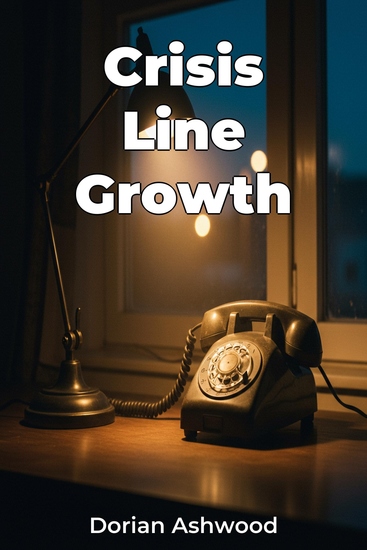
Crisis Line Growth - cover

Crisis Line Growth

Dorian Ashwood

Translator A Ai

Publisher: Publifye

  • 0
  • 0
  • 0

Summary

Crisis Line Growth explores the vital role of LGBTQ-focused crisis lines in addressing mental health disparities and providing crucial support to a vulnerable community. These hotlines serve not just as reactive services, but as proactive agents of change, fostering resilience and promoting mental well-being. The book traces the development of these lines from grassroots efforts to established mental health interventions, highlighting the unique challenges faced by the LGBTQ community, such as discrimination and stigma, that necessitate tailored support systems. Interestingly, these crisis lines address various issues, from immediate crisis intervention to offering a safe space for individuals to express themselves, contributing significantly to suicide prevention efforts. The book adopts an accessible approach, presenting complex information in a clear and engaging manner suitable for mental health professionals, social workers, and anyone interested in LGBTQ issues. It incorporates quantitative data, qualitative interviews, and analyses of organizational policies to provide a comprehensive understanding. The structure of the book progresses from foundational concepts of crisis intervention and LGBTQ mental health needs, through a historical analysis of crisis lines, to an evaluation of intervention models and their impact.
Available since: 04/07/2025.
Print length: 89 pages.

Other books that might interest you

  • The Persian Empire - Their Routes Their Roots and Their History - cover

    The Persian Empire - Their...

    Kelly Mass

    • 0
    • 0
    • 0
    Whether you have played a Prince of Persia video game, seen the movie, or just heard about it in history class, it is hard to ignore the Persian Empire, which was among the greatest empires of the world for some time. 
    The typical area for the Persian Empire was what is now Iran. The Persians had a vast influence on surrounding countries and regions. Their style, art, music, rule, and culture has had an influence on the development of science and the forming of nations. 
    The Achaemenid Empire is well-known for enforcing an effective model of centralized, governmental administration through the usage of satraps; its multicultural policy; the building of road network, like roadways and a postal system; the usage of a main language during its areas; and the development of civil services, and that includes the possession of a big, professional army. The empire's success resulted in the adoption of comparable systems by later empires. 
    Learn more in this book about this empire of old.
    Show book
  • Violence and the Sacred - cover

    Violence and the Sacred

    René Girard

    • 0
    • 0
    • 0
    Violence and the Sacred is René Girard's landmark study of human evil. Here Girard explores violence as it is represented and occurs throughout history, literature, and myth. Girard's forceful and thought-provoking analyses of Biblical narrative, Greek tragedy, and the lynchings and pogroms propagated by contemporary states illustrate his central argument that violence belongs to everyone and is at the heart of the sacred.
    Show book
  • Tao Te Ching & Siddhartha - cover

    Tao Te Ching & Siddhartha

    Lao Tzu, Herman Hesse

    • 0
    • 0
    • 0
    The philosophies of the East are both complex and enlightening. Their views on human nature, society, and morality have shaped the world for thousands of years. Now, we get a chance to delve deep into the primary texts which are held close to the hearts of millions. 
    In this bundle, you’ll discover the Tao Te Ching, the world-renowned work first written in ancient China, along with the classic Siddhartha, a powerful and spiritually enlightening novel which tells the story of the Buddha. 
    Both these texts have stood the test of time, and paved the way for philosophies which continue to have impact across the ages. From the life of the Buddha and his belief in Samsara and Nirvana, to the secrets of the Tao, this book is a must-listen for anyone interested in spiritual and philosophical enlightenment.
    Show book
  • Nobody Is Protected - How the Border Patrol Became the Most Dangerous Police Force in the United States - cover

    Nobody Is Protected - How the...

    Reece Jones

    • 0
    • 0
    • 0
    Late one July night in 2020, armed men, identified only by the word POLICE written across their uniforms, began snatching supporters of Black Lives Matter off the street in Portland, Oregon, and placing them in unmarked vans. These mysterious actions were not carried out by local law enforcement or even right-wing terrorists, but by the US Border Patrol. Why was the Border Patrol operating so far from the boundaries of the United States? What were they doing at a protest that had nothing to do with immigration or the border? 


    Nobody Is Protected: How the Border Patrol Became the Most Dangerous Police Force in the United States is the untold story of how, through a series of landmark but largely unknown decisions, the Supreme Court has dramatically curtailed the Fourth Amendment of the Constitution in service of policing borders. The Border Patrol exercises exceptional powers to conduct warrantless stops and interrogations within one hundred miles of land borders or coastlines, an area that includes nine of the ten largest cities and two thirds of the American population. 


    Mapping the Border Patrol's history from its bigoted and violent Wild West beginnings through the legal precedents that have unleashed today's militarized force, Reece Jones reveals the shocking true stories and characters behind its most dangerous policies.
    Show book
  • Imperial Chinese Foundations - Uniting the Land (3 in 1) - cover

    Imperial Chinese Foundations -...

    Rolf Hedger

    • 0
    • 0
    • 0
    The story of China's imperial unification represents one of history's most consequential political transformations. "Imperial Chinese Foundations: Uniting the Land" explores the three dynasties that forged China's imperial system—a political structure that would endure for over two millennia. 
    The brief but revolutionary Qin Dynasty (221-206 BCE) ended centuries of warring states by conquering all rivals under the leadership of the First Emperor, Qin Shi Huang. Through military might, standardized writing, currency, measurements, and a unified legal code, the Qin created China's first centralized bureaucratic empire—though their harsh Legalist policies triggered rebellion after the emperor's death. 
    The Western Han Dynasty (206 BCE-9 CE) consolidated imperial rule through a more pragmatic blend of Confucian ideology and centralized governance. Under Emperor Wu's dynamic leadership, the Han expanded Chinese territory, opened the Silk Road, established the civil service examination system, and created cultural and political institutions that would define Chinese civilization for millennia. 
    As power shifted to the Eastern Han (25-220 CE), the dynasty initially flourished before facing mounting challenges from natural disasters, court intrigues, and the Yellow Turban Rebellion. Yet even as political cohesion weakened, this period saw remarkable innovations—including paper, the seismograph, and advances in mathematics and medicine—while Buddhism began its profound influence on Chinese civilization. 
    Through examining these three foundational dynasties, we witness the birth and evolution of the imperial Chinese state that would serve as a template for governance across East Asia and continue to influence Chinese identity into the modern era.
    Show book
  • Malfoy - The Fall and the Fate of the Wizarding World's Most Treacherous Family: An Unofficial Exploration - cover

    Malfoy - The Fall and the Fate...

    Irvin Khaytman

    • 0
    • 0
    • 0
    With his very first sneer, Draco Malfoy is established as the school bully of the Harry Potter series. But how did Draco become so detestable? What was inherited from his parents, and what is unique to him among the Malfoy clan? And what was he thinking all those times when he picked fights with Harry, Ron, or Hermione?Malfoy analyzes Draco throughout his seven years at Hogwarts, as his role in the series grew in prominence. At the same time, Lucius Malfoy and Narcissa Malfoy have their own stories play out, forever scheming and plotting to advance the family's interests . . . even when they're in conflict with each other.Bestselling author Irvin Khaytman dives deep into the Malfoys' deeds to answer the two central questions about Draco that remain after Deathly Hallows: Is he redeemable? And was he redeemed?
    Show book