Join us on a literary world trip!
Add this book to bookshelf
Grey
Write a new comment Default profile 50px
Grey
Subscribe to read the full book or read the first pages for free!
All characters reduced
Don Troiani's Campaign to Saratoga–1777 - The Turning Point of the Revolutionary War in Paintings Artifacts and Historical Narrative - cover

Don Troiani's Campaign to Saratoga–1777 - The Turning Point of the Revolutionary War in Paintings Artifacts and Historical Narrative

Don Troiani, Eric Schnitzer

Publisher: Stackpole Books

  • 0
  • 0
  • 0

Summary

An artistic rendering of a key campaign in the American Revolution along with historical narrative brings this first United States victory to life.   The Battles of Saratoga are cited as the turning point in the Revolutionary War. Beginning when the armies prepared to face off in June 1777 through the surrender of the British Army in October, the battles of the Northern Campaign were significant to the outcome of the War and the fight for independence. As a result of the Saratoga battles, the patriots gained confidence, the French entered the war, and the British plan to win the war quickly was put to an end. Master historical painter Don Troiani and historian Eric Schnitzer combine their talents in this new book on Saratoga, the Revolutionary War campaign. This magnificently illustrated history features many new artworks, previously unpublished eyewitness accounts, photographs of important artifacts, and a solid, detailed historical narrative including background on the campaigns leading up to Saratoga.
Available since: 06/14/2023.
Print length: 344 pages.

Other books that might interest you

  • Rewrite Your Life - Discover Your Truth Through the Healing Power of Fiction - cover

    Rewrite Your Life - Discover...

    Jessica Lourey

    • 0
    • 0
    • 0
    Learn the Art of Storytelling“A step-by-step guide for writers struggling to create fiction from their life . . . delivers on its promise with such honesty, simplicity, and beauty.”—William Kent Krueger, New York Times bestselling author
     
    #1 Bestseller in Self-Help, CreativityShortlisted for an Agatha Award for Best Nonfiction!
     
    Tender, raw, and laugh-out-loud funny, Rewrite Your Life offers both a map and a compass for those seeking to harvest their life experiences to heal, lead a more authentic life, and craft a rich, powerful work of fiction.
     
    According to common wisdom, we all have a book inside of us. But how do we select and then write our most significant story—the one that helps us to evolve and invites pure creativity into our lives? In Rewrite Your Life, creative writing professor, sociologist, and popular fiction author Jess Lourey guides you through the redemptive process of writing a healing novel that recycles and transforms your most precious resources—your own emotions and experiences.
     
    There’s more to writing that meets the eye. This fact-to-fiction process provides not only the essential building blocks of bestselling novels but is also personally transformative. Based on the process the author developed and field-tested in the wake of her husband’s suicide, Rewrite Your Life is devoted to the practice of discovering, healing, and evolving through fiction writing. It combines research, practical and engaging guidance, and personal experience to meet readers where they are and take their creativity and personal growth to the next level.
     
    Rewrite your life teaches you to:
     
    Navigate the inner process to telling a storyUse tools and tactics to master fiction writingUncover the stories through your experiencesIf you have read books such as Save the Cat! Writes a Novel, How to Be Heard, or Story Power, you will love Rewrite Your Life.
    Show book
  • History of Denmark - A Captivating Guide to Danish History - cover

    History of Denmark - A...

    Captivating History

    • 0
    • 0
    • 0
    For centuries, Denmark "punched above its weight" and was a major player on the European stage. Many know about the Danish Vikings and their voyages of conquest and discovery, but Denmark is more than just those medieval raiders and traders, even though interest in their adventures is at an all-time high today.
    Denmark became the first Scandinavian country to convert to Christianity, though this was likely as much to protect themselves from Christian kingdoms to the south and to increase their trade with Christian nations than any love for Christian beliefs.
    Denmark has been at peace since WWII, but its position between the North and Baltic Seas makes it an important part of NATO, allowing it to once more "punch above its weight." But despite its location, Denmark has managed to not only remain at peace but is today ranked as one of the happiest nations on Earth.
    You will discover many astounding facts about Denmark's history in this book. Discover the answer to fascinating questions like the following:
    
    - Does Denmark really appear in the top three of the world's "happiest" countries?
    - Were the Danish Vikings only interested in conquest? And what were their relations like with Europe before the Viking Age?
    - Who was Cnut the Great, and why was he so important in the history of countries like England, Denmark, Norway, and Sweden?
    - Who the current Danish royal family is descended from? (Hint: it is not a Dane!)
    - How and when did Denmark establish the wide-ranging social safety net it is so well-known for today?
    - What role did Germany play in Denmark losing its status as an offensive military power? What was life like for Danish Jews during WWII?  
    You'll find these answers and many more in Captivating History's History of Denmark! 
    Show book
  • Dark Psychology - Secrets of Influence Emotional Brainwashing and Lie Detection - cover

    Dark Psychology - Secrets of...

    Valerie Glossner

    • 0
    • 0
    • 0
    Emotions are powerful things. They are capable of completely overriding our logic centers, causing us to make very poor choices as we do not think of the consequences. Emotion is also capable of making us act on them out of pure instinct, and we are barely, if at all, able to even comprehend what we are about to do. However, we can learn to gain emotional intelligence, thereby gaining the ability to know the true source of the emotion and what to do about it. This book can teach you how to do just that. It will teach you the distinctions between being embarrassed, real guilt, and shame. 
    Within the chapters of this book you will also learn about hypnosis. It will teach you about the use of hypnosis throughout the centuries. Learn whether hypnosis can restore memories, you will even learn a little bit about NLP. 
    Hear about what deception actually is and gain the knowledge to dispel the inaccurate beliefs about liars. Listen to how statistics are feeding the fake news and why you need to learn from multiple sources. 
    Study how jealousy works, what it’s for, and why men and women experience it differently. This book has it all.
    Show book
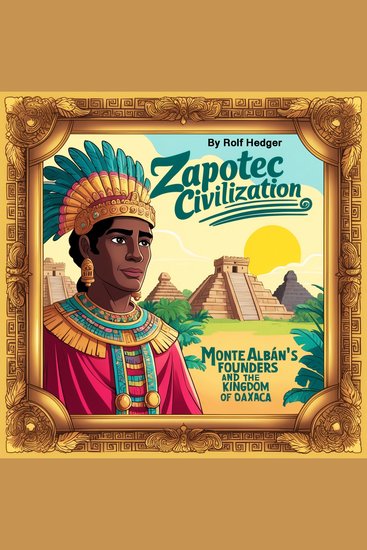
  • Zapotec Civilization - Monte Albán's Founders and the Kingdom of Oaxaca - cover

    Zapotec Civilization - Monte...

    Rolf Hedger

    • 0
    • 0
    • 0
    The Zapotec civilization emerged in the valleys of Oaxaca, a region characterized by its fertile land, diverse ecosystems, and strategic position for trade and agriculture. Archaeological evidence suggests that the earliest Zapotec communities began forming around 1500 BCE, with small farming villages dotting the landscape. Over time, these settlements grew in complexity, giving rise to a society that would become one of Mesoamerica’s most influential civilizations. 
    Early Zapotec communities relied heavily on agriculture, cultivating maize, beans, squash, and chili peppers—staples that formed the foundation of their diet. The region’s rivers and seasonal rains provided a reliable water source, allowing for irrigation techniques that supported larger populations. As food production increased, villages expanded, and the need for organization led to the development of social hierarchies. Religious leaders, warriors, and skilled artisans began to hold distinct roles in society, paving the way for the emergence of political structures. 
    By the first millennium BCE, the Zapotecs had established themselves as a dominant force in the Oaxaca Valley. Unlike nomadic or loosely structured societies, they developed permanent settlements with planned architecture, ceremonial centers, and marketplaces. This period saw the rise of San José Mogote, one of the earliest known Zapotec centers, where the first signs of their writing system and political organization appeared. San José Mogote’s influence laid the groundwork for the later establishment of Monte Albán, which would become the heart of Zapotec power.
    Show book
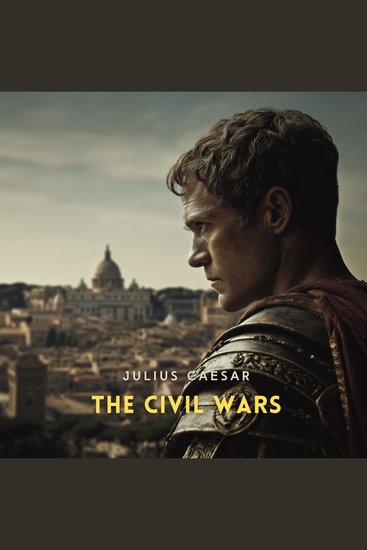
  • The Civil Wars Book 2 - cover

    The Civil Wars Book 2

    Julius Caesar

    • 0
    • 0
    • 0
    The Civil Wars is a firsthand account of the pivotal conflict between Julius Caesar and Pompey the Great, written by Caesar himself. Covering the events leading to the war, his strategic campaigns in Italy, Spain, and Greece, and culminating in Pompey’s defeat at Pharsalus, the narrative showcases Caesar’s military genius, political resolve, and justification for seizing power. Written in a clear, detached tone, the work presents Caesar’s perspective as a commander fighting for legitimacy against a corrupt Senate. Though unfinished—ending before his ultimate victory—it remains a crucial historical document offering insight into Roman politics, loyalty, and the fall of the Republic. A foundational text of military and political history.
    Show book
  • Anxiety - A Philosophical Guide - cover

    Anxiety - A Philosophical Guide

    Samir Chopra

    • 0
    • 0
    • 0
    Today, anxiety is usually thought of as a pathology, the most diagnosed and medicated of all psychological disorders. But anxiety isn't always or only a medical condition. Indeed, many philosophers argue that anxiety is a normal, even essential, part of being human, and that coming to terms with this fact is potentially transformative. In Anxiety, Samir Chopra explores valuable insights about anxiety offered by ancient and modern philosophies. Blending memoir and philosophy, he also tells how serious anxiety has affected his own life—and how philosophy has helped him cope with it. 


    Chopra shows that many philosophers have viewed anxiety as an inevitable human response to existence: to be is to be anxious. Drawing on Karl Marx and Herbert Marcuse, Chopra examines how poverty and other material conditions can make anxiety worse, but he emphasizes that not even the rich can escape it. Nor can the medicated. Inseparable from the human condition, anxiety is indispensable for grasping it. Philosophy may not be able to cure anxiety but, by leading us to greater self-knowledge and self-acceptance, it may be able to make us less anxious about being anxious. 


    Personal, poignant, and hopeful, Anxiety is a book for anyone who is curious about rethinking anxiety and learning why it might be a source not only of suffering but of insight.
    Show book