Join us on a literary world trip!
Add this book to bookshelf
Grey
Write a new comment Default profile 50px
Grey
Subscribe to read the full book or read the first pages for free!
All characters reduced
Heaven Is Portable - New & Collected Poems - cover

Heaven Is Portable - New & Collected Poems

D.L. Lang

Publisher: D.L. Lang

  • 0
  • 0
  • 0

Summary

Heaven is Portable: New and Collected Poems is D.L. Lang's 14th poetry book featuring poems on social justice, the global pandemic, Judaism, nature, and more. This volumecontains dozens of poems previously published in anthologies worldwide and other brand new poems.
Available since: 01/30/2022.
Print length: 181 pages.

Other books that might interest you

  • A Doll's House - cover

    A Doll's House

    Henrik Ibsen

    • 0
    • 0
    • 0
    A door slams, and the echoes never fade. Henrik Ibsen's A Doll's House (1879) is a play that doesn't shout—it lingers, unsettling and undeniable. Beneath the surface of a seemingly ordinary household lies a quiet storm, gathering strength with every polite exchange, every carefully placed smile.
    Nora Helmer is a wife, a mother, a woman adored. Her home is warm, her life is comfortable, her husband sings her praises. But when a long-kept secret begins to unravel, so does the delicate balance of her world. What happens when the roles we play no longer fit? When the words we speak don't match the voices inside us?
    Ibsen doesn't lecture, doesn't plead—he simply opens a door and lets us look inside. What we see is up to us. Is it a tale of liberation or betrayal? A tragedy or a beginning? More than a century later, the questions still stand, just as urgent, just as sharp.
    With A Doll's House, Ibsen didn't just write a play. He set a stage for countless conversations, forcing audiences to lean in, to question, to wonder. And when the final moment comes, when the door closes behind Nora, it isn't just her world that shifts. It's ours, too.
    Show book
  • Too Much World at Once - cover

    Too Much World at Once

    Billie Collins

    • 0
    • 0
    • 0
    'We should've seen this coming. We did. We did see this coming. The world will not be kind to us because we haven't given it a reason to be.'
    On his fifteenth birthday, Noble transforms into a bird. Thousands of miles away, his sister Cleo is stationed on a remote island with the British Antarctic Survey.
    But the birds have disappeared and Noble needs to reach her. Lying low until it's safe to take flight, he finds solace in misfit Ellis, while his mum desperately tries to stop their home from falling apart.
    The world turns. Dark clouds gather. Chaos is on the horizon...
    Billie Collins's play Too Much World at Once is an urgent coming-of-age story for our times – and a lyrical, theatrical journey that spans continents and lives. It was premiered at HOME, Manchester, in March 2023 by Box of Tricks Theatre before a UK tour.
    Show book
  • The Poetry of Gerard Manley Hopkins - Innovative poet that posthumously inspired T S Eliot Dylan Thomas W H Auden & others - cover

    The Poetry of Gerard Manley...

    Gerard Manley Hopkins

    • 0
    • 0
    • 0
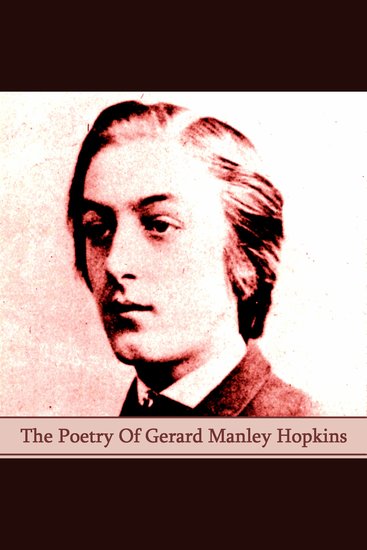
    Gerard Manley Hopkins was born in Stratford, then part of Essex on 28th July, 1844, to deeply religious parents?the first of nine children. 
    The family moved to Hampstead in 1852, near to where John Keats had lived thirty years before.  At age ten the young Gerard was sent to school in nearby Highgate and afterwards to Balliol College, Oxford. 
    Hopkins was unusually shy and reserved and prone to bizarre ideas. He once argued that most people drank more liquids than they really needed and bet that he could go without drinking for a week. He persisted until his tongue was black and he collapsed.  
    In January 1866 Hopkins composed his most ascetic poem, The Habit of Perfection but a few days later he included poetry in the list of things to be given up for Lent. In July he decided to become a Catholic and by May 1868 Hopkins firmly "resolved to be religious." Less than a week later, he made a bonfire of his poems and ceased to write for almost seven years.  
    In 1874 Hopkins returned to the Society of Jesus at Manresa House, Roehampton to teach classics. While he was studying in the Jesuit house of theological studies in North Wales, he was asked to write a poem to commemorate the foundering of a German ship in a storm. So in 1875 he was moved to take up poetry once more and write a lengthy poem, The Wreck of the Deutschland, inspired by the Deutschland maritime disaster in which 157 people died, including five nuns.  The poem was accepted but not printed by a Jesuit publication. This rejection fed his ambivalence about his poetry. Most of his poetry remained unpublished until after his death. 
    Hopkins chose the austere and restrictive life of a Jesuit and was at times gloomy. The brilliant student who had left Oxford with a first-class honours degree failed his final theology exam and although ordained in 1877, Hopkins would not progress in the order. That same year he wrote God’s Grandeur, and sonnets including The Starlight Night and finished The Windhover. 
    In 1884 he became professor of Greek and Latin at University College Dublin. His English roots, his disagreement with current Irish politics, as well as his own small stature (5'2"), shy nature and personal foibles meant that he was not an effective teacher. This and his isolation in Ireland deepened his gloom.  
    The final years of his life continued to find him in a depressed state and to restrict his poetic inspiration. His extremely heavy work load coupled with the dislike of living in Dublin, away from England and friends meant his health further deteriorated, even his eyesight began to fail. As a devout Jesuit, he found himself in an artistic dilemma. To subdue any egotism which would violate the humility required by his religious position, he decided never to publish his poems.  
    After suffering several bouts of diarrhoea, Gerard Manley Hopkins died of typhoid fever on 8th June, 1889 at the early age of 44. On his death bed, his last words were, "I am so happy, I am so happy. I loved my life." 
     This volume comes to you from Portable Poetry, a specialized imprint from Deadtree Publishing.  Our range is large and growing and covers single poets, themes, and many compilations.
    Show book

  • The Wife of Cyncoed - cover

    The Wife of Cyncoed

    Matt Hartley

    • 0
    • 0
    • 0
    Jayne is newly retired and disappointed with her life. She's in danger of becoming her daughter's babysitting service, and is desperate to make a change. When she meets a handsome stranger in the park – and an opportunity to do something for herself arises – can Jayne allow herself a second chance at happiness?
    Matt Hartley's play The Wife of Cyncoed is a charming and open-hearted play about self-discovery later in life. It premiered at Sherman Theatre, Cardiff, in 2024, and provides gloriously entertaining opportunities for a mature solo performer.
    Show book
  • Intruder - cover

    Intruder

    Jerrold Yam

    • 0
    • 0
    • 0
    At home with loneliness and passing encounters, can we be familiar with another or even ourselves? Does love outweigh the uncertainty of its memory? In his third and latest collection, award-winning poet Jerrold Yam ushers us into a traveller's world through sensitive and enquiring eyes, navigating a landscape of flitting figures, thoughts and emotions. 
     
     
    Informed by expansive travel across Asia and Europe, Yam's poetry is as varied as his journey, exploring geysers, horse riding and Picasso, while building on his preoccupations with family, sensuality and displacement. His poems make fresh the contradictions of young adulthood, its heady mix of determined restlessness, bold insecurities, desire for intimacy and fear of commitment. In his unflinchingly honest treatment of these themes, Yam exhibits new range and complexity as he describes a shifting terrain, where moving on is as difficult as letting go. 
     
     
    Above all, Intruder is an attempt to make sense of the impermanent structures that hold up one's life. Home, like love, may be a fiction that we must resist claiming for our own. After all, can we--and should we--be more than intruders? 
     
    "Jerrold Yam writes with an old voice and the youthful abandon of a poet out of his safe shell; a strong conviction of his depthless solitude yet weak in the presence of love and desire. His poems are lamentable etudes of one-word titles so vocal of absence and longing they are heartrending to those in the thick throes of love's discovery, loss and reconciliation." 
    -Grace Chia, author of Cordelia and womango
    Show book
  • Concerto - cover

    Concerto

    Robert S. Field

    • 0
    • 0
    • 0
    On Charlie Tyndale’s family tree Are branches bearing, he discovers, Ancestors of the landed gentryIncluding incestuous lovers;An intrepid adventurer too,With an eye for a collectible,And there’s a murdered musician whoIn life was all too corruptible.Was his killer a spurned lover, orA rival claimant to the estate, Or treasure-seekers settling a score,Or all, in a brutal syndicate?    And through all a Concerto’s movements endure;   To Charlie’s ancestral tale, the overture.
    Show book