Join us on a literary world trip!
Add this book to bookshelf
Grey
Write a new comment Default profile 50px
Grey
Subscribe to read the full book or read the first pages for free!
All characters reduced
The Rainbow - Enriched edition - cover

The Rainbow - Enriched edition

D.H. Lawrence

Publisher: DigiCat

  • 0
  • 0
  • 0

Summary

D. H. Lawrence's "The Rainbow" is a profound exploration of human relationships and the interplay of individuality within the framework of society. Set in the English countryside, the novel unfolds across three generations of the Brangwen family, delving into themes of sexuality, identity, and the quest for self-understanding. Lawrence employs a rich, lyrical prose style characterized by vivid imagery and emotional depth, reflecting the turbulent societal changes of the early 20th century. The novel stands as a pivotal work in modernist literature, emphasizing the necessity of personal transformation, while questioning the constraints imposed by conventional norms and familial expectations. D. H. Lawrence, an influential figure in modernist literature, drew upon his own experiences of class struggle, familial discord, and the quest for authenticity as he penned this ambitious work. Growing up in a working-class family and witnessing the struggles of industrialization informed his empathetic portrayal of his characters' internal conflicts. Lawrence's passionate relationships and his interest in psychological and existential themes also permeate the narrative, inviting readers to engage with his own philosophical inquiries about life and love. "The Rainbow" is highly recommended for readers seeking a rich, introspective journey into human connection and the inner workings of identity. This novel not only challenges societal norms but also invites readers to interrogate their own lives in relation to the forces that shape their existence. Lawrence's powerful prose and keen psychological insights make this work an enduring classic that resonates deeply with contemporary audiences.

In this enriched edition, we have carefully created added value for your reading experience:
- A succinct Introduction situates the work's timeless appeal and themes.
- The Synopsis outlines the central plot, highlighting key developments without spoiling critical twists.
- A detailed Historical Context immerses you in the era's events and influences that shaped the writing.
- An Author Biography reveals milestones in the author's life, illuminating the personal insights behind the text.
- A thorough Analysis dissects symbols, motifs, and character arcs to unearth underlying meanings.
- Reflection questions prompt you to engage personally with the work's messages, connecting them to modern life.
- Hand‐picked Memorable Quotes shine a spotlight on moments of literary brilliance.
- Interactive footnotes clarify unusual references, historical allusions, and archaic phrases for an effortless, more informed read.
Available since: 10/11/2022.
Print length: 404 pages.
Other books that might interest you

  • Mr Achilles - cover

    Mr Achilles

    Jennette Lee

    • 0
    • 0
    • 0
    A Greek fruit-seller in Chicago, an heiress's child who goes missing, and a man everyone in the city has walked past a thousand times without seeing. Lee taught English at Smith College; her Uncle William was loved by a generation, and this 1912 novel does the same trick — the person nobody notices turns out to be the only one who is really paying attention.
    Show book
  • The Way of a Man with a Maid - From their pens to your ears genius in every story - cover

    The Way of a Man with a Maid -...

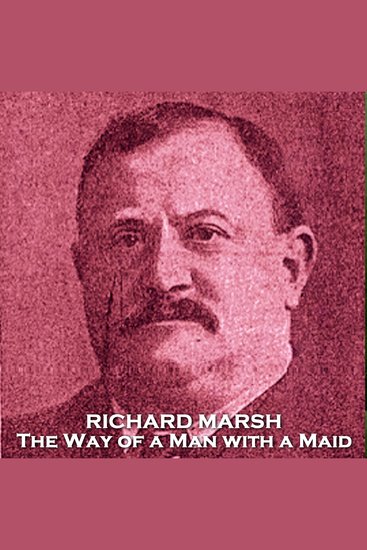
    Richard Marsh

    • 0
    • 0
    • 0
    Richard Bernard Heldmann was born on 12th October 1857, in St Johns Wood, North London.  
    By his early 20’s Heldmann began publishing fiction for the myriad magazine publications that had sprung up and were eager for good well-written content.  
    In October 1882, Heldmann was promoted to co-editor of Union Jack, a popular magazine, but his association with the publication ended suddenly in June 1883.  It appears Heldman was prone to issuing forged cheques to finance his lifestyle.  In April 1884 he was sentenced to 18 months hard labour. 
    In order to be well away from the scandal and the damage that this had caused to his reputation Heldmann adopted a pseudonym on his release from jail.  Shortly thereafter the name ‘Richard Marsh’ began to appear in the literary periodicals.  The use of his mother’s maiden name as part of it seems both a release and a lifeline. 
    A stroke of very good fortune arrived with his novel ‘The Beetle’ published in 1897.  This would turn out to be his greatest commercial success and added some much-needed gravitas to his literary reputation.   
    Marsh was a prolific writer and wrote almost 80 volumes of fiction as well as many short stories, across many genres from horror and crime to romance and humour.   His unusual characters, plotting devices and other literary developments have identified his legacy as one of the best British writers of his time.   
    Richard Marsh died from heart disease in Haywards Heath in Sussex on 9th August 1915.  He was 57.
    Show book
  • The Love of Monsieur - cover

    The Love of Monsieur

    George Fort Gibbs

    • 0
    • 0
    • 0
    The Love of Monsieur by George Fort Gibbs is a captivating work of classic fiction that blends romance, drama, and intrigue into a compelling tale of human emotion and unexpected destiny. Set against richly detailed surroundings, the novel follows characters whose lives become intertwined through passion, loyalty, sacrifice, and the unforeseen consequences of their choices. As relationships deepen and hidden motives emerge, every decision carries lasting significance.
    
    George Fort Gibbs crafts an engaging narrative with memorable characters, vivid settings, and a finely balanced mix of suspense and emotional depth. Through themes of devotion, honor, redemption, and personal transformation, the story explores the complexities of the human heart while maintaining a sense of mystery and anticipation that keeps readers turning the pages.
    
    A memorable example of early twentieth-century literature, The Love of Monsieur continues to captivate readers with its elegant prose, timeless themes, and engaging storytelling. Perfect for admirers of classic romance, historical fiction, and character-driven novels, this enduring work offers a rewarding reading experience filled with emotion, atmosphere, and literary charm.
    Show book
  • The Opera Glass - From their pens to your ears genius in every story - cover

    The Opera Glass - From their...

    Louis Couperus

    • 0
    • 0
    • 0
    The bookshelves of European literature are incredible collections that have gathered together centuries of very talented authors.  From this continent their fame spread and whilst among their number many are now forgotten or neglected their talents endure.  Among them is Louis Couperus.
    Show book
  • Heart of Darkness - cover

    Heart of Darkness

    Joseph Conrad

    • 0
    • 0
    • 0
    “He struggled with himself, too. I saw it -- I heard it. I saw the inconceivable mystery of a soul that knew no restraint, no faith, and no fear, yet struggling blindly with itself.”  
    Aboard an anchored boat on the Thames a sailor named Charlie Marlow tells his fellow sailors a shocking story from his youth as a ferry boat captain traveling up the Congo River. It soon becomes clear to his audience that Marlow is more than a little obsessed with the brilliant ivory trader he met there, Kurtz. Though gifted, powerful and charismatic, the young Marlow suspected the man had gone mad. 
    ‘Heart of Darkness’ (1899) is a timeless book and a breathtaking story about the corruptive European colonialism. It is the inspiration behind the classic 1979 movie, Apocalypse Now starring Marlon Brando and Martin Sheen. 
    Joseph Conrad (1857-1924) was a Polish-born author who left Poland in his teens to avoid enlistment in the Russian Army. He learned English aboard British ships and started writing in the language after settling in England. His most famous novel is ‘Heart of Darkness’ (1899), which was inspired by his experiences on the open sea.
    Show book
  • The Scarlet Plague - cover

    The Scarlet Plague

    Jack London

    • 0
    • 0
    • 0
    "The world was full of people... and then, in a moment, the world was empty."
    
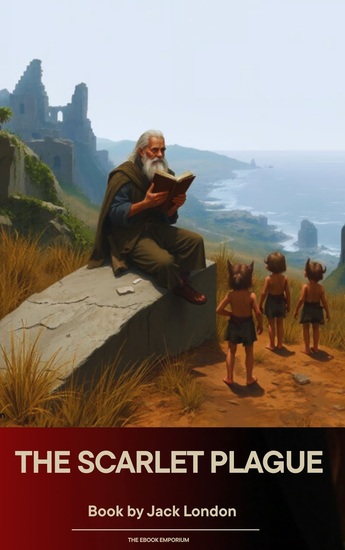
    The year is 2073. An old man, clad in goatskins and wandering the ruins of a wild California, tells his skeptical, savage grandsons about a world they can hardly imagine: a world of airships, teeming cities, and a miracle called "science." He is Professor James Howard Smith, one of the few survivors of the "Scarlet Death" that decimated the global population in 2013. As he recounts the terrifying speed with which the plague spread and the brutal chaos that followed, London delivers a stark warning about the fragility of our modern world and the enduring power of nature.
    
    A Blueprint for Post-Apocalyptica: Jack London was the first to master the "shattered world" aesthetic. He describes iconic landmarks like the San Francisco Bay Area reclaimed by forests and wolves. The novel explores the "Great Regression," where the descendants of scholars and billionaires have become illiterate hunters, losing the hard-won knowledge of their ancestors in just two generations.
    
    The Biological Terror: Unlike many Victorian "plague" stories, London focuses on the terrifying efficiency of the pathogen. The Scarlet Death kills within hours, turning the skin red and paralyzing the body. Through the Professor's eyes, we witness the terrifying realization that no amount of wealth or technology can stop a microscopic enemy once it reaches critical mass.
    
    Witness the end of the world. Purchase "The Scarlet Plague" today and discover the roots of modern survival fiction.
    Show book