Join us on a literary world trip!
Add this book to bookshelf
Grey
Write a new comment Default profile 50px
Grey
Subscribe to read the full book or read the first pages for free!
All characters reduced
Penetration Testing Fundamentals -1 - Penetration Testing Study Guide To Breaking Into Systems - cover

Penetration Testing Fundamentals -1 - Penetration Testing Study Guide To Breaking Into Systems

Devi Prasad

Publisher: BookRix

  • 0
  • 0
  • 0

Summary

 Unlock the art of ethical hacking and fortify your cybersecurity arsenal with 'Penetration Mastery: A Comprehensive Guide to Ethical Hacking.' Delve into the mind of a hacker to understand the vulnerabilities that could compromise your systems and emerge as a vigilant defender of digital landscapes. This book provides hands-on techniques, cutting-edge tools, and real-world scenarios to empower you to identify and eliminate security loopholes. From network reconnaissance to exploiting weaknesses and implementing foolproof defenses, this comprehensive guide navigates you through the intricate world of penetration testing. Whether you're a seasoned cybersecurity professional or an aspiring ethical hacker, 'Penetration Mastery' is your definitive roadmap to securing the digital future. 
Available since: 11/30/2023.
Print length: 19 pages.

Other books that might interest you

  • The Year in Tech 2023 - The Insights You Need from Harvard Business Review - cover

    The Year in Tech 2023 - The...

    Harvard Business Review

    • 0
    • 0
    • 0
    A year of HBR's essential thinking on tech—all in one place. 


    Easy-to-use AI tools, contactless commerce, crypto for business, the mature metaverse—new technologies like these are reshaping organizations at the hybrid office, on factory floors, and in the C-suite. What should you and your company be doing now to take advantage of the new opportunities these technologies are creating—and avoid falling victim to disruption? The Year in Tech 2023: The Insights You Need from Harvard Business Review will help you understand what the latest and most important tech innovations mean for your organization and how you can use them to compete and win in today's turbulent business environment. 


    Business is changing. Will you adapt or be left behind? 


    Get up to speed and deepen your understanding of the topics that are shaping your company's future with the Insights You Need from Harvard Business Review series. Featuring HBR's smartest thinking on fast-moving issues—blockchain, cybersecurity, AI, and more—each book provides the foundational introduction and practical case studies your organization needs to compete today and collects the best research, interviews, and analysis to get it ready for tomorrow.
    Show book
  • America’s Most Notorious Fires: The Deadliest Blazes in American History - cover

    America’s Most Notorious Fires:...

    Charles River Editors

    • 0
    • 0
    • 0
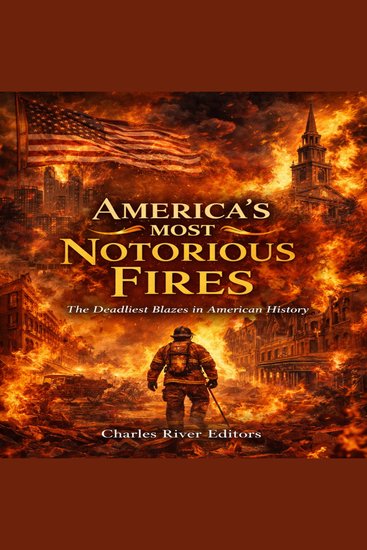
    It had taken about 40 years for Chicago to grow from a small settlement of about 300 people into a thriving metropolis with a population of 300,000, but in just two days in 1871, much of that progress was burned to the ground. In arguably the most famous fire in American history, a blaze in the southwestern section of Chicago began to burn out of control on the night of October 8, 1871. Thanks to The Chicago Tribune, the fire has been apocryphally credited to a cow kicking over a lantern in Mrs. Catherine O’Leary’s barn, and though that was not true, the rumor dogged Mrs. O’Leary to the grave. Of course, the cause of the fire didn’t matter terribly much to the people who lost their lives or their property in the blaze. Thanks to dry conditions, wind, and wooden buildings, firefighters were never actually able to stop the fire, which burned itself out only after it spent nearly two whole days incinerating several square miles of Chicago. 
    Overshadowed by the much better covered and publicized Great Chicago Fire that occurred on the very same evening, the fire that started in the Wisconsin logging town of Peshtigo generated a firestorm unlike anything in American history. In addition to destroying a wide swath of land, it killed at least 1,500 people and possibly as many as 2,500, several times more than the number of casualties in Chicago.  
    On April 18, 1906, most of the residents of the city of San Francisco were sound asleep when the ground started to shake around 5:15 a.m., but what started as fairly soft tremors turned into a violent shaking in all directions. Unfortunately for San Franciscans, the worst was yet to come. During the earthquake, the city’s gas mains and water mains were ruptured, which had the effects of starting a number of fires and preventing the residents from being equipped to fight them. 
    Show book
  • Mesoamerican Astronomy: The History of Celestial Observations Made by the Maya Aztec and Inca - cover

    Mesoamerican Astronomy: The...

    Editors Charles River

    • 0
    • 0
    • 0
    For the Maya, astronomy was not a purely scientific pursuit but intimately linked to religious, mythological, and ideological elements that were of the highest importance. The celestial realm held a sacred nature, as did the many gods and goddesses that dwelt there, so for all Mesoamerican cultures, astronomy was a fundamental part of their everyday lives. Thus, astronomy was present in their calendars, religion, and even agriculture, and in close relation to astronomy, the concept of time was also an essential part of their worldview.  
    The Aztec recorded many of the astronomical events they observed in codices and hieroglyphic inscriptions, but the main evidence of their deep astronomical knowledge comes from their calendar system. This information was then used to plan the orientation of buildings and ceremonial centers, which were aligned to sunrises or sunsets corresponding to special dates, such as solstices or equinoxes. Observational calendars were also used to schedule agricultural activities, as well as rituals, festivals, and celebrations. 
    Though the Spanish physically conquered them in quick fashion, the culture and legacy of the Inca Empire has continued to endure throughout the centuries in both Europe and South America, due in no small part to the fact they were one of the most advanced and sophisticated cultures on the continent. The sun was the main element present in the Inca worldview, so Inti, the sun god, was worshipped above all others and, even though the different parts of the empire were allowed to practice their individual beliefs, they were encouraged to venerate the sun. The connection with the sun even extended to their kings since they were considered to be the sons of the sun. Naturally, this meant astronomy was a key component of the Incas’ beliefs, and in addition to the sun, the Inca observed the moon, stars, constellations, and some planets, all of which became integral parts of their cosmology.
    Show book

  • Ripple - An Intimate Exchange of Urgency and Hope Between An Ecologist and His Daughter - cover

    Ripple - An Intimate Exchange of...

    William Powers

    • 0
    • 0
    • 0
    Ripple: An Intimate Exchange of Urgency and Hope Between An Ecologist and His Daughter is a narrative of letters written by an ecologist dad to his daughter upon her coming-of-age. Drawing upon his personal history, family anecdotes, and shared memories, Powers envisions a path for humanity's reintegration with nature, and a chance to save the life force that runs through all of us. A story of separation has long gripped the human race: that people are separate—with more advanced habitats, technologies, and values—from our natural surroundings and fellow creatures. We have been told this story for generations. But as Powers watches his daughter approach adulthood, with all of society's expectations, he knows that the story we pass down has to change. In Ripple, he tells a different tale, one of community and family, inner wisdom, and shared existence within a living planet.
    Show book
  • Stop Procrastination Now Sleep Hypnosis - No More Delay Only Success - cover

    Stop Procrastination Now Sleep...

    Dreamy Hypnosis

    • 0
    • 0
    • 0
    Does procrastination cripple your productivity? Are you caught in the cycle of postponing tasks, causing you unnecessary stress? What if you could overcome this barrier and take control of your life while you sleep? 
    Dive into this revolutionary audiobook that uses sleep hypnosis techniques designed to restructure your subconscious mind, the key to breaking the shackles of procrastination. By reprogramming your thoughts in a serene sleep state, you can instill habits of efficiency and focus. 
    Featuring soothing narratives by expert hypnotherapists, this audiobook will gently guide you into a restful slumber while instilling in you the drive to accomplish tasks with determination. Coupled with tranquil soundscapes, it's an immersive journey to enhance productivity and eliminate the tendency to delay. 
    It's time to say goodbye to the stress and anxiety of unfinished tasks. Picture yourself waking up refreshed and eager to tackle the day, having the energy and motivation to complete your to-do list. Start your journey towards an efficient, fulfilling life tonight. Embrace the freedom that comes from saying "no" to procrastination and "yes" to productivity.
    Show book
  • Pope Francis - From the End of the Earth to Rome - cover

    Pope Francis - From the End of...

    The Wall Street Journal

    • 0
    • 0
    • 0
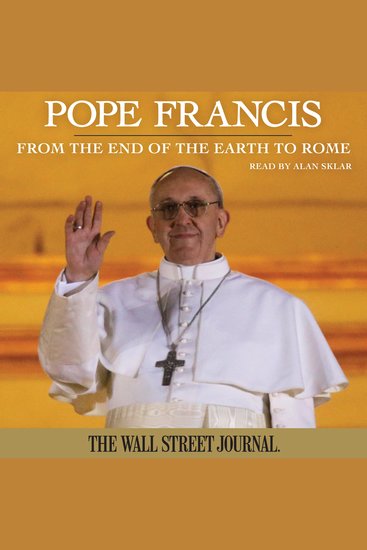
    A detailed, timely, and original biography of Pope Francis by the staff of the Wall Street Journal, offering insight into the bargaining and drama that surrounded his rise. Pope Francis presents the full, in-depth story of the church's change in direction and the man charged with leading it. 
    On March 13, the cardinals of the Catholic Church, gathered to elect a successor to a living Pope for the first time in 600 years, announced a dramatic shift. By elevating Cardinal Jorge Mario Bergoglio of Argentina to become Pope Francis the 266th Pontiff, the cardinals were naming the first-ever Pope from the growing New World to take the helm of the church at a crucial moment. 
    It was a stunning move by a 2,000-year-old institution that has immense influence—with 1.2 billion adherents worldwide—and huge problems, including a decade-old sex-abuse scandal that has shattered faith in the institution, a shortage of priests and secular trends that have drained the church of members and challenged its relevancy in a changing world. 
    From the shocking decision by Pope Benedict XVI to retire, to the introduction of Pope Francis, from the back streets of Buenos Aires to the front row at St. Peter's Square, reporters from The Wall Street Journal have chronicled these dramatic weeks in the life of the oldest institution in the world.
    Show book