Join us on a literary world trip!
Add this book to bookshelf
Grey
Write a new comment Default profile 50px
Grey
Subscribe to read the full book or read the first pages for free!
All characters reduced
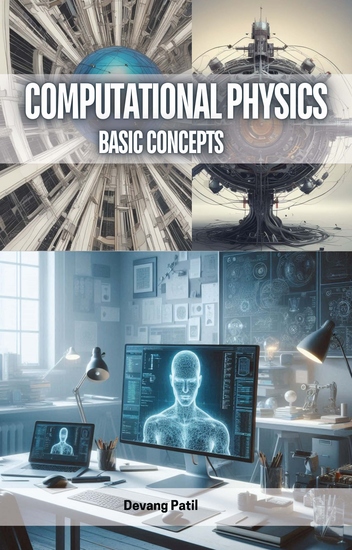
Computational Physics - Basic Concepts - cover

Computational Physics - Basic Concepts

Devang Patil

Publisher: Educohack Press

  • 0
  • 0
  • 0

Summary

"Computational Physics: Basic Concepts" serves as an indispensable guide for students, researchers, and enthusiasts exploring the intersection of physics and computational methods. This book offers a comprehensive exploration of the fundamental principles of computational physics, providing a solid foundation to tackle complex problems in various branches of physics.

The book begins by elucidating the foundational principles and theoretical underpinnings essential for effective computational simulations. It covers a variety of numerical techniques, including finite difference methods and Monte Carlo simulations, with practical examples and applications. 

Recognizing the importance of coding skills, it includes a section on programming tailored for physicists, teaching readers to implement numerical algorithms using popular programming languages.

"Computational Physics: Basic Concepts" extends its coverage to diverse branches of physics such as classical mechanics, electromagnetism, quantum mechanics, and statistical physics, illustrating the versatility of computational techniques. Each chapter includes problem-solving exercises designed to reinforce understanding and enhance computational skills. Techniques for data visualization and interpretation are discussed, enabling effective communication of findings. The book also shares practical tips and best practices to optimize computational workflows and avoid common pitfalls.

Whether you're a student new to computational physics or a seasoned researcher, "Computational Physics: Basic Concepts" provides a thorough and accessible resource for mastering the essential elements of this dynamic field.
Available since: 02/20/2025.
Print length: 289 pages.
Other books that might interest you

  • Machine Learning with Python - Step By Step Methods To Master Machine Learning With Python - cover

    Machine Learning with Python -...

    Alexander Cane

    • 0
    • 0
    • 0
    It’s clear that the future is all about artificial intelligence and machine learning. We all want better recommendations, better personalization, and we want much more from our internet searches. The apps we use can see, they can hear, and they can even respond, and that is a direct result of artificial intelligence – improving the user experience and bringing much more value across every industry. 
    This brings two questions to mind, though – How do we bring those experiences to life and what’s the best computer programming language to use? 
    The obvious answer is to use Python because it is the best language for machine learning. 
    Why?  
    What makes it the best programming language? 
    Artificial intelligence projects are different from your standard software project, and that difference comes from the technology stack, from the skills that you need for artificial intelligence projects and from the real necessity for deep research. 
    You need a programming language that offers stability, flexibility, and a wide range of tools. Python gives you all this and more. From development, right through deployment to maintenance, the Python language helps us to be productive developers, confident about what we are building.
    Show book
  • Gravity's Hidden Partner - Understanding Dark Matter's Role in Space - cover

    Gravity's Hidden Partner -...

    Dirk Fallon

    • 0
    • 0
    • 0
    Dark matter is one of the most perplexing and elusive concepts in modern astrophysics. It was first proposed in the early 20th century when astronomers and physicists observed that galaxies and galaxy clusters seemed to be moving in ways that couldn't be explained by the visible matter alone. Despite the fact that dark matter cannot be directly seen or measured through conventional means, its existence has been inferred through its gravitational effects on visible matter, radiation, and the large-scale structure of the universe. 
    The concept of dark matter emerged after astronomer Fritz Zwicky made an important observation in the 1930s. He noticed that galaxy clusters were moving much faster than they should have been based on the amount of visible matter present in them. In other words, there seemed to be an invisible force or substance that was exerting additional gravitational pull on these galaxies. However, it wasn't until the 1970s when Vera Rubin made similar findings in her studies of galactic rotation curves that the theory of dark matter gained significant traction. 
    Rubin's work revealed that the outer edges of galaxies were rotating faster than expected, based on the amount of visible matter present in them. If only the visible stars, gas, and dust were taken into account, the outer regions should have been moving slower, but they weren't. This discrepancy suggested that there was more mass in these galaxies than what could be seen. This unseen mass was later attributed to dark matter, a substance that doesn't emit, absorb, or reflect light, making it undetectable by conventional instruments.
    Show book
  • Tough and Competent - Leadership and Team Chemistry - cover

    Tough and Competent - Leadership...

    Eugene F. Kranz

    • 0
    • 0
    • 0
    Tough and Competent documents the leadership and teamwork principles which emerged from an organization of novice, part-time engineers in NASA Mercury Control. By July 1969, when faced with the stress of the Apollo 11 mission to land Americans on the moon, they had matured into a group of hardened individuals empowered to make the split-second decisions to land with only seventeen seconds of fuel remaining. What had changed? Team chemistry, IT!, is the unifying soul of operations that emerged from the leadership, working, and social environment to achieve organizational excellence. Mission Control could address quickly the risks and complexity of spaceflight operations. The intangible element, IT!, elevates performance to where the impossible becomes commonplace. 


    IT! was born in a bare-bones warehouse floor work environment, where learning by doing developed the materials for flight. Controllers spanned diverse backgrounds: Philco tech reps, farm boys, Native Americans, and junior college grads who became self-made engineers. A free exchange of knowledge developed expertise among colleagues. Everyone brought unique viewpoints and skills which coalesced into IT! In relaying his long tenure at NASA, Kranz narrates the development of IT! His views on lessons learned through decades of Mission Control are valuable for any innovation-based organization.
    Show book
  • CRRN - Ace your Certified Rehabilitation Registered Nurse Exam! Discover unmatched audio lessons tailored for incredible results - cover

    CRRN - Ace your Certified...

    Adrian R. Wilde

    • 0
    • 0
    • 0
    - CRRN - 
    ⭐⭐ Simplified Guide & Explanations Included ⭐⭐ 
    Are you seeking to advance your nursing career and strengthen your expertise by successfully passing the CRRN Exam 2024-2025? 
    Looking for a thorough guide that covers all the necessary aspects to pass the CRRN Exam 2024-2025? 
    Your search ends here! 
    This guide is your ultimate companion for deepening your understanding, applying your skills, and engaging in practical exercises. With this, you're set for success. 
    Updated for the CRRN 2024-2025 Exam Structure. 
    Key features of this enriched guide: 
    - Profound insights about the CRRN Exam 2024-2025 Certification 
    - Detailed explanation of the Certified Rehabilitation Registered Nurse 
    - Effective strategies for exam preparation and tackling 
    Our guide distinguishes itself through comprehensive coverage, essential for your exam success. Concepts aren't merely skimmed; they are explored in depth with precision. 
    Please note that this guide is not affiliated with any official CRRN entity and is purely an independent resource for your benefit. 
    Designed with a clear structure and easy-to-understand language, our CRRN Exam Guide 2024-2025 ensures smooth transitions between topics. Say goodbye to dense jargon and welcome clear, precise, and technically accurate content. 
    So, why wait? Click the BUY NOW button, secure your guide, and begin your journey to CRRN Exam 2024-2025 success!
    Show book
  • AI for Everyone - How Non-Technical Managers Entrepreneurs and Creatives Can Harness Artificial Intelligence for Efficiency Growth and Career Advancement - cover

    AI for Everyone - How...

    Adrian Cole

    • 0
    • 0
    • 0
    Feeling like the AI revolution is happening to you, not for you? Drowning in tech jargon like "machine learning" and "neural networks," wondering how you, as a non-technical manager, entrepreneur, or creative, can possibly harness this power without getting lost in the complexity? 
    You see AI's potential but feel stuck on the outside looking in. Maybe you're frustrated by tedious tasks eating into your strategic time, worried about falling behind tech-savvier colleagues, or simply intimidated by the perceived need for coding skills. You know there has to be a way to leverage AI, but the path feels blocked by confusing language and a lack of practical guidance for your specific needs. 
    Imagine confidently automating routine work, freeing up hours each week for innovation and focus. Picture yourself making smarter, data-backed decisions with ease, and communicating the value of AI within your role. This book empowers you to transform from feeling overwhelmed or excluded to feeling confident and in command. You'll learn not just about AI, but how to make AI work for you, boosting your productivity and positioning yourself as a forward-thinking leader in your field. 
    Inside, you'll discover how to:Translate the Tech-Speak: Finally grasp essential AI concepts without the confusing jargon.Pinpoint the Perfect Tools: Identify and evaluate user-friendly AI solutions tailored to your specific challenges.Future-Proof Your Skillset: Gain the AI literacy needed to thrive and advance professionally.Apply Real-World Strategies: Benefit from practical case studies and actionable exercises. 
    Scroll up and click "Buy Now" to claim your place in the AI revolution today! 
     
    Show book
  • Science and Health - Knowledge and Medicine in Ancient Rome (3 in 1) - cover

    Science and Health - Knowledge...

    Rogan Fish

    • 0
    • 0
    • 0
    Science and Health: Knowledge and Medicine in Ancient Rome (3 in 1) explores the intellectual and spiritual forces that shaped Roman civilization, from its groundbreaking scientific ideas to its religious beliefs and the formidable enemies it battled across centuries. 
    In Roman Medicine and Science, uncover the practical and philosophical roots of Roman knowledge—how doctors, engineers, and scholars applied Greek theory, astrology, and firsthand experience to treat the sick, build aqueducts, and study the stars. Roman Religion and Mythology dives into the gods, rituals, and sacred practices that infused daily life with divine meaning and political power. From Jupiter to household spirits, religion in Rome was deeply entwined with science, healing, and war. The Roman Empire and Their Enemies offers a dynamic look at Rome’s greatest rivals—Persians, Carthaginians, Germanic tribes, and more—examining how these conflicts influenced Rome’s scientific developments, medical needs, and mythic self-image. 
    Together, these three books reveal how Romans understood the world—through logic and legend, reason and ritual. Ideal for readers fascinated by ancient science, belief systems, and military history, this volume reveals how Rome's view of knowledge shaped its rise—and echoed through its fall.
    Show book