Join us on a literary world trip!
Add this book to bookshelf
Grey
Write a new comment Default profile 50px
Grey
Subscribe to read the full book or read the first pages for free!
All characters reduced
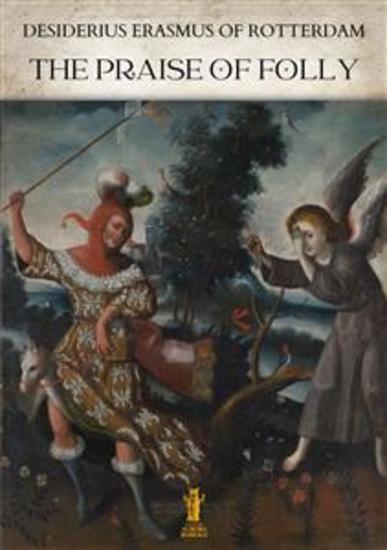
The Praise of Folly - cover

The Praise of Folly

Desiderius Erasmus of Rotterdam

Publisher: Edizioni Aurora Boreale

  • 0
  • 0
  • 0

Summary

Desiderius Erasmus of Rotterdam (1466-1536) was a Dutch humanist, Catholic theologian, educationalist, satirist and philosopher. Through his vast number of translations, books and essays, he is considered one of the most influential thinkers of the Northern Renaissance and one of the major figures of Dutch and Western culture.
He was an important figure in classical scholarship who wrote in a spontaneous, copious and natural Latin style. As a Catholic priest developing humanist techniques for working on texts, he prepared important new Latin and Greek editions of the New Testament, and also wrote fundamental works as On Free Will, The Praise of Folly, Handbook of a Christian Knight, On Civility in Children, and many other essays.
The Praise of Folly (Stultitiae Laus or Moriae Encomium in Latin), is an essay written by Erasmus in Latin in 1509 and first printed in June 1511. Inspired by a previous works of the Italian humanist Faustino Perisauli, De Triumpho Stultitiae, it is a spiralling satirical attack on all aspects of human life, not ignoring superstitions and corruptions in the contemporary Latin Church, but with a pivot into an orthodox religious purpose.
Available since: 02/16/2024.
Other books that might interest you

  • The Gulf Wars - Conflict in the Middle East - cover

    The Gulf Wars - Conflict in the...

    Nova Ashford

    • 0
    • 0
    • 0
    The Middle East, a region at the crossroads of Africa, Asia, and Europe, has a complex and multifaceted history that has shaped its modern political and social dynamics. Understanding the historical background of this area is essential for grasping the causes of its current conflicts, including the Gulf Wars. The region’s significance goes beyond its geographical location; it is home to some of the world’s oldest civilizations, such as the Sumerians, Egyptians, and Persians, which laid the foundation for much of human civilization, particularly in terms of writing, law, and governance. 
    The historical trajectory of the Middle East has been deeply influenced by the rise and fall of empires. In ancient times, the region was dominated by powerful empires such as the Persian Empire and the Ottoman Empire. The Ottoman Empire, in particular, played a central role in shaping the political landscape of the Middle East for over 400 years. Its collapse after World War I marked the beginning of a new era, characterized by the creation of modern nation-states and the imposition of arbitrary borders by Western powers. The dismantling of the Ottoman Empire led to the carving up of its territories under the Sykes-Picot Agreement, a secret 1916 accord between Britain and France that laid the groundwork for many of the modern-day conflicts in the region. 
    The aftermath of World War I also saw the emergence of European mandates in the Middle East. The British and French took control of territories such as Iraq, Palestine, and Syria, which created tensions among various ethnic and religious groups. The artificial borders drawn by colonial powers failed to account for the region's complex social fabric, where multiple ethnicities, religions, and cultures coexisted. This imposition of external governance set the stage for future conflicts, as regional communities struggled for autonomy and independence.
    Show book
  • The Individualization of War - Rights Liability and Accountability in Contemporary Armed Conflict - cover

    The Individualization of War -...

    Dapo Akande, David Rodin,...

    • 0
    • 0
    • 0
    The rights and responsibilities of the individual are at the center of today's armed conflicts in a way that they have never been before. This process of "individualization," which challenges the primacy of the sovereign state, is driven by normative developments related to human rights that have elevated human-centric conceptions of security and created a new class of international crimes, as well as by technological and strategic developments that can both empower individuals as military actors and enable either the targeting or protection of particular individuals. 


    The Individualization of War examines the status of individuals in contemporary armed conflict in three main capacities: as subject to violence but deserving of protection; as liable to harm because of their responsibility for attacks on others; and as agents who can be held accountable for the perpetration of crimes. This book presents a novel conceptualization of the phenomenon of individualization, including how it is both practiced and contested. It then convenes a set of leading thinkers from the fields of moral philosophy, international law, and international relations to further our understanding of not only how individualization is manifest in armed conflict—in theory and in practice—but also how it generates tensions and challenges for today's scholars and practitioners.
    Show book
  • Saving Michael - How Rescuing a "Throwaway Child" Turned Me into a Foster Care Advocate - cover

    Saving Michael - How Rescuing a...

    Keri Vellis

    • 0
    • 0
    • 0
    Describes what being a foster mom is really like, the effects of foster care on the whole family, and how the foster care system fails severely abused children. 


    Foster children are society's throwaway kids, the children no one wants—until someone finally does. Saving Michael provides an inside look at Keri Vellis's struggle to secure the best possible services for two severely abused and traumatized siblings. Listeners get a glimpse of Keri and her family's day-to-day life as she went from mother of three to adoptive mother of three more children and then the temporary caregiver of another seventeen. 


    Saving Michael delves into issues bigger than one family's experiences and determination. Now an author and child advocate, Vellis provides a profoundly personal look into what it takes to get the best for each of the children she's had in her care. Her journey started from the first day of her first foster care situation and the urgent need for diagnoses and treatment. Along the way, she details the many ups and downs, challenges and triumphs, her whole family experienced as part of the foster care system. All children deserve permanent, safe homes. The effort to obtain those for every child is a tremendous one not for the faint-hearted. But the rewards reverberate for everyone when it works.
    Show book
  • War Peace and Violence: Four Christian Views - cover

    War Peace and Violence: Four...

    Paul Copan

    • 0
    • 0
    • 0
    In a world of war, terrorism, and other geopolitical threats to global stability, how should committed Christians honor Jesus Christ and his Word? How should Christians think and act when it comes to church-state relations, the preservation of order, the practice of just peacemaking, and the use of coercive force?
    In this volume in IVP Academic's Spectrum series, four contributors—experts in Christian ethics, political philosophy, and international affairs—offer the best of current Christian thinking on issues of war and peace. They present four distinct views:
    
    - Eric Patterson, just war view
    - Myles Werntz, nonviolence view
    - A. J. Nolte, Christian realist view
    - Meic Pearse, church historical view
    Each contributor makes a case for his own view and responds to the others, highlighting complexities and real-world implications of the various perspectives. Edited and with an introduction and conclusion by the philosopher Paul Copan, this book provides a helpful orientation to the key positions today.
    Spectrum Multiview Books offer a range of viewpoints on contested topics within Christianity, giving contributors the opportunity to present their position and also respond to others in this dynamic publishing format.
    Show book
  • More Foul Deeds & Suspicious Deaths in Wakefield - cover

    More Foul Deeds & Suspicious...

    Katie Taylor

    • 0
    • 1
    • 0
    A historic account of the Northern England city’s crimes, including misdeeds that shed light on past ways of life—from death by neglect to police killings.   How the body of a Wakefield murder victim was exhibited for a fee in 1853, the odd story of a Normanton miner attacked by a prosperous Crofton gentleman in 1875, the tragic death of a twenty-one-year old woman on what should have been her wedding day in 1909, and the case of the Sandal dental lecturer who killed his adopted daughter in 1966 are among the many foul deeds recounted in More Foul Deeds and Suspicious Deaths in Wakefield.   In a companion volume to Foul Deeds and Suspicious Deaths in Wakefield (2001), Kate Taylor has assembled more than fifty further accounts of horrific deaths in or near Wakefield. Some killings reflect the tensions and resentment of domestic life but there are mysteries too like the case of a man found dead in 1860 in a shallow beck with no marks of violence on him. In an incident in Horbury involving the death of a baby in 1849 it was the assistant constable pursuing the inquiries who died. The book shows something of the cultural context that can promote murder—the stigma of illegitimacy in the past and the more recent risks of glue sniffing and the appalling bullying of immigrants. Take a journey into the darker and unknown side of your area as you read More Foul Deeds and Suspicious Deaths in Wakefield.
    Show book
  • The Airborne Mafia - The Paratroopers Who Shaped America's Cold War Army - cover

    The Airborne Mafia - The...

    Robert F. Williams

    • 0
    • 0
    • 0
    The Airborne Mafia explores how a small group of World War II airborne officers took control of the US Army after World War II. This powerful cadre cemented a unique airborne culture that had an unprecedented impact on the Cold War US Army and beyond. 


    Robert F. Williams reveals the trials and tribulations this group of officers faced in order to bring about their vision. He spotlights the relationship between organizational culture, operational behavior, and institutional change in the United States Army during the Cold War, showing that as airborne officers ascended to the highest ranks of the army they transmitted their culture throughout their service in four major ways—civil-military relations, preparation for potential atomic combat, helicopter airmobility, and strategic response forces. 


    Experiences of training and commanding airborne divisions in World War II led these men to hold sway in army doctrine by the mid-1950s. Dominating institutional thought and imparting their values, beliefs, and norms throughout the service they enjoyed a special privilege within the group culture. Williams demonstrates this impact, privilege, and power by focusing on the paratrooper triumvirate of Matthew Ridgway, Maxwell Taylor, and James Gavin and the lasting impression they made on how the US Army fought.
    Show book