Join us on a literary world trip!
Add this book to bookshelf
Grey
Write a new comment Default profile 50px
Grey
Subscribe to read the full book or read the first pages for free!
All characters reduced
Human Intelligence Collector Operations - Enriched edition - cover

Human Intelligence Collector Operations - Enriched edition

Department of the Army Headquarters

Publisher: DigiCat

  • 0
  • 0
  • 0

Summary

In "Human Intelligence Collector Operations," the Department of the Army Headquarters presents an authoritative and practical guide on the intricacies of human intelligence (HUMINT). This comprehensive manual integrates tactical frameworks with operational guidelines, employing a straightforward literary style that emphasizes clarity and accessibility for military personnel at all levels. The text reflects a disciplined approach, meticulously outlining techniques for intelligence collection, analysis, and reporting, while situating HUMINT within the broader context of modern warfare and national security protocols. The use of real-world scenarios enhances the reader's understanding of the challenges and ethical considerations inherent in HUMINT operations. The Department of the Army Headquarters, a pivotal institution in shaping military doctrine, draws upon decades of collective experience in intelligence practices. Their insights are informed by ongoing military engagements and evolving threats, which underscore the necessity for robust HUMINT capabilities. This institutional knowledge has allowed the authors to present a rich tapestry of theoretical grounding and practical application, showcasing the importance of human interactions in gathering actionable intelligence. This manual is an essential resource for military professionals, intelligence analysts, and scholars interested in the operational nuances of intelligence work. "Human Intelligence Collector Operations" not only equips readers with essential skills but also fosters a deeper appreciation for the strategic role of HUMINT in contemporary conflict scenarios.

In this enriched edition, we have carefully created added value for your reading experience:
- A succinct Introduction situates the work's timeless appeal and themes.
- The Synopsis outlines the central plot, highlighting key developments without spoiling critical twists.
- A detailed Historical Context immerses you in the era's events and influences that shaped the writing.
- An Author Biography reveals milestones in the author's life, illuminating the personal insights behind the text.
- A thorough Analysis dissects symbols, motifs, and character arcs to unearth underlying meanings.
- Reflection questions prompt you to engage personally with the work's messages, connecting them to modern life.
- Hand‐picked Memorable Quotes shine a spotlight on moments of literary brilliance.
- Interactive footnotes clarify unusual references, historical allusions, and archaic phrases for an effortless, more informed read.
Available since: 11/23/2023.
Print length: 306 pages.

Other books that might interest you

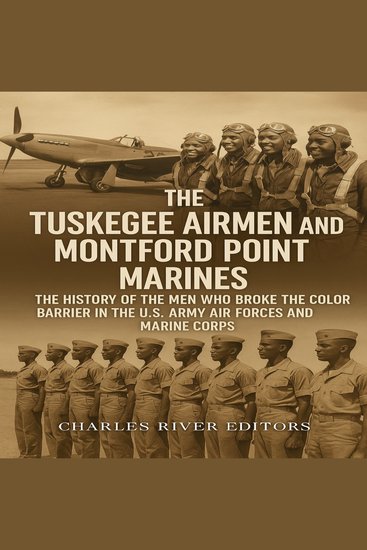
  • Tuskegee Airmen and Montford Point Marines The: The History of the Men Who Broke the Color Barrier in the US Army Air Forces and Marine Corps - cover

    Tuskegee Airmen and Montford...

    Charles River Editors

    • 0
    • 0
    • 0
    The United States has no shortage of famous military units, from the Civil War’s Iron Brigade to the 101st Airborne, but one would be hard pressed to find one that had to go through as many hardships off the field as the Tuskegee Airmen, a group of African American fighter pilots who overcame Jim Crow at home and official segregation in the military to serve their country in the final years of World War II. In fact, it required a concerted effort by groups such as the National Association for the Advancement of Colored People (NAACP) and the extreme circumstances brought about by World War II that the military eventually decided to establish the “Tuskegee Experiment.” 
    The black crews trained at Tuskegee before being sent overseas, and even then, they faced discrimination from those who didn’t trust them to do more than escort bombers flown by white pilots. However, as the men proved their worth in the heat of battle, some of the squadrons’ red markings helped them earn the nickname “Red Tails,” and their track record was so good that eventually the white pilots of American bombers wanted to fly with them. As Tuskegee airman Roscoe Brown eloquently put it, “They have a saying that excellence is the antidote to prejudice; so, once you show you can do it, some of the barriers will come down.” 
    In the summer of 1942, the first group of African American recruits stepped off a bus into the pine woods of North Carolina, bound for an experiment the Marine Corps had long vowed never to attempt. Their destination - Montford Point, a hastily constructed satellite to the new Camp Lejeune - was more than a training ground. It was a compromise with democracy, a segregated doorway into an institution that had defined itself for generations by who could not enter. The Corps’ exclusivity had a racial edge, as the Marines had barred black men outright from 1798 all the way up the start of the Second World War. 
    Show book
  • How to Find Happiness - An Ancient Guide to the Good Life - cover

    How to Find Happiness - An...

    Marcus Tullius Cicero, Katharina...

    • 0
    • 0
    • 0
    Does happiness come from the pursuit of pleasure or moral virtue? A vivid new translation of Cicero’s exploration of a timeless question“Of course, we all want to be happy.” So wrote the Roman statesman, orator, and philosopher Marcus Tullius Cicero. He and his fellow Greek and Roman philosophers agreed that the secret to happiness—or what they called the “good life”—is pursuing the “greatest good.” The only problem is that they couldn’t agree on what the greatest good is. Cicero addressed this dilemma by composing a set of dialogues, On the Greatest Good and Evil (De finibus bonorum et malorum), in which he pitted advocates of different philosophical approaches to happiness against one another. Notably, these include the Epicureans (who believe that the greatest good is pleasure) and the Stoics (according to whom it is moral virtue). Rather than choosing sides, Cicero considers the pros and cons of the different philosophies, ultimately leaving it to his readers to make up their own minds. In How to Find Happiness, Katharina Volk offers a vivid new translation of selections from Cicero’s work, complete with an introduction and the original Latin text on facing pages. The result is a lively and engaging debate that invites each of us to discover our own path to happiness.
    Show book
  • Everyday Memory - Unleashing the Power of Your Mind for Enhanced Recall and Everyday Excellence - cover

    Everyday Memory - Unleashing the...

    Anette Fisher

    • 0
    • 0
    • 0
    Everyday Memory: Unleashing the Power of Your Mind for Enhanced Recall and Everyday ExcellenceUnleash the full potential of your mind with "Everyday Memory: Unleashing the Power of Your Mind for Enhanced Recall and Everyday Excellence." In this audiobook, we delve into the fascinating world of memory and provide you with practical techniques to boost your memory and enhance your everyday life.In our fast-paced world, having a sharp memory is a valuable asset. From remembering important dates and details to retaining information effortlessly, a powerful memory can transform how you navigate your personal and professional spheres.Drawing on the latest scientific research, our expert authors unravel the mysteries of memory and share valuable insights into how you can optimize your memory for peak performance. Through simple memory exercises and proven strategies, you'll learn how to retain information effectively, improve recall ability, and overcome common memory challenges.Discover the different types of memory, from short-term to long-term memory, and unlock the secrets of leveraging visual aids, mnemonics, and other memory techniques. Whether you're a student seeking to ace exams, a professional aiming to boost productivity, or simply someone who wants to maintain mental sharpness, this audiobook is your ultimate guide.Enhancing your memory is within your reach. Join us on this transformative journey to unlock the power of your mind, elevate your memory prowess, and achieve everyday excellence. So, sit back, relax, and embark on the path to a sharper memory and a brighter future.
    Show book
  • Max Hastings On War - cover

    Max Hastings On War

    Max Hastings

    • 0
    • 0
    • 0
    From Max Hastings comes a collection of talks and lectures exploring the wars of the 20th century with the verve, insight and originality that has made him a number one bestselling historian. 
    What is war like to live through, for civilian victims, especially women, as well as soldiers, sailors and fliers? Hastings has been a life-long student of warfare, a ‘chronicler of conflict’, working first as a foreign correspondent on battlefields, then as a prolific prize-winning historian of the 20th century’s greatest struggles. He has now been studying warfare for over fifty years, published thirty books, and given hundreds of talks and lectures. Here are thirteen of the best. 
    Addressing questions of truth versus myth and revisiting many last-generation narratives, Hastings leads us through the most important conflicts in recent times. Listen as he explores D-Day, the Dambusters raid, Churchill’s character and achievement as war leader, Vietnam, and – in his most recent book, published in 2022, the Cuban missile crisis – 13 days when we came closest to annihilation and which stands as a mirror to the grave threats the world faces today. 
    Max Hastings, the Sunday Times bestselling author, delves into the modern history of warfare, shedding light on the political relations that have shaped the world. His international acclaim is a testament to his top-notch storytelling and deep understanding of geopolitics. 
    For fans of Antony Beevor (Arnhem), Damien Lewis (SAS Daggers Drawn), Al Murray (Watching War Films With My Dad), Peter Caddick-Adams (Monte Cassino), and Jonathan Trigg (D-Day Through German Eyes). 
    HarperCollins 2022
    Show book
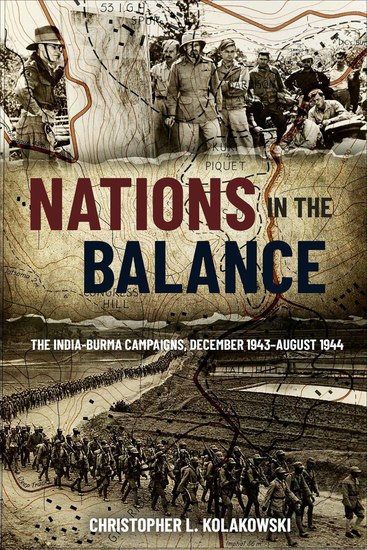
  • Nations in the Balance - The India-Burma Campaigns December 1943–August 1944 - cover

    Nations in the Balance - The...

    Christopher L. Kolakowski

    • 0
    • 0
    • 0
    An account of the decisive WWII battles that helped shape Asia’s future: “Reminds us of the high stakes at risk for both Allies and Axis powers in Burma.” —Military Review   From December 1943 to August 1944, Allied and Japanese forces fought the decisive battles of World War II in Southeast Asia. Fighting centered around North Burma, Imphal, Kohima, and the Arakan, involving troops from all over the world along a battlefront the combined size of Pennsylvania and Ohio. The campaigns brought nations into collision for the highest stakes: British and Indian troops fighting for Empire, the Indo-Japanese forces seeking a prestige victory with an invasion of India and the Americans and Chinese focused on helping China and reopening the Burma Road.   Events turned on the decisions of the principal commanders—Admiral Louis Mountbatten and Generals Joseph Stilwell, William Slim, Orde Wingate, and Mutaguchi Renya, among many others. The impact of the fighting was felt in London, Tokyo, Washington, and other places far away from the battlefront, with effects that presaged postwar political relationships. This was also the first U.S. involvement in Southeast Asia, and Stilwell’s operations in some ways foreshadowed battles in Vietnam two decades later.  Nations in the Balance recounts these battles, offering dramatic and compelling stories of people fighting in difficult conditions against high odds, with far-reaching results. It also shows how they proved important to the postwar future of the participant nations and Asia as a whole, with effects that still reverberate decades after the war.
    Show book
  • Leadership from Bad to Worse - What Happens When Bad Festers - cover

    Leadership from Bad to Worse -...

    Barbara Kellerman

    • 0
    • 0
    • 0
    Leadership from Bad to Worse is about how leadership that is bad, invariably, inexorably, gets worse—unless it is somehow, by someone or something, stopped or slowed. 


    This work draws on four cases of bad leadership—two in political leadership, two in business leadership—to show how it goes from bad to worse. Kellerman finds that bad leadership and bad followership go through four phases of development: 1) Onward and Upward; 2) Followers Join In; 3) Leaders Start In; and 4) Bad to Worse. These findings correctly suggest that the book, in addition to being of theoretical interest, is of practical import. It is intended, deliberately, to serve as an early warning system. By breaking bad leadership and followership into phases—each more ominous and ultimately dangerous than the one preceding—their progression will be easier to predict and detect. And easier, therefore, to slow or, preferably, to stop before they turn toxic. 


    Bad leadership is a social disease. But unlike diseases that are physical or psychological, it remains at the margins of our collective concerns. Leadership from Bad to Worse is, then, a corrective. Knowing that bad leadership can be checked before it corrupts is knowing that bad and then worse can be, if not completely precluded, then sometimes short-circuited.
    Show book