Del - Becoming a Voice for Young People
Delroy Ellis
Editorial: Icon Books
Sinopsis
Lo sentimos, ahora mismo no disponemos de sinopsis para este libro. Entra a leerlo en 24symbols.com
Editorial: Icon Books
Lo sentimos, ahora mismo no disponemos de sinopsis para este libro. Entra a leerlo en 24symbols.com
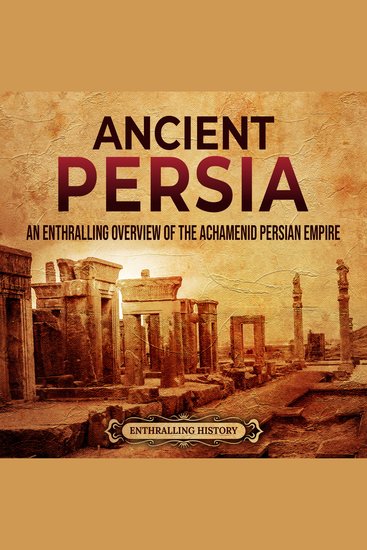
With unimaginable wealth, palace intrigues, birthday parties featuring fine wine and endless desserts, lavish architecture and gardens, an underground water system, and a 1,500-mile Royal Road, the ancient Persian Empire captures the imagination. Under Cyrus the Great, ancient Persia exploded into the world’s first mega-empire, spanning three continents and over 40 percent of the global population at its zenith. The Achaemenid Empire stretched from India to Greece and from Russia’s southern border to Egypt and the Sahara. It left an indelible mark on the history of Asia, Europe, and Africa. Step back in time to examine how the Persians impacted world history. How did they create a multi-ethnic empire that was ahead of its time in respecting all ethnicities and religions? With a captivating narrative that draws the listener in, this meticulously researched audiobook will usher you through ancient Persia’s mesmerizing and magical history. Unpack these fascinating questions:Where were the origins of the Persians? How did they live in ancient times?What engineering feat helped the Medes and Persians conquer Babylon without a battle?How did Cyrus the Great overpower the entire Middle East?Did Xerxes really lead a million-man army into Greece?What queen served as a commander in the Persian navy?Why did a eunuch poison two kings and most of the royal males?How did Alexander the Great conquer the entire empire in lightning speed?And much, much more! To explore the stunning history of ancient Persia, scroll up and click the “add to cart” button!Ver libro
Puerto Rico’s economic history is a complex narrative shaped by its geography, colonial past, and evolving relationship with the United States. As an island strategically positioned in the Caribbean, Puerto Rico has long been a crossroads of trade and cultural exchange. Its economic transformations have been influenced by global markets, shifting policies, and the resilience of its people. From the early days of indigenous trade and Spanish colonial rule to its modern struggles with debt and recovery, the island’s economy has undergone dramatic shifts that reflect broader historical forces. Before European contact, Puerto Rico’s indigenous Taíno population lived in a society largely based on subsistence farming, fishing, and trade with neighboring islands. The arrival of Spanish colonizers in 1493 fundamentally altered the island’s economic structure, introducing mercantilist policies that prioritized resource extraction for the benefit of Spain. The encomienda system, which forced indigenous labor into agricultural production and mining, marked the beginning of Puerto Rico’s long history of external economic control. As sugarcane, coffee, and tobacco plantations expanded, the island became increasingly dependent on these cash crops, with African slaves and, later, poor laborers fueling the agricultural economy. In 1898, Puerto Rico’s economic trajectory changed abruptly when the United States took control following the Spanish-American War. The transition from Spanish to American rule reshaped trade networks, introducing new economic policies that favored U.S. business interests. The Foraker Act of 1900 established a civilian government but left Puerto Rico politically and economically subordinate to the United States. The shift from a Spanish mercantile system to an American capitalist framework brought opportunities but also deep inequalities.Ver libro
In 2014 Michael Fullan set his sights on the daily needs of school leaders in his bestselling book The Principal. This updated edition shows how the principal's role continues to change and how we can embrace the transformation in short order. As crucial in-school influencers of student learning, principals have an opportunity and an obligation to maximize student achievement. But how? In The Principal 2.0, Fullan explains why the answer lies neither in micro-managing instruction nor in autonomous entrepreneurialism. He shows a new way forward that allows principals to expand their roles without overstepping and contribute to the development of the whole school. Even in difficult times of crisis, there's room for principals to take action. In The Principal 2.0, Fullan explains how to loosen focus on accountability and instead concentrate on capacity-building; focus less on technology and more on pedagogy; abandon fragmented strategies; and forgo individualistic solutions in favor of collaborative effort. Discover why The Principal is a bestseller in educational leadership and strike out into the future with this new edition, updated for the changing role of today's principals.Ver libro
Written by the medieval Indian Buddhist monk Shantideva, The Bodhicaryavatara is one of the most beloved and frequently taught works in Buddhism and a favorite of the Dalai Lama. An inspiring and powerful poem that uses a gripping, first-person, confessional voice, it is the most systematic work of ethical thought in the Indo-Tibetan Buddhist tradition. And its invaluable insights, exhortations, and encouragements about how we can relieve suffering by becoming more caring and compassionate are universal. In How to Be Caring, philosopher and Buddhist scholar Jay Garfield presents a lively new translation of selected verses from Shantideva’s text that capture its powerful lessons for all of us. The result is the clearest, most concise, and most accessible introduction to this masterful Buddhist guidebook about how we can change the world by changing ourselves.Focusing on the life of a bodhisattva, a person committed to attaining awakening for the benefit of all beings, Shantideva argues that the first step to reducing suffering and making the world better is to conquer our own psychopathologies. Urging us to remember that we won’t live forever and therefore need to think about what is most important, the work seeks to inspire us and teach us how to be more generous, thoughtful, polite, patient, committed, and self-aware.Ver libro
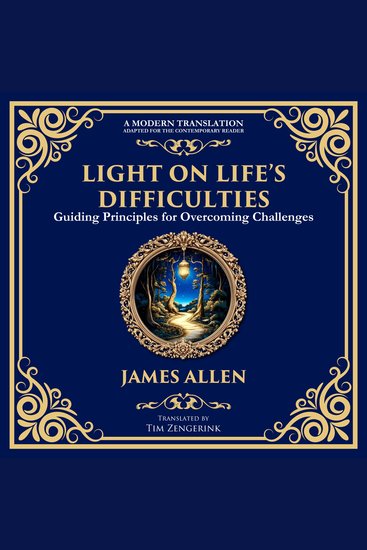
What if you could approach life’s toughest moments with unwavering confidence and resilience? James Allen’s uplifting work offers a beacon of hope for those navigating hardship. Adapted for modern readers, it provides simple yet profound strategies to tackle everyday obstacles, cultivate inner peace, and transform adversity into growth. By shedding light on life’s difficulties, Allen guides you toward renewed optimism and self-mastery. What You’ll Discover in This Modern Translation: - Mindset shifts that turn challenges into stepping stones - Practical tools for staying calm under pressure - The importance of gratitude, patience, and determination - Life-affirming wisdom for nurturing a resilient spirit Imagine confronting every obstacle with grace, clarity, and determination—awakening the powerful realization that adversity can be a catalyst for self-improvement. James Allen’s timeless insights make it possible for anyone to thrive, no matter the circumstances. Embrace the radiance of positive thought. Get your copy now and illuminate your path through life’s most demanding chapters.Ver libro
In striking photography and informative text, this volume both celebrates and mourns Eastern European Jewish life of the early- to mid-twentieth century.From Odessa to Budapest, Warsaw, Prague, and Sarajevo, the Jews of Eastern Europe established thriving, traditional communities . And while there are still proud Jews who keep the Kehilla robust in the region, they are a shadow of their former glory. In The Last Jews of Eastern Europe, Yale Strom and photographer Brian Blue record a way of life that largely disappeared through the torment, violence, and upheaval of the twentieth century. Through the USSR, Poland, Czechoslovakia, Hungary, Romania, Yugoslavia, and Bulgaria, this volume records the three great blows to Eastern European Jewry: the historical persecution of the Jews who suffered the envy of their neighbors; the slaughter of millions during World War II; and the loss of those who accepted the aliyah to Israel. It also records how the Jews of Eastern Europe laugh, weep, and sing.Ver libro