Join us on a literary world trip!
Add this book to bookshelf
Grey
Write a new comment Default profile 50px
Grey
Subscribe to read the full book or read the first pages for free!
All characters reduced
Social Confidence - cover

Social Confidence

Dawn Chekulski

Translator A AI

Publisher: Publifye

  • 0
  • 0
  • 0

Summary

"Social Confidence" explores the vital connection between communication skills and social anxiety, offering a self-help guide to building stronger relationships. It acknowledges that social confidence isn't an innate trait but a skill developed through understanding and practice. The book delves into how social anxiety can hinder effective communication—such as active listening and assertive communication—highlighting how fear of judgment often leads to avoidance. It presents actionable strategies, including cognitive behavioral therapy techniques, to challenge negative thoughts and foster more adaptive behaviors. 

 
Beginning with communication theory, the book transitions into examining the causes and symptoms of social anxiety. It then introduces practical strategies for building communication skills, like improving nonverbal communication and active listening. This approach emphasizes empowering readers to take control of their social interactions by managing anxiety and building genuine connections. The book's approach synthesizes these elements, offering a holistic path to building social confidence. It provides real-world scenarios to demonstrate how these strategies can be applied in everyday life. 

 
Readers gain tools to initiate conversations, manage anxiety, build rapport, and assert their needs effectively, making this book a valuable resource for anyone seeking to overcome shyness and improve their interpersonal relationships.
Available since: 03/14/2025.
Print length: 112 pages.

Other books that might interest you

  • Fight for Free Speech The: Rock Icon Dee Snider Addresses a 1985 US Senate Hearing On Music Content Labeling - cover

    Fight for Free Speech The: Rock...

    Dee Snider

    • 0
    • 0
    • 0
    On September 19, 1985, a US Senate hearing was instigated by the Parents Music Resource Center (PMRC)--founded by Tipper Gore, wife of Senator and later Vice President Al Gore; and Susan Baker, wife of Treasury Secretary James Baker--who wanted to introduce a parental warning system that would label all music albums containing alleged offensive material. The system was to include letters identifying the type of objectionable content to be found in each album (O for occult themes, S for sex, D for drugs, V for violence, etc.).


    Dee Snider, lead singer and primary songwriter for the rock band Twisted Sister, John Denver, and Frank Zappa all testified against censorship and the proposed warning system. Such a system was never implemented, but the result of the hearing brought about what was known as the "Parental Advisory: Explicit Content" label.
    Show book
  • Spain’s Explorers in the Age of Discovery - cover

    Spain’s Explorers in the Age of...

    Editors Charles River

    • 0
    • 0
    • 0
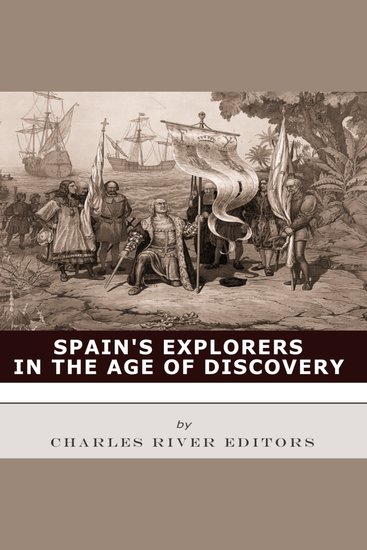
    The most seminal event of the last millennium might also be its most controversial. As schoolchildren have been taught for over 500 years, “In 1492 Columbus sailed the ocean blue.” In October of that year, the Italian Christopher Columbus immortalized himself by landing in the New World and beginning the process of European settlement in the Americas for Spain, bringing the Age of Exploration to a new hemisphere with him. Ironically, the Italian had led a Spanish expedition, in part because the Portugese rejected his offers in the belief that sailing west to Asia would take too long. 
    If Columbus and Cortés were the pioneers of Spain’s new global empire, Pizarro consolidated its immense power and riches, and his successes inspired a further generation to expand Spain’s dominions to unheard of dimensions. Furthermore, he participated in the forging of a new culture: like Cortés, he took an indigenous mistress with whom he had two mixed-race children, and yet the woman has none of the lasting fame of Cortés’s Doña Marina. With all of this in mind, it is again remarkable that Pizarro remains one of the less well-known and less written about of the explorers of his age. 
    Today Ferdinand Magellan is remembered as the first man to circumnavigate the globe, an ironic legacy given that he died half a world away from completing that journey. But though it ended catastrophically for Magellan and most of his crew, his expedition accomplished its objective, and in economic terms, the opening up of new trade routes with Asia was a more significant development than the conquest of the Americas for the Europeans of the early 16th century.
    Show book
  • Urban Health - Addressing Health Issues in City Environments - cover

    Urban Health - Addressing Health...

    Lyric Vale

    • 0
    • 0
    • 0
    As the global population continues to urbanize at an unprecedented rate, the health challenges faced by city dwellers are becoming increasingly important. Over half of the world’s population now resides in urban areas, and this figure is expected to rise sharply in the coming decades. While cities offer a multitude of opportunities for economic, social, and cultural growth, they also pose unique risks to the health and well-being of their inhabitants. The concentration of people, industries, and infrastructure in urban spaces brings forth a complex array of health issues, from air and water pollution to mental health challenges and inadequate healthcare access. Understanding and addressing these issues is crucial for creating cities that foster not only economic prosperity but also the physical and mental well-being of their populations. 
    Urban health problems are often exacerbated by rapid and unplanned growth. In many cities, particularly in low- and middle-income countries, the urbanization process is marked by overcrowded living conditions, poor sanitation, and a lack of adequate healthcare facilities. Urban air pollution, largely driven by traffic and industrial emissions, is a significant contributor to respiratory diseases, cardiovascular problems, and premature deaths. Meanwhile, the noise and stress associated with city living have been linked to mental health issues such as anxiety, depression, and sleep disorders. These environmental factors, combined with limited access to green spaces and recreational areas, create a challenging backdrop for promoting public health in cities. 
    In addition to environmental hazards, urban health is also shaped by social determinants. Disparities in healthcare access, education, income, and living conditions often result in health inequities, particularly among marginalized populations. The urban poor, for instance, are more likely to suffer from chronic diseases and lack proper healthcare resources.
    Show book
  • Why Can't I Just Enjoy Things? - A Comedian's Guide to Autism - cover

    Why Can't I Just Enjoy Things? -...

    Pierre Novellie

    • 0
    • 0
    • 0
    *Nominated for Best Book at the 2025 Chortle Awards*'Outstanding, I want to press it into the hands of every newly diagnosed person' Fern Brady'Like a Martian's guide to living on Earth. Funny, enlightening and gobsmacking' Frank Skinner 'A hilarious, crystal-clear guide to autism' Phil Wang'An illuminating and joyously entertaining book' Daily ExpressWhy were the other kids at school obsessed with Britney Spears instead of The Goon Show? Why don't people ever say what they mean? And... Why is everyone chewing so loudly?Comedian Pierre Novellie was on stage when a heckler suggested he was autistic. Usually, this disruption would be water off a duck's back but two things made this heckler different: first, he was himself autistic. Second, he turned out to be absolutely right.This random encounter led to a diagnosis of autism at the age of 31 that unravelled his world, explained his struggles and answered questions that had bothered him for his entire life. At once a hilarious and insightful journey through autism and neurodivergence, an entertaining explainer for the uninitiated and observational comedy for the neurodiverse, this is the perfect read for anyone who has ever asked themselves: why can't I just enjoy things?The audiobook includes an exclusive Q&A with comedian and BudPod co-host, Phil Wang.
    Show book
  • Mayflower - Its History Passengers and Voyage to the New Land - cover

    Mayflower - Its History...

    Kelly Mass

    • 0
    • 0
    • 0
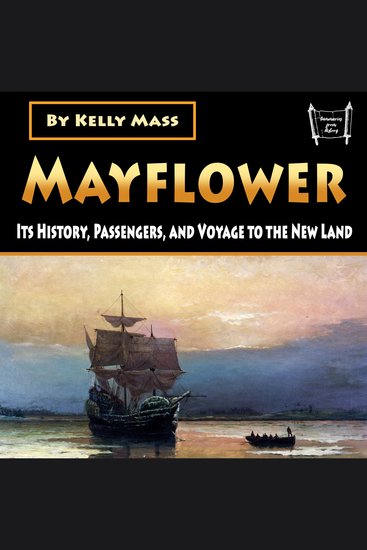
    In 1620, a group of English families, known now as the Pilgrims, were carried from England to the New World on the Mayflower. When the Mayflower finally showed up in America on November twenty-first, 1620, it had 102 guests and a team of around 30 on board and was anchored off Cape Cod. 
    The Pilgrims, as opposed to their Puritan coworkers, chose to break away from the Church of England because of its Roman Catholic heritage and the church's hesitation to reform, requiring them to pray in personal instead of in the church. In 1608, a group of English families left England for the Netherlands, where they could practice their faith without fear of persecution. As early as 1620, the Plymouth Group population had determined to cross the Atlantic to the New World, which they viewed as a "new Promised Land." 
    Due to hold-ups and challenges, the Pilgrims were only able to take one ship, the Mayflower, to reach America in early October. It was a pretty hard winter season when they showed up in November, and they were unprepared. Consequently, hardly half of the original Pilgrims made it through the first winter season at Plymouth, Massachusetts. All of the settlers may have died if near Native tribes had not taught them how to collect food and other survival methods. On that first fall harvest, they gathered with Native Americans to celebrate what would end up being referred to as the first Thanksgiving in America.
    Show book
  • First Triumvirate The: The History of the Men Who Led Rome Near the End of the Republic - cover

    First Triumvirate The: The...

    Editors Charles River

    • 0
    • 0
    • 0
    Thanks to his rise in the military and politics, Crassus’s renown and riches heavily influenced his contemporaries. In the wake of the Third Servile War, Crassus’ patronage helped position Caesar to be appointed governor of Hispania Ulterior. In order to maintain political office, which made him immune from prosecution for his debts, he left for modern day Spain before his praetorship expired. Caesar made this move knowing that governors were immune from prosecution, but governors also had vitally important military responsibilities via command of whatever legions were garrisoned in their territory. It would be as governor that Caesar’s military career truly took off, starting with his victories over a couple of local tribes. These military successes earned him the title Imperator, the Roman equivalent of the title of Commander.  
    	Likewise, Caesar was heavily sponsored in his run for Consul by Crassus, and in a brilliant stroke of diplomacy, he succeeded in reconciling Crassus with Pompey, who was Rome’s most powerful general at the time. Alongside Pompey and Caesar, Crassus established the First Triumvirate, with Crassus supplying the funds, Pompey the muscle, and Caesar the political clout necessary for governing the city. Though later triumvirates officially wielded power, like the Second Triumvirate (which formed in the wake of Caesar’s assassination and included his heir Augustus and longtime general Mark Antony), this First Triumvirate acted behind the scenes to run Rome unofficially. 
    	The triumvirate would come to an end when Crassus met a sudden and unexpected end while campaigning in the east against the Parthians. Ironically, his failed campaign is better remembered than the rest of his life because of the way his reputation brought about his manner of death: ancient writers claimed that shortly after he was killed in fighting, the Parthians poured molten gold down his throat and then used his head as a prop in a play.
    Show book