Join us on a literary world trip!
Add this book to bookshelf
Grey
Write a new comment Default profile 50px
Grey
Subscribe to read the full book or read the first pages for free!
All characters reduced
Alcohol Effects - cover

Alcohol Effects

Dawn Chekulski

Translator A AI

Publisher: Publifye

  • 0
  • 0
  • 0

Summary

Alcohol Effects explores the wide-ranging impact of alcohol on the human body and mind, from immediate psychological effects to long-term health consequences. The book examines how alcohol consumption influences behavior, impairs memory formation, and affects overall well-being. It's crucial to understand these effects, considering alcohol's prevalent role in society, to make informed choices about responsible consumption. For example, the book explains how alcohol disrupts neural pathways, leading to altered mood and impaired motor skills.

 
The book progresses in three sections, beginning with the basic chemistry of alcohol and its interaction with the brain. It then details research on alcohol's impact on memory, highlighting how it can hinder new memory formation and contribute to cognitive decline. Finally, it investigates the long-term effects of alcohol on organ systems, covering liver damage and cardiovascular problems.

 
By adopting a fact-based approach, the book empowers readers to understand the science behind alcohol's effects, balancing potential benefits against known risks and encouraging informed decisions.
Available since: 03/12/2025.
Print length: 78 pages.

Other books that might interest you

  • Financial Feminism: Cash in on Your Power - "Unlock financial empowerment! Dive into our dynamic audio lessons and master Financial Feminism to elevate your money game" - cover

    Financial Feminism: Cash in on...

    Cyrus Windermere

    • 0
    • 0
    • 0
    Financial Feminism: Cash in on Your Power   
    ⭐⭐ Simplified Guide & Explanations Included ⭐⭐ 
    Are you eager to advance your career and enhance your financial knowledge to take charge of your economic future? 
    Looking for a thorough guide that equips you with all the tools you need to break barriers and create your own path? 
    Your quest ends here! 
    This guide is your ultimate resource for deepening your financial understanding, applying your newfound skills, and engaging in practical exercises. With this, you're ready to succeed. 
    Updated for the latest strategies in Financial Feminism! 
    Key features of this enhanced guide: 
    - In-depth insights into Financial Feminism principles   
    - Comprehensive explanation of mastering your finances   
    - Effective strategies for overcoming obstacles and achieving success   
    Our guide stands out with its thorough coverage, which is vital for your financial empowerment. Concepts are explored in detail, ensuring you grasp each one fully. 
    Crafted with a logical structure and clear language, our guide to Financial Feminism ensures seamless navigation through various topics. Say goodbye to complex jargon and embrace straightforward, precise, and technically sound content. 
    So, why hesitate? Click the BUY NOW button, secure your guide, and embark on your journey to financial empowerment! 
    This audiobook is your key to unlocking your financial potential and making informed decisions. Get started today!
    Show book
  • The Myth of Left and Right - How the Political Spectrum Misleads and Harms America - cover

    The Myth of Left and Right - How...

    Verlan Lewis, Hyrum Lewis

    • 0
    • 0
    • 0
    A groundbreaking argument that the political spectrum today is inadequate to twenty-first-century America and a major source of the confusion and hostility that characterize contemporary political discourse. 


    As American politics descends into a battle of anger and hostility between two groups called "left" and "right," people increasingly ask: What is the essential difference between these two ideological groups? In The Myth of Left and Right, Hyrum Lewis and Verlan Lewis provide the surprising answer: nothing. As the authors argue, there is no enduring philosophy, disposition, or essence uniting the various positions associated with the liberal and conservative ideologies of today. Far from being an eternal dividing line of American politics, the political spectrum came to the United States in the 1920s and, since then, left and right have evolved in so many unpredictable and even contradictory ways that there is currently nothing other than tribal loyalty holding together the many disparate positions that fly under the banners of "liberal" and "conservative." Cutting against the grain of most scholarship on polarization in America, this book shows why the idea that the political spectrum measures deeply held worldviews is the central political myth of our time and a major cause of the confusion and vitriol that characterize public discourse.
    Show book
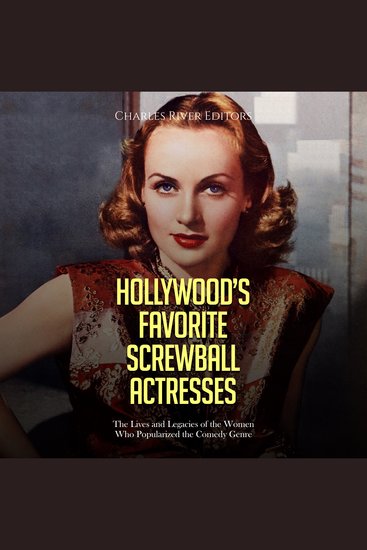
  • Hollywood’s Favorite Screwball Actresses: The Lives and Legacies of the Women Who Popularized the Comedy Genre - cover

    Hollywood’s Favorite Screwball...

    Editors Charles River

    • 0
    • 0
    • 0
    “If I couldn't laugh, I'd rather die.” – Claudette Colbert 
    The 1930s were the height of the classical Hollywood era, known for lavish studio productions by heavyweights like MGM, RKO, Warner Brothers, Paramount, and 20th Century Fox, which were operating at the height of their powers. Every major studio possessed a long roster of contract players, and films were released at such a rapid pace that it made for an especially competitive environment within the industry. Even while America remained in the throes of the Great Depression, the film industry continued to flourish, and movies easily supplanted the theater as the main attraction for American entertainment. Indeed, it would be no exaggeration to claim that the film industry reached its zenith during the decade precisely because it offered an affordable (if very temporary) escape from the anxieties of the economic woes of the era. 
    When the American Film Institute ranked its top 50 screen legends of the 20th century, many of the people named had careers spanning several decades, but one of them managed the feat despite living less than three decades. Ranked as the 22nd greatest actress of the 20th century, Jean Harlow was on the screen for less than 10 years, but in that time the “Blonde Bombshell” became the most popular actress of the 1930s, eclipsing superstars like Joan Crawford and Norma Shearer along the way. In fact, the platinum blonde accomplished that feat as a leading lady for just five years before her premature death of renal failure at the age of 26. 
    Carole Lombard has been memorialized in many fitting ways as an actress, and one of her biggest contributions to Hollywood was the blond archetype that the film industry used successfully for decades in screwball comedies, paving the way for the success of women like Marilyn Monroe. Perhaps the most remarkable aspect of that fact is that it was actually based on Carole’s gushing personality. 
    Show book
  • What The Dogs Tell Me - cover

    What The Dogs Tell Me

    Rose Lesniak

    • 0
    • 0
    • 0
    Inspired and inspiring, What The Dogs Tell Me opens a new chapter in human-dog relationships. Dog-whisperer, poetry-shouter. Rose Lesniak has written a one-of-a-kind book from a one-of-a-kind poet. What The Dogs Tell Me is poetry that is gentle and loving, with a witty syntax and eyes that look at you awaiting a response. Then again, there's a lot of barking and rowdiness and sadness too, as her 2 Wheatons, Martha and Joey, move through her life and pass away. This is an interspecie Book of Advice you'd be wise to heed. And you'll find a paw print on every page just to show that the co-author is present too. This is a treasure for dog lovers who want to know what's going on inside that furry head. Read Rose's book and expand your conversation with your 4-legged friends!
    Show book
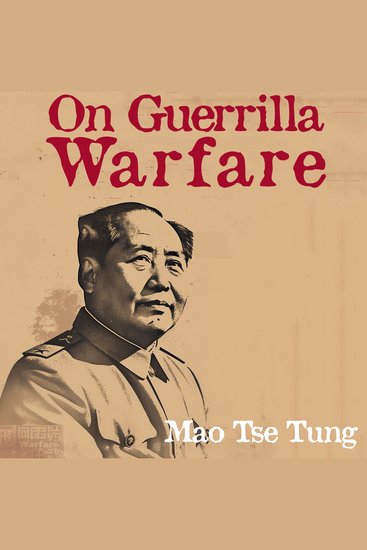
  • On Guerrilla Warfare - cover

    On Guerrilla Warfare

    Mao Tse-Tung

    • 0
    • 0
    • 0
    "On Guerrilla Warfare" by Mao Tse Tung is a foundational text that elaborates on the strategies and philosophies behind guerrilla warfare, authored by the revolutionary leader during the tumultuous period of the Chinese Civil War and the Japanese invasion of China in the 20th century. Mao's work is not just a military manual but a profound treatise on the application of guerrilla tactics as a form of irregular warfare by a smaller, mobile force against a larger, more conventionally equipped enemy. Through this work, Mao emphasizes the importance of political ideology, the support of the local population, and the use of the terrain to the guerrilla fighter's advantage. His insights into the interplay between politics and military strategy have made this work a staple reference in the study of revolutionary warfare and insurgency movements globally, influencing numerous conflicts and shaping the tactics of various liberation movements.
    Show book
  • The Individualization of War - Rights Liability and Accountability in Contemporary Armed Conflict - cover

    The Individualization of War -...

    Jennifer Welsh, David Rodin,...

    • 0
    • 0
    • 0
    The rights and responsibilities of the individual are at the center of today's armed conflicts in a way that they have never been before. This process of "individualization," which challenges the primacy of the sovereign state, is driven by normative developments related to human rights that have elevated human-centric conceptions of security and created a new class of international crimes, as well as by technological and strategic developments that can both empower individuals as military actors and enable either the targeting or protection of particular individuals. 


    The Individualization of War examines the status of individuals in contemporary armed conflict in three main capacities: as subject to violence but deserving of protection; as liable to harm because of their responsibility for attacks on others; and as agents who can be held accountable for the perpetration of crimes. This book presents a novel conceptualization of the phenomenon of individualization, including how it is both practiced and contested. It then convenes a set of leading thinkers from the fields of moral philosophy, international law, and international relations to further our understanding of not only how individualization is manifest in armed conflict—in theory and in practice—but also how it generates tensions and challenges for today's scholars and practitioners.
    Show book