Join us on a literary world trip!
Add this book to bookshelf
Grey
Write a new comment Default profile 50px
Grey
Subscribe to read the full book or read the first pages for free!
All characters reduced
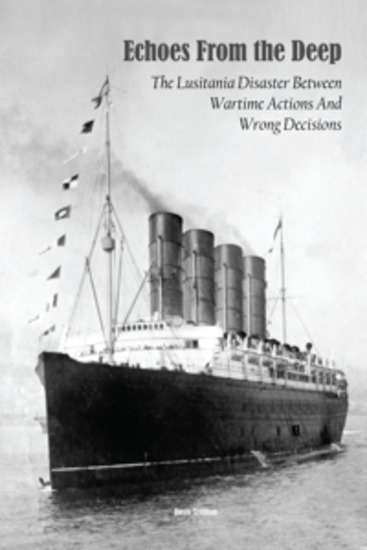
Echoes From the Deep - The Lusitania Disaster Between Wartime Actions And Wrong Decisions - cover

Echoes From the Deep - The Lusitania Disaster Between Wartime Actions And Wrong Decisions

Davis Truman

Publisher: Davis Truman

  • 0
  • 0
  • 0

Summary

On May 1, 1915, the majestic RMS Lusitania departed from New York, bound for Liverpool, navigating through the escalating tensions of a war-torn Europe. Just six days later, the Cunard liner met a tragic fate, sinking into the depths of the Atlantic after being struck by a German torpedo. The catastrophe claimed the lives of over a thousand passengers, sending shockwaves across the world and profoundly influencing the American stance on World War I.At the heart of this investigation lies a provocative thesis: the tragic loss of life on the Lusitania was not merely a consequence of wartime hostilities but was exacerbated by decisions and actions that could have been averted. Through detailed analysis, the book questions the accountability of the captain and crew, challenging readers to reconsider the extent to which their actions — or inactions — contributed to the disaster.But this story is not confined to the ill-fated ship alone. "Echoes From the Deep" also examines the broader ramifications of the Lusitania's sinking on American public opinion. The tragedy stirred a powerful emotional response, turning the tide of sentiment and drawing the United States closer to joining the global conflict.Blending historical rigor with compelling storytelling, "Echoes From the Deep" explores tragedy, responsibility, and the complex interplay between individual actions and larger historical forces. This book is essential for history enthusiasts, maritime scholars, and anyone intrigued by the profound impact of the Lusitania disaster on the American war effort.
Available since: 05/20/2025.

Other books that might interest you

  • The Madman - cover

    The Madman

    Kahlil Gibran

    • 0
    • 0
    • 0
    The Madman, His Parables and Poems is a book written by Kahlil Gibran, which was published in the United States by Alfred A. Knopf in 1918, with illustrations reproduced from original drawings by the author. It was Gibran's first book in English to be published, also marking the beginning of the second phase of Gibran's career. May Ziade, with whom Gibran had been corresponding since 1912, reviewed it in Al-Hilal, a magazine in Egypt.
    Among the most significant works Kahlil Gibran: "Broken Wings", "The Prophet", "The Earth Gods" , "The Garden of the Prophet".
    Show book
  • Conversational Spanish for Beginners - Master Espanol Language in 60 Days with Dialogues Short Stories and Simple Vocabulary Words Learn How To Speak Mexican Spanish While Sleeping or in Your Car – Quick & Easy Methods for Kids Adults and Dummies - cover

    Conversational Spanish for...

    Damián Carabello

    • 0
    • 0
    • 0
    ¡Hola, amigo! Are you ready to unlock the vibrant world of Spanish and transform your language skills in just a few hours? "Conversational Spanish for Beginners" is your ticket to a thrilling linguistic journey that will have you chatting confidently with native speakers in no time! Imagine walking the bustling streets of Madrid, ordering tapas like a local in Barcelona, or making new friends on the beaches of Mexico – all in Spanish! This audiobook is your personal guide to making those dreams a reality. With 23 engaging chapters covering real-life scenarios, you'll learn the exact phrases and expressions you need to navigate any situation with ease. From bargaining at a market to discussing your symptoms with a doctor, you'll pick up authentic, conversational Spanish that you can use immediately. By the end of this audiobook, you'll be amazed at how much you've learned. Don't just learn Spanish – live it, breathe it, and make it your own! ¡Vamos! Your adventure starts now!
    Show book
  • Progress and poverty: Book Summary & Analysis - cover

    Progress and poverty: Book...

    Henry George

    • 0
    • 0
    • 0
    "Progress and Poverty" is a seminal work written by Henry George, first published in 1879. The book addresses economic and social issues, particularly focusing on the unequal distribution of wealth and the causes of poverty in the midst of progress and economic growth. In "Progress and Poverty," Henry George explores the relationship between economic progress and the persistence of poverty. He critiques the existing economic system and advocates for a single tax on land as a solution to address wealth inequality and eradicate poverty. George argues that land, as a resource, should be treated as a common good, and the benefits of land value increases should be shared by the community. The book gained widespread attention and sparked discussions on economic reform and social justice.
    Show book
  • Exploring Maritime Washington - A History and Guide - cover

    Exploring Maritime Washington -...

    Erich Ebel

    • 0
    • 0
    • 0
    An authoritative guide to Washington's nautical heritage.  Discover the popular destinations and hidden gems along Washington's coastline, from the Mukilteo Lighthouse to the Wedding Rocks petroglyphs and beyond. Learn about the seafaring Coast Salish people, who navigated the waters of the Pacific Northwest for thousands of years, and the early exploration and settlement by European-Americans in the late 18th century. Delve into the expansion and growth that led to the development of international ports and the modern maritime economy. View the enormous sternwheel snagboat, W.T. Preston--one of a trio that kept inland waterways navigable for nearly a century--and hundreds of other fascinating sites.  Join author Erich R. Ebel and historian Chuck Fowler as they guide you through the cultural and nautical history of the Maritime Washington National Heritage Area.
    Show book
  • Stairway to the Spectrum - One man's story of coming to terms with autism and ADHD - cover

    Stairway to the Spectrum - One...

    Travis Alexander

    • 0
    • 0
    • 0
    Ever wondered what goes on inside the neurodivergent brain? 
    Known and loved by his family and friends as quirky and different, Travis is a man on a mission to find his purpose in a world that often throws him grenades.  
    Through the pitfalls of high school, the workplace and dating scene, he shares an honest account of his personal struggles with undiagnosed autism, ADHD and dyslexia. 
    Written with dark humour and powerful reflection, Stairway to the Spectrum is an entertaining and thought-provoking memoir which will appeal to anybody who has ever felt uncomfortable in their own skin. 
    Show book
  • Underground and Underwater in World War I: The History and Legacy of the Hidden Fighting during the Great War - cover

    Underground and Underwater in...

    Editors Charles River

    • 0
    • 0
    • 0
    Most books and documentaries about the war focus on the carnage of the trenches, depicting the ceaseless bombardment and sniping, and the assaults and counterattacks that took millions of lives. This was the experience of most frontline soldiers during that great conflict, but it was not the only experience. There was another war going on beneath the trenches, a war of tunnels and mines fought by men who didn’t see sunlight for days at a time and who lived in constant fear of cave-ins and enemy detection. These men, who had mostly been miners in civilian life, lived a twilight existence, working long hours in silence and near darkness while great battles raged overhead. They suffered from fatigue, stress, and the knowledge that they could be killed at any time by an unseen enemy. Despite this, they persevered, and the mines they laid under enemy trench systems turned the tide of at least one major battle.  
    	The sleek hunter-killers lurking beneath the waves, using periscopes to close in unnoticed on their prey, added a new, nerve-wracking element to naval warfare. The mere threat of submarine attack immediately altered naval tactics and strategies employed by both the Western Allies and the Central Powers, shifting them towards a more cautious approach, especially at the war’s start when the submarine threat remained untested. 	During World War I, German U-boats operated solo except on one occasion. Initially, the British and nations supplying England with food and materiel scattered vessels singly across the ocean, making them vulnerable to the lone submarines. However, widespread late war re-adoption of the convoy system tipped the odds in the surface ships' favor.
    Show book