Rejoignez-nous pour un voyage dans le monde des livres!
Ajouter ce livre à l'électronique
Grey
Ecrivez un nouveau commentaire Default profile 50px
Grey
Abonnez-vous pour lire le livre complet ou lisez les premières pages gratuitement!
All characters reduced
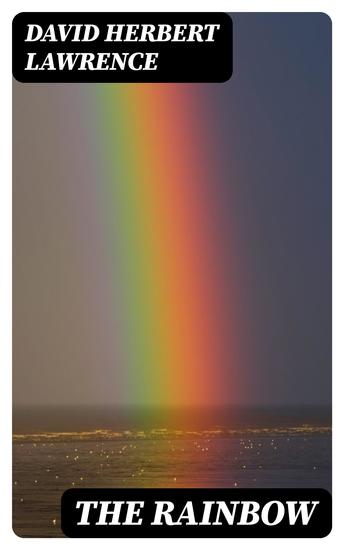
The Rainbow - cover

The Rainbow

David Herbert Lawrence

Maison d'édition: DigiCat

  • 0
  • 0
  • 0

Synopsis

David Herbert Lawrence's "The Rainbow" is a pioneering exploration of human sexuality and the intricacies of relationships set against the backdrop of early 20th-century England. Written in Lawrence's signature modernist style, the novel intertwines lyrical prose with rich symbolism, revealing the emotional and spiritual depths of its characters. Through the lives of three generations of the Brangwen family, the narrative delves into themes of individuality, love, and the clash between tradition and modernity, ultimately portraying the tension between personal desires and societal expectations. The seamless flow of the narrative invites readers into the vivid tapestry of rural life, challenging conventional moralities of the time. David Herbert Lawrence was an influential figure of the early 20th century, known for his candid examinations of human psychology and sexuality. Born in 1885 in the industrial Midlands of England, Lawrence's own experiences shaped his views on relationships and social structures. His observation of the rapidly changing world around him, coupled with his interest in psychosexual dynamics, provided fertile ground for the themes explored in "The Rainbow," which was initially met with controversy due to its frank portrayal of sexual relationships. Highly recommended for readers interested in modernist literature, "The Rainbow" offers profound insights into the complexities of love and identity, making it a timeless study of human experience. Lawrence's novel challenges readers to reflect on their own lives and relationships, making it an essential read for those curious about the intersection of art, sexuality, and societal norms.
Disponible depuis: 20/07/2022.
Longueur d'impression: 449 pages.
D'autres livres qui pourraient vous intéresser

  • They Call Me Carpenter - A Tale of the Second Coming - cover

    They Call Me Carpenter - A Tale...

    Upton Sinclair

    • 0
    • 0
    • 0
    Enter the provocative world of "They Call Me Carpenter: A Tale of the Second Coming" by Upton Sinclair. Set in post-World War I America, this satirical novel follows the miraculous appearance of a carpenter, bearing an uncanny resemblance to Jesus Christ, on the streets of Western City. As he confronts greed, corruption, and social injustice, his teachings spark both inspiration and outrage. Sinclair's compelling narrative challenges societal norms and explores the enduring quest for spiritual and moral awakening, making it a thought-provoking read.
    Voir livre
  • The Lost Manuscript The Wind in the Willows - cover

    The Lost Manuscript The Wind in...

    Kenneth Grahame

    • 0
    • 0
    • 0
    This much-loved story follows a group of animal friends in the English countryside as they pursue adventure ... and as adventure pursues them! The chief characters - Mole, Rat, and Toad - generally lead upbeat and happy lives, but their tales are leavened with moments of terror, homesickness, awe, madcap antics, and derring-do. 
     
    Although classed as children's literature, The Wind in the Willows holds a gentle fascination for adults too. The vocabulary is decidedly not "Dick and Jane", and a reader with a love of words will find new ones to treasure, even if well-equipped for the journey. Parents will appreciate the themes of loyalty, manners, self-restraint, and comradeship which are evident throughout the book. When the characters err, they are prompt to acknowledge it, and so a reading of this book can model good behavior to children, who will otherwise be enchanted with the many ways in which the lives of these bucolic characters differ from modern life. 
     
    This book was so successful that it enabled the author to retire from banking and take up a country life somewhat like that of his creations. It has been adapted for screen, stage, and even a ride at the original Disneyland.
    Voir livre
  • The Monkey's Paw - cover

    The Monkey's Paw

    W. W. Jacobs

    • 0
    • 0
    • 0
    The Monkey’s Paw by W. W. Jacobs is a chilling tale of fate, greed, and the dangers of tampering with forces beyond human control. The story follows the White family, who acquire a mysterious monkey’s paw said to grant three wishes. Despite warnings of dire consequences, they succumb to curiosity and wish for wealth. Tragedy strikes when their wish is fulfilled at a devastating cost. As grief consumes them, further wishes spiral into horror, revealing the paw’s sinister power. Jacobs masterfully crafts an atmosphere of suspense and inevitability, exploring themes of unintended consequences and humanity’s futile attempts to defy fate. A timeless classic, The Monkey’s Paw serves as a haunting reminder that some desires come at too great a price.
    Voir livre
  • King Midas - A Romance - cover

    King Midas - A Romance

    Upton Sinclair

    • 0
    • 0
    • 0
    This captivating novel weaves the tale of two idealistic lovers, Billy Fairfax and Ethel Hever, whose dreams clash with the greed and materialism of their families. As they navigate love and ambition, they encounter the timeless tale of King Midas, drawing poignant parallels between myth and their reality. Sinclair's richly detailed romance explores the moral dilemmas of wealth and the enduring power of true love, making it a deeply touching and thought-provoking read.
    Voir livre
  • A Model Crime - From their pens to your ears genius in every story - cover

    A Model Crime - From their pens...

    William Pett Ridge

    • 0
    • 0
    • 0
    William Pett Ridge was born at Chartham, near Canterbury, Kent, on 22nd April 1859.  
    His family’s resources were certainly limited. His father was a railway porter, and the young Pett Ridge, after schooling in Marden, Kent became a clerk in a railway clearing-house. The hours were long and arduous, but self-improvement was Pett Ridge’s goal.  After working from nine until seven o’clock he would attend evening classes at Birkbeck Literary and Scientific Institute and then to follow his passion; the ambition to write.  He was heavily influenced by Dickens and several critics thought he had the capability to be his successor.  
    From 1891 many of his humourous sketches were published in the St James's Gazette, the Idler, Windsor Magazine and other literary periodicals of the day. 
    Pett Ridge published his first novel in 1895, A Clever Wife. By the advent of his fifth novel, Mord Em'ly, a mere three years later in 1898, his success was obvious.  His writing was written from the perspective of those born with no privilege and relied on his great talent to find humour and sympathy in his portrayal of working class life. 
    Today Pett Ridge and other East End novelists including Arthur Nevinson, Arthur Morrison and Edwin Pugh are being grouped together as the Cockney Novelists.   
    In 1924, Pugh set out his recollections of Pett Ridge from the 1890s: “I see him most clearly, as he was in those days, through a blue haze of tobacco smoke. We used sometimes to travel together from Waterloo to Worcester Park on our way to spend a Saturday afternoon and evening with H. G. Wells. Pett Ridge does not know it, but it was through watching him fill his pipe, as he sat opposite me in a stuffy little railway compartment, that I completed my own education as a smoker... Pett Ridge had a small, dark, rather spiky moustache in those days, and thick, dark, sleek hair which is perhaps not quite so thick or dark, though hardly less sleek nowadays than it was then”. 
    With his success, on the back of his prolific output and commercial success, Pett Ridge gave generously of both time and money to charity. In 1907 he founded the Babies Home at Hoxton.  This was one of several organisations that he supported that had the welfare of children as their mission.  
    His circle considered Pett Ridge to be one of life's natural bachelors. In 1909 they were rather surprised therefore when he married Olga Hentschel.  
    As the 1920’s arrived Pett Ridge added to his popularity with the movies. Four of his books were adapted into films.  
    Pett Ridge now found the peak of his fame had passed. Although he still managed to produce a book a year he was falling out of fashion and favour with the reading public and his popularity declined rapidly.  His canon runs to over sixty novels and short-story collections as well as many pieces for magazines and periodicals. 
    William Pett Ridge died, on 29th September 1930, at his home, Ampthill, Willow Grove, Chislehurst, at the age of 71. 
    He was cremated at West Norwood on 2nd October 1930.
    Voir livre
  • A Midsummer Night's Dream - cover

    A Midsummer Night's Dream

    Maria Krestovskaya

    • 0
    • 0
    • 0
    Maria Krestovskaya demonstrates her incredibly astute understanding of human mind as she gives us a unique glimpse into the mental turmoils associated with one boy's first love.
    Voir livre