Join us on a literary world trip!
Add this book to bookshelf
Grey
Write a new comment Default profile 50px
Grey
Subscribe to read the full book or read the first pages for free!
All characters reduced
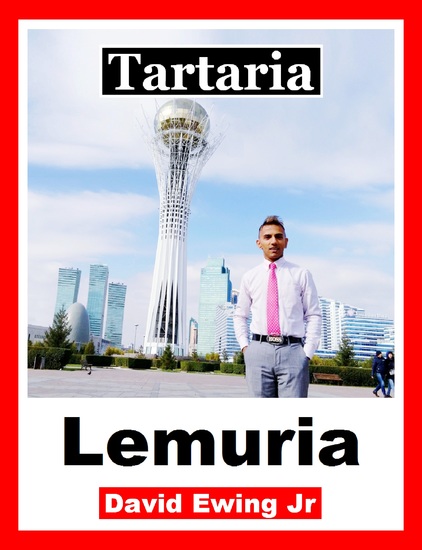
Tartaria - Lemuria - cover

Tartaria - Lemuria

David Ewing Jr

Publisher: Publishdrive

  • 0
  • 1
  • 0

Summary

Did Lemuria exist?Did advanced civilisations exist in the past?Where is the proof?Many people around the world believe that an ancient civilisation existed in the past and was known as Lemuria. Many people believe that Lemuria and Atlantis and Tartaria were advanced civilisations. If these civilisations were advanced, there must be evidence around the world to show this. This book will show the evidence that advanced civilisations did exist in the pastHistorians and their friends have wasted time showing crazy theories about advanced civilisations in the past. Many researchers believe that this was done deliberately to waste time and to make sure that the world does not find the truth
Available since: 07/11/2021.
Print length: 183 pages.

Other books that might interest you

  • SACRED INTIMACY - Navigating the Spiritual Dimensions of Love Connection and Sacred Intimacy (2024 Guide for Beginners) - cover

    SACRED INTIMACY - Navigating the...

    WILONA LYNCH

    • 0
    • 0
    • 0
    "Sacred Intimacy" is a profound exploration of the spiritual dimensions woven into the fabric of human connection, providing a guide to transcending the physical and embracing a deeper, more meaningful level of intimacy. This transformative journey delves into the sacred aspects of love, inviting couples to cultivate a connection that nourishes the soul and uplifts the spirit.Spiritual Connection Beyond the Physical: Explore practices and insights that elevate physical intimacy to a sacred and spiritual experience.Tantric Wisdom: Uncover the ancient teachings of Tantra, guiding you to harness and channel the potent energy of intimacy.Deepening Emotional Bond: Cultivate a profound emotional connection with your partner, fostering trust, vulnerability, and understanding.Meditative Practices: Integrate meditation and mindfulness into your intimate experiences, creating a space for presence and connection.Embodied Presence: Embrace the art of being fully present in the moment, heightening sensations and deepening the shared experience.Harmony of Mind, Body, and Spirit: Align the physical, emotional, and spiritual aspects of your being for a harmonious and sacred union. 
    🌟 Ready to embark on a sacred journey of love and connection? Dive into "Sacred Intimacy" and discover the transformative power of spiritual connection in your relationship. Whether you're seeking to deepen your current connection or embark on a new level of intimacy, this guide offers the keys to a sacred and fulfilling love life. Embrace the sacred—start your journey to profound intimacy today! 🌟 
     
    Show book
  • B H Mangal Maharaj My Spiritual Master - Living With A Pure Devotee - cover

    B H Mangal Maharaj My Spiritual...

    Sripad Jagannatha Das

    • 0
    • 0
    • 0
    His Divine Grace Tridandi Gosvami Bhakti Hirday Mangalniloy Maharaj was the longtime secretary of the Sri Chaitanya Gaudiya Math of India and so much more. He was born Madan Mohan Chandra on January 31, 1928, in Anandapur (Midnapur), West Bengal. After graduating first from university in 1949 he took up a career as a high school teacher. Madan, inwardly yearned to embrace a genuine spiritual process culminating in meeting his guru, Bhakti Dayita Gosvami Maharaj Of the Sri Chaitanya Gaudiya Math at the Kumba Mela, Hardwar. Entering the monastic order at the age of twenty one Mangal Niloy Brahmachari, as he was known, undertook Devotion Yoga (Bhakti). Several years later, he was accepted into the sanyasi order by Bhakti Promode Puri Gosvami Maharaj. From that day Maharaj traveled the world preaching the gospel of Krishna and Sri Chaitanya Mahaprabhu. 
     
    A longtime friend and confidant of ISKCON founder A.C. Bhaktivedanta Swami Prabhupada, in 1966 Maharaj were asked by the leader to join him in the States to become president of what the world knows as the Hare Krishna Movement. Unfortunately, Maharaj could not accompany the Swami and had to wait some years before finally reaching America. 
     
    In 1980 while on one of his many preaching tours of North America Maharaja met the struggling young writer, Geoffrey Giuliano in Toronto at the temple of the International Society for Krishna Consciousness. Two years later Giuliano was given initiation along with his wife Brenda and the names Jagannatha Dasa and Vrndarani Devi. From 1986 to 2004 Maharaj presided over a large rural ashram, goshalla (cow protection facility), and international media center overseen by his disciples in Lockport, New York. Until his death in Vrndavana, India the fully self-realized master continued to teach the philosophy of God consciousness freely around the globe.
    Show book
  • Dogwhistles and Figleaves - How Manipulative Language Spreads Racism and Falsehood - cover

    Dogwhistles and Figleaves - How...

    Jennifer Mather Saul

    • 0
    • 0
    • 0
    It is widely accepted that political discourse in recent years has become more openly racist and more accepting of wildly implausible conspiracy theories. Dogwhistles and Figleaves explores ways in which such changes—both of which defied previously settled norms of political speech—have been brought about. Jennifer Saul shows that two linguistic devices, dogwhistles and figleaves, have played a crucial role. Some dogwhistles (such as "88", used by Nazis online to mean "Heil Hitler") serve to disguise messages that would otherwise be rejected as unacceptable, allowing them to be transmitted surreptitiously. Other dogwhistles (like the 1988 "Willie Horton" ad) work by influencing people in ways that they are not aware of, and which they would likely reject were they aware. Figleaves (such as "just asking questions") take messages that could easily be recognized as unacceptable, and provide just enough cover that people become more willing to accept them. Saul argues that these devices are important for the spread of racist discourse. She also shows how they contribute to the transmission of norm-violating discourse more generally, focusing on the case of wildly implausible conspiracist speech. This book is the first full-length exploration of dogwhistles and figleaves. It offers an illuminating and disturbing view of the workings of contemporary political discourse.
    Show book
  • The Fall of Rome - Causes and Consequences - cover

    The Fall of Rome - Causes and...

    Rogan Fish

    • 0
    • 0
    • 0
    The decline of the Roman Empire is one of the most studied events in world history, with numerous scholars and historians seeking to explain the causes and contributing factors that led to its fall. It is a complex process that unfolded over centuries, involving a combination of internal weaknesses and external pressures. Although the empire had been a dominant force for centuries, by the 5th century AD, it was struggling to maintain its territorial integrity and power. Several key elements contributed to this gradual decline. 
    One of the primary causes of the empire's decline was economic instability. Over time, the Roman economy became strained under the weight of military expansion, government spending, and inefficient management. Inflation began to plague the empire as the government devalued its currency to finance its military campaigns and public works. Additionally, the empire faced a growing reliance on slave labor, which hindered innovation and economic development. As the economy weakened, the cost of maintaining the empire’s vast infrastructure and military forces became increasingly difficult to manage, leading to a cycle of financial crises. 
    Political corruption and instability were also central to the empire's decline. Throughout its later years, the Roman government became riddled with corruption, particularly within the ruling elite. Emperors were often chosen based on their ability to maintain power rather than their administrative abilities, leading to a lack of effective leadership. The Senate, once a powerful institution, lost its influence, and political factions within the empire vied for control, often undermining efforts to address the empire’s growing problems. This fragmentation of political power weakened the central authority, making it difficult to implement coherent policies across the empire.
    Show book
  • Paths of Dissent - Soldiers Speak Out Against America's Misguided Wars - cover

    Paths of Dissent - Soldiers...

    Andrew Bacevich, Daniel A. Sjursen

    • 0
    • 0
    • 0
    American veterans who fought in Iraq and Afghanistan offer invaluable firsthand perspectives on what made America’s post-9/11 wars so costly and disastrous.Twenty years of America’s Global War on Terror produced little tangible success while exacting enormous harm. In Iraq and Afghanistan, the United States sustained tens of thousands of casualties, expended trillions of dollars, and inflicted massive suffering on the very populations that we sought to “liberate.” Now the inclination to forget it all and move on is palpable. But there is much to be learned from the immense debacle. And those who served and fought in these wars are best positioned to teach us. Paths of Dissent collects fifteen original essays from American veterans of Iraq and Afghanistan—hailing from a wide range of services, ranks, and walks of life—who have come out in opposition to these conflicts. Selected for their candor and eloquence by fellow veterans Andrew Bacevich and Daniel A. Sjursen, these soldiers vividly describe both their motivations for serving and the disillusionment that made them speak out against the system. Their testimony is crucial for understanding just how the world’s self-proclaimed greatest military power went so badly astray.A Macmillan Audio production from Metropolitan Books
    Show book
  • Mosaic of Minds - Navigating the Coexistence of Artificial Intelligence and Humanity - cover

    Mosaic of Minds - Navigating the...

    Songyee Yoon

    • 0
    • 0
    • 0
    Forging a More Humane Future through Ethical AI CollaborationThe rapid development of AI is bringing revolutionary changes that raise complex ethical questions without clear solutions. As AI becomes an integral part of human society, how can we ensure it evolves responsibly and ethically? Songyee Yoon draws from conversations with pioneering AI experts to provide insight into building a framework for the coexistence of humans and machines. Exploring philosophical, educational, engineering, and societal perspectives, Mosaic of Minds offers thought-provoking discussions on AI's potential benefits and risks.This insightful book encourages collaborative efforts between diverse fields to develop AI that augments humanity, arguing that open communication and debate will reveal solutions hidden in differences. Ultimately, it makes a compelling case that by working together, we can create a new order where AI assists in solving humanity’s problems.
    Show book