Join us on a literary world trip!
Add this book to bookshelf
Grey
Write a new comment Default profile 50px
Grey
Subscribe to read the full book or read the first pages for free!
All characters reduced
Tradition and Apocalypse - An Essay on the Future of Christian Belief - cover

Tradition and Apocalypse - An Essay on the Future of Christian Belief

David Bentley Hart

Publisher: Baker Academic

  • 0
  • 0
  • 0

Summary

In the two thousand years that have elapsed since the time of Christ, Christians have been as much divided by their faith as united, as much at odds as in communion. And the contents of Christian confession have developed with astonishing energy. How can believers claim a faith that has been passed down through the ages while recognizing the real historical contingencies that have shaped both their doctrines and their divisions? 
 
In this carefully argued essay, David Bentley Hart critiques the concept of "tradition" that has become dominant in Christian thought as fundamentally incoherent. He puts forth a convincing new explanation of Christian tradition, one that is obedient to the nature of Christianity not only as a "revealed" creed embodied in historical events but as the "apocalyptic" revelation of a history that is largely identical with the eternal truth it supposedly discloses. Hart shows that Christian tradition is sustained not simply by its preservation of the past, but more essentially by its anticipation of the future. He offers a compelling portrayal of a living tradition held together by apocalyptic expectation--the promised transformation of all things in God.
Available since: 02/08/2022.
Print length: 208 pages.

Other books that might interest you

  • What's So Great about the Doctrines of Grace? - cover

    What's So Great about the...

    Richard Phillips

    • 0
    • 0
    • 0
    Do Christians choose to have faith, or is faith a supernatural work of God? Far from an abstract intellectual exercise, this question has vast implications for the hope, joy, and assurance of the Christian life. When the truth of God’s sovereign grace breaks into our minds and hearts, it changes everything.  In What’s So Great about the Doctrines of Grace? Dr. Richard D. Phillips takes us on a tour of the doctrines of grace, also known as the five points of Calvinism. With clear biblical exposition, he helps us to see the extent of our corruption in sin, to anchor our faith in the fullness of grace, and to trust in God’s promise to finish what He started—the salvation of His people. When we rely on God’s all-sufficient grace, we can truly live for His all-consuming glory.
    Show book
  • Interpreting the Pauline Epistles - Second Edition - cover

    Interpreting the Pauline...

    Thomas R. Schreiner

    • 0
    • 0
    • 0
    Leading Pauline-studies expert Thomas Schreiner provides an updated guide to the exegesis of the New Testament epistles traditionally assigned to Paul. The first edition helped thousands of students dig deeper into studying the New Testament epistles. This new edition is revised throughout to account for changes in the field and to incorporate the author's maturing judgments. The book helps listeners understand the nature of first-century letters, do textual criticism, investigate historical and introductory issues, probe theological context, and much more.
    Show book
  • Europe Between East and West - in Cosmic and Human History - cover

    Europe Between East and West -...

    Rudolf Steiner

    • 0
    • 0
    • 0
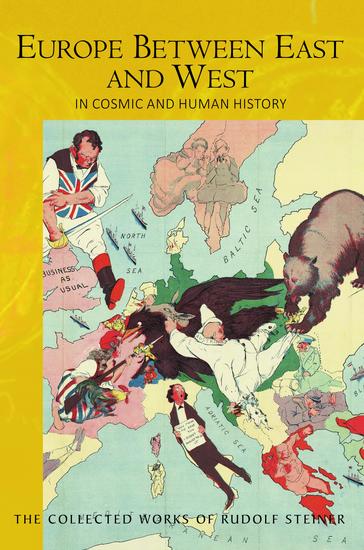
    In a broad-ranging series of lectures, Rudolf Steiner shines new light on the spiritual background to the outbreak of the Great War in Europe. Spiritual entities stand behind the various peoples of the world, he says. He describes how these beings – Folk Souls – relate to the cultural diversity of Europe, America and the East, and speaks of their individual tasks and destinies in relation to the deeper causes of the catastrophic war. Central Europe has the particular mission of mediating between the Western world, the Slavic countries and by extension the East. Steiner alleges that Western secret societies consciously suppressed the spiritual life of this central cultural region through malign activities. These same brotherhoods exploited H. P. Blavatsky's occult faculties for their own ends. Given in Munich between the years 1914 and 1918 – and appearing in English for the first time – Rudolf Steiner addresses an array of topics in these lectures, including the potential elimination of the soul through specific medicines; intelligence testing as an expression of an ahrimanic trend; the stunted state of inner growth of many people after the age of 27; the effects in the spiritual world of those who die young; how war is an educator of selflessness; and the significance of Michael for the appearance of Christ in the etheric. The volume also features an introduction by Terry Boardman, editorial notes and an index. Twelve lectures, Munich, Dec. 1914–May 1918, GA 174a
    Show book
  • The Lankāvatāra Sūtra - cover

    The Lankāvatāra Sūtra

    D.T. Suzuki

    • 0
    • 0
    • 0
    The Lankavatara Sutra, dating from the early years of the Common Era, sometime before 443, is one of the most important Mahayana Buddhist texts, not least because of its influence on later Tibetan, Chinese and Japanese Buddhism.  One of its possible early translators in the 8th century was Gunabhadra who is sometimes regarded as the first father of Zen in China.   
    The Sutra takes the form of a dialogue between the Buddha in his cosmic form (as opposed to the historical figure of the Pali Canon) and the Bodhisattva or ‘Great Being’, Mahamati.  The Bodhisattva, as represented by Mahamati, is the enlightened presence in the world, foregoing the bliss of Nirvana and enlightenment for the sake of oneself alone, in order to lead all beings to that state of liberation, of complete non-attachment, as taught by the Buddha.   
    The Sutra is especially concerned with the teaching of ‘Emptiness’, or ‘Sunyata’ in the Sanskrit, the letting go of all concepts and constructs, through which we ‘label’ the world around us, thus perpetuating that duality of self and other, which, according to the Buddha’s teaching, lies at the root of the world’s suffering.  This is what is meant in the Sutra by the ‘discriminating consciousness’, through which we make logical sense of the world on a relative basis and which is distinguished from Transcendental Knowledge which allows us to enter into absolute reality. Much of the Sutra is concerned with the way this is brought about through the workings of our inner consciousness. 
    The Buddha, prompted by Mahamati’s questions, reiterates again and again that this world of ‘particulars’ as perceived by the non-enlightened, is devoid of an ego-substance and is illusory, like ‘Maya’ or a visionary flower in the air.  It is because of our persistent need to hold onto some sense of a fixed self or ‘soul’ that we perpetuate the rounds of rebirth in this samsaric world, or world of suffering. 
    This recording includes the ‘Sagathakam’ (or “one with verses”), a later addition to the Sutra which contains many references to the Sutra itself and may well have been intended as an ‘aide-memoire’ for those trying to learn sections of the Sutra.
    Show book
  • Ten Fundamental Acts of Fathers - The Builders Protectors and Warriors of the Family - cover

    Ten Fundamental Acts of Fathers...

    Omaudi Reid

    • 0
    • 0
    • 0
    You just want to be a hero to your kids. But in today's world, where do you even begin? 
    The Ten Fundamental Acts of Fathers offers a clear roadmap for dads of all stages, from new fathers to those seeking to reconnect. Get straight-to-the-point Biblical and practical tips that help men raise healthy children who thrive in faith, family, and society. 
    Hoping our children will become the individuals God desires is not enough. Taking action sets a good example for our children's success. The acts of building, protecting, and fighting for the family are crucial in fatherhood. 
    The book outlines the following three roles of fathers:Builder: Create a loving environment where your children can grow, love, and play.Protector: Safeguard them physically, mentally, and spiritually.Warrior: Guide them through life's challenges to reach their full potential. 
     
    No matter what stage you are in fatherhood, you can be the hero your kids need. Start your journey today! Get your copy of Ten Fundamental Acts of Fathers and unlock the power of Biblical & practical guidance.
    Show book
  • Mosaics of the First Christmas - cover

    Mosaics of the First Christmas

    Perry Anthony Castelli, Vivian...

    • 0
    • 0
    • 0
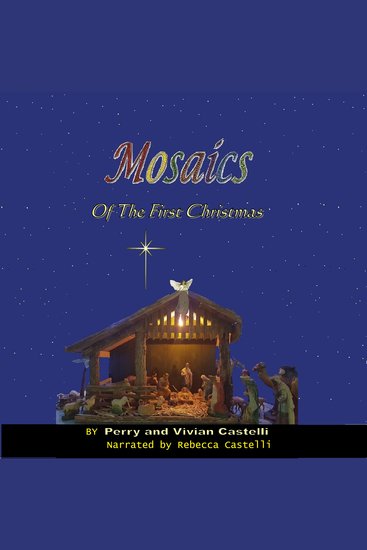
    The title, Mosaics of the First Christmas, is represented by the colorful mosaic letters on the cover of the book. The mosaic letters represent the multihued stories contained within this book. Just as the bright mosaic pieces come together to create a letter, the nine vibrant stories come together as vivid pieces of the First Christmas. As you read the lively stories, you will be carried back to the first Christmas and immersed in a new and enriched perspective of characters and events that we have both researched and imagined. We believe they are possible happenings because of the human spirit that desires to help family, friends or even strangers. Since the Biblical descriptions that surround this beautiful season are so brief, yet evocative, they have prompted our joyful dreams of what MAY have been! We know your imagination will flourish. Meet the playful, loving children of Bethlehem; or a young girl whose dream is to become a shepherdess following in the footsteps of her father; or the Roman Centurion whose life is dramatically altered by the birth of a child. Enjoy meeting all these wonderful characters and their stories as they become part of the wonderful story of the first Christmas!
    Show book