Unisciti a noi in un viaggio nel mondo dei libri!
Aggiungi questo libro allo scaffale
Grey
Scrivi un nuovo commento Default profile 50px
Grey
Iscriviti per leggere l'intero libro o leggi le prime pagine gratuitamente!
All characters reduced
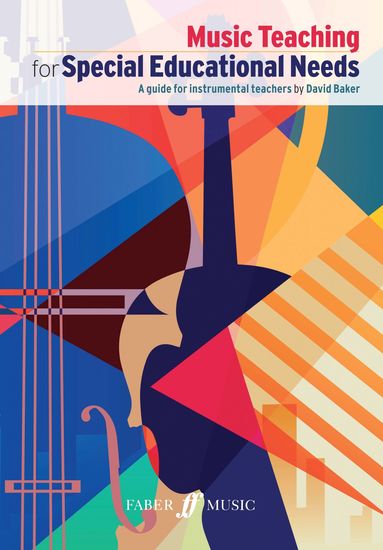
Music Teaching for Special Educational Needs - cover

Music Teaching for Special Educational Needs

David Baker

Casa editrice: Faber Music Limited

  • 0
  • 0
  • 0

Sinossi

The full eBook version of Music Teaching for Special Educational Needs in fixed-layout format.
Music Teaching for Special Educational Needs is comprehensive guide which provides a solid foundation for teachers wanting to understand and support music students with additional needs. It covers Dyslexia, Autism Spectrum Disorder and visual, auditory and physical disabilities, and is packed with up-to-date information, helpful pedagogical starting points, case studies, practical advice, ideas for reflective practice and further reading.
David Baker is Associate Professor at University College London (UCL), where he leads the Music Education MA and is Fellow of the Higher Education Academy. In the wider Higher Education sector, David has assisted in developing new degree courses and modules across a range of education disciplines and has been an External Examiner for PhDs in music education at universities and music

conservatoires worldwide. His early background is as a peripatetic instrumental music teacher, teaching in UK primary and secondary schools for over 10 years. He has a particular interest in disability, music and assistive technology development.
Disponibile da: 01/08/2026.
Lunghezza di stampa: 229 pagine.

Altri libri che potrebbero interessarti

  • Building the Metropolis - Architecture Construction and Labor in New York City 1880–1935 - cover

    Building the Metropolis -...

    Alexander Wood

    • 0
    • 0
    • 0
    A sweeping history of New York that chronicles the construction of one of the world’s great cities. Between the 1880s and the 1930s, New York City experienced explosive growth as nearly a million buildings, dozens of bridges and tunnels, hundreds of miles of subway lines, and thousands of miles of streets were erected to meet the needs of an ever-swelling population. This landscape—jagged with skyscrapers, rattling with the sound of mass transit, alive with people—made the city world-famous. Building the Metropolis offers a revelatory look at this era of urban development by asking, “Who built New York, and how?” Focusing on the work of architects, builders, and construction workers, Alexander Wood chronicles the physical process of the city’s rapid expansion. New York’s towering buildings and busy thoroughfares aren’t just stylish or structural marvels, Wood shows, but the direct result of the many colorful personalities who worked in one of the city’s largest industries. This development boom drew on the resources of the whole community and required money, political will, creative vision, entrepreneurial drive, skilled workmanship, and hard physical labor. Wood shows this to be an even larger story as well. As cities became nodes in a regional, national, and global economy, the business of construction became an important motor of economic, political, and social development. While they held drastically different views on the course of urban growth, machine politicians, reformers, and radicals alike were all committed to city building on an epic scale. Drawing on resources that include city archives and the records of architecture firms, construction companies, and labor unions, Building the Metropolis tells the story of New York in a way that’s epic, lively, and utterly original.
    Mostra libro
  • Cosimo de' Medici: The Life and Legacy of the Politician Who Established Florence’s Most Famous Family - cover

    Cosimo de' Medici: The Life and...

    Charles River Editors

    • 0
    • 0
    • 0
    Most historians credit the city-state of Florence as the place that started and developed the Italian Renaissance, a process carried out through the patronage and commission of artists during the late 12th century. If Florence has received its due credit, much of it belongs to the House of Medici, the family dynasty of Florence that ruled at the height of the Renaissance. The dynasty held such influence that some of its family members even became pope, and it all started with a banker colloquially known as Cosimo the Elder.  
    	Cosimo’s trajectory was nothing short of incredible. In the spring of 1433, he sat in a small stone cell high in the tower of the Palazzo della Signoria, listening to the bells of the city he had spent his life serving and waiting to learn whether he was to be beheaded. He was 43 and held no public title of consequence, commanded no army, and had taken pains for most of his life to appear as one prosperous citizen among many. Nonetheless, the men who then governed Florence had decided that he was too dangerous to leave at liberty, and for several days the question before the city was not whether Cosimo possessed power but whether the republic dared to kill him for it.  
    	Instead of being executed, within 18 months, he returned from exile to a city that received him as a deliverer, and for the 30 years that followed, he ruled Florence more completely than any king ruled a kingdom, despite never assuming a crown, a permanent office, or a public claim to authority. He governed through a network of friendships, debts, favors, and quiet arrangements so subtly that foreign observers struggled to describe it, but what they saw was plain enough even when the mechanisms by which Cosimo maintained control were not. The peace and the wars of Italy answered to his judgment, and the powerful leaders across the peninsula carried their business to his house, settling across a banker’s table the questions other cities settled in council chambers and throne rooms.
    Mostra libro
  • Unique Andy Warhol The - The Life and Works of the Most Important Pop Artist - Global Basics 101 - Your Series for Modern Knowledge Folge 4 (unabridged) - cover

    Unique Andy Warhol The - The...

    Bert Alexander Petzold

    • 0
    • 0
    • 0
    Why does a soup can feel like a work of art? Why does a starlet's pose become an icon? And why does our present sometimes feel like an endless repetition of images? If you understand Andy Warhol, you understand the mechanics of pop culture, media and fame right up to our own day. This non-fiction book opens the door to an artist who turned advertising into art - and art into a brand: cool, razor-sharp in observation and, surprisingly, deeply human.
    
    Andy Warhol (1928-1987) did not begin as a myth, but as Andrej Warhola, the son of an immigrant family from what is now Slovakia - shaped by illness, withdrawal and an early passion for images. Out of that childhood grew a way of seeing that would later change the world. After studying commercial art in Pittsburgh, he moved to New York, to the place where style, consumption and attention ruled. In the 1950s he became successful as a commercial illustrator - and this is the key to his later upheaval. Warhol understood how images work: how they seduce, how they imprint themselves, and how to design them so they will not let you go.
    
    When he opened his legendary studio, 'The Factory', in 1962, it became a laboratory of modernity. Warhol perfected screen printing and made reproduction the principle. Suddenly, everyday products and press photographs could appear like holy icons. 'Campbell's Soup Cans', 'Coca-Cola Bottles' and the portrait series of 'Marilyn', 'Elvis' or 'Mao' became symbols of a new era. Yet beneath the smooth surface lay a precise way of thinking about original and copy, about staging and power - about what we accept as real simply because it appears often enough before our eyes. Series such as 'Brillo Boxes' or 'Death and Disaster' revealed how closely consumer gloss and shock imagery sit together, and how ruthlessly the media shapes our perception.
    
    This book also takes you into Warhol's radical boundary-crossings. He shot hundreds of experimental films, worked with the band The Velvet Underground, staged light shows under the title 'Exploding Plastic Inevitable', and turned 'The Factory' into a magnet for music, fashion, film and the art market. Then came the 1968 shooting by Valerie Solanas - an rupture that permanently changed Warhol's body and life. The glittering centre became an artist who cultivated distance even more deliberately, and yet mirrored society more sharply than ever.
    
    In the 1970s he produced his famous commissioned portraits of celebrities: Polaroids, the magazine 'Interview', stage designs and record sleeves. Warhol's belief that 'business art' was an art form became the blueprint for a present in which attention has become a currency. In the 1980s he sought dialogue with younger artists such as Jean-Michel Basquiat and turned to themes of religion and mortality - crosses, skulls and 'Last Supper' motifs. In 1987 he created a haunting 'self-portrait'. Shortly afterwards he died in New York following complications from surgery. His estate - films, screen prints, photographs and the 'Time Capsules' - shows the extraordinary range of an artist who newly connected advertising, media and high art.
    
    In this non-fiction book, Bert Alexander Petzold takes you on a richly factual cultural journey - accessible, entertaining and clearly structured. You gain solid basics that stay with you, and connections that illuminate. Ideal for students preparing for the university entrance qualification, and just as valuable for undergraduates and art lovers who do not want to know Warhol as a poster, but as a thinking machine of modernity.
    
    Order your copy now and discover Andy Warhol beyond the clichés. Understand why his images still shape our ideas of fame, consumption and identity - and why this book is the fastest way to truly grasp Pop Art.
    Mostra libro
  • British Architecture - A Very Short Introduction - cover

    British Architecture - A Very...

    Dana Arnold

    • 0
    • 0
    • 0
    British Architecture presents an original and engaging overview of the architecture of the British Isles, from medieval times to the present day. Avoiding the traditional approach of a chronological survey of architects and architectural style, each chapter presents a thematic exploration of key aspects of British architecture that endure across time and still have relevance today. Arnold also highlights the ways in which architecture can project national and regional identities. 


    British architecture tells of the intrinsic nature of Britishness and is an important means of understanding Britain's connection with the world. There is no doubt about the international significance of the work of recent and contemporary British architects. But Arnold also relates how a preoccupation with the past has been a constant theme in design. A thematic, historical understanding of British architecture in terms of its form and purpose explains much about society and culture. Architecture continues to shape patterns of living and social interaction and responds to new demands. Equally, debates about how best to express the nation through its architecture reveal much about Britain's perception of itself. Finally, Arnold explores how subsequent generations can offer new interpretations and meanings that change our view of British architecture's legacy.
    Mostra libro
  • The Jewel in Mumbai - cover

    The Jewel in Mumbai

    Bikram Dandiya

    • 0
    • 0
    • 0
    The Global Vipassana Pagoda in Mumbai was built to mark the birth centenary year of Sayagyi U Ba Khin, the Burmese Dhamma teacher of S.N. Goenka. The monument is built in the Myanmar style of the Shwedagon pagoda, as a token of gratitude to that country where the essence of the Buddha’s teachings was maintained in its pristine purity, and from where it is now spreading throughout India, and via India to the rest of the world. Mr. S.N. Goenka became the vehicle to make this happen and was the inspiring guide for every important aspect of this building project. Tremendous volition and effort went into the building of this staggering monument, and it is interesting and educative to explore the journey. Mr. Bikram Dandiya has beautifully chronicled some of these experiences in this booklet, The Jewel in Mumbai, the story of the making of the crystal bud atop the Global Vipassana Pagoda.
    Mostra libro
  • Richard Wagner - Thunderstorms Music and Drama - cover

    Richard Wagner - Thunderstorms...

    Richard Wagner

    • 0
    • 0
    • 0
    Experience Wagner Like Never Before: "Richard Wagner - Thunderstorms, Music, and Drama" 
     
    Unlock the Ultimate Audiobook Experience 
    Dive into the mesmerizing world of Richard Wagner with our digital audiobook, "Richard Wagner - Thunderstorms, Music, and Drama." This unique auditory experience weaves together Wagner’s most evocative compositions with the atmospheric intensity of thunderstorms, creating a symphonic journey unlike any other. Whether you're a lifelong Wagner aficionado or a newcomer to his works, this audiobook promises to captivate your senses and transport you to the dramatic heart of Wagnerian opera. 
     
    Musical Highlights 
    Siegfried Idyll, WWV 103: Immerse yourself in the serene and tender tones of the Siegfried Idyll, a piece that Wagner composed as a birthday gift for his wife. The gentle melody, accompanied by the distant rumble of thunderstorms, creates an intimate and tranquil atmosphere. 
     
    Das Liebesmahl der Apostel, WWV 69: Experience the grandeur of "The Feast of the Apostles," a rarely performed work that showcases Wagner’s choral genius. The stormy background enhances the spiritual and majestic qualities of this piece, making it a truly divine listening experience. 
     
    Parsifal, WWV 111 - Act I: Let the legendary tale of Parsifal unfold through: 
     
    1. Prelude: The opening notes set the stage for a journey of redemption and enlightenment, enriched by the rolling thunder that underscores the gravity of the prelude. 
    2. Transformation Scene: Feel the dramatic shifts as you are transported through Parsifal’s transformative journey, with thunderclaps highlighting key moments of change and revelation. 
    3. Grail Scene:  
     
    Dramatic Journey through "Tristan and Isolde" 
     
    Act 1: The Voyage to Cornwall:  
    Act 2: At the Court of King Mark:  
    Act 3: At Tristan's Castle in Brittany:
    Mostra libro