Join us on a literary world trip!
Add this book to bookshelf
Grey
Write a new comment Default profile 50px
Grey
Subscribe to read the full book or read the first pages for free!
All characters reduced
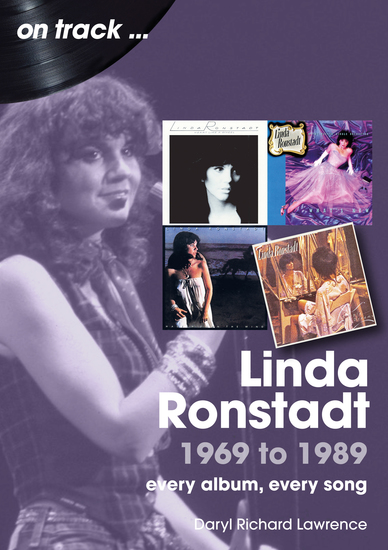
Linda Ronstadt: 1969 - 1989 - Every Album Every Song - cover

Linda Ronstadt: 1969 - 1989 - Every Album Every Song

Daryl Richard Lawrence

Publisher: Sonicbond Publishing

  • 0
  • 0
  • 0

Summary

Linda Ronstadt is one of the most important women in the history of popular music. Starting her solo career in 1969, she redefined what a music superstar could be by expanding her repertoire from her country rock roots, to cross over to success with mainstream pop music, and then evolving into more diverse genres such as operetta, American jazz standards, and mariachi. This work provides a track-by-track breakdown of the first twenty years of her solo career when her output totaled an amazing 17 albums. Transcending genres and applying her own vision to not only her career, but each song she interpreted, Linda Ronstadt garnered a wide fan base and had massive commercial success with albums such as Heart Like A Wheel and Living In The USA. Those familiar with her work, as well as those entirely new to it, will find something to discover through this analysis of her output up to 1989. All the best-known hits are covered in this volume; however, the real fun is finding new favorites by visiting or revisiting lesser-known works. So sit back, put some of her songs on, crack this book open, and indulge in the voice that sold over 100 million records worldwide.
 
The authorDaryl Richard Lawrence holds a Master of Science in Education from the University of Wisconsin-La Crosse. When not occupied with his museum operations job, he spends his time reading, writing, volunteering for the local historical society, and podcasting about Marvel comics. Daryl resides in the almost always wintry Minnesota, USA, and dotes upon his pet rabbits, who mostly tolerate the many keyboard clicks it takes to write a book. His writing ranges from music reviews to historical biographies. A lifelong classic rock fan, he is overjoyed at sharing his passion for artists and their songs.
Available since: 09/01/2025.
Print length: 160 pages.


Other books that might interest you

  • Life Belongs to the Loud - cover

    Life Belongs to the Loud

    Forrest Lonefight

    • 0
    • 0
    • 0
    Azul Morgan, a young Native / Indigenous woman is the next rock star to break. Trapped in M-town, Iowa during the "Next Seattle" Midwest Music Scene explosion during the aftermath of 9/11, she takes her guitar named, Mocha, & her composition notebook, The Bastard Chronicle, to write the greatest songs ever & form the perfect band. 
    Through the chaos she finds her tribe outside her native tribal roots in two amazing dudes, Rick, a womanizing drummer/singer, and Jesus, a cross-dressing guitarist. The three find the musical chemistry they've been looking for. Their unique new band are poised to take over the world-at-war. Azul writes about it all in The Bastard Chronicle, in her hilarious voice, as her past, present, & future collide in a coming-of-age story never told before in an era of the music scene when anything was possible. 
    This is author Forrest Lonefight's debut novel.
    Show book
  • Inglourious Basterds - The Ultimate Trivia Collection - From The Movie Directed By Quentin Tarantino - cover

    Inglourious Basterds - The...

    Film Trivia Metaverse

    • 0
    • 0
    • 0
    INGLOURIOUS BASTERDS 
    THE ULTIMATE TRIVIA COLLECTION 
      
    FROM THE MOVIE DIRECTED BY QUENTIN TARANTINO 
      
    CREATED BY FILM TRIVIA METAVERSE 
      
    ABOUT THE FILM 
    Inglourious Basterds, directed by Quentin Tarantino, is a World War II film that blends historical fiction with intense action. It follows two main storylines: one about a group of Jewish-American soldiers, led by Lieutenant Aldo Raine, who aim to instill fear in the Nazi army by killing and scalping German soldiers. The other centers on Shosanna Dreyfus, a young Jewish woman who seeks revenge on the Nazis after they kill her family. Tarantino uses themes of vengeance, justice, and survival, blending intense violence with sharp dialogue and dark humor in a unique and stylized narrative. 
      
    TRIVIA SAMPLES: 
      
    “Inglourious Basterds marked the first Quentin Tarantino film to win an Oscar for acting, with Christoph Waltz receiving the Best Supporting Actor award. Waltz went on to win another Oscar for his role in Django Unchained (2012).” 
      
    “In a roundtable discussion with Brad Pitt, Tarantino revealed that Til Schweiger, who was born and raised in Germany, had always refused to wear a Nazi uniform for a film. However, Schweiger agreed to do so on the condition that he could kill a Nazi in every scene where he wore one.” 
      
    “Tarantino spent nearly a decade working on the script for Inglourious Basterds.” 
      
    “Colonel Hans Landa, played by Christoph Waltz, speaks the most languages in the film, including English, French, German, and Italian.”
    Show book
  • Audio Snaps Volume One - 100 minutes from his book You Don't Have to Say You Love me - cover

    Audio Snaps Volume One - 100...

    Simon Napier-Bell

    • 0
    • 0
    • 0
    Audio Snaps is a series of 100 minute audiobooks packed with fun stories from my books about my life in the music business. Volume One features stories from You Don’t Have to Say You Love Me, a book I wrote in 1983 about my time in London in the Sixties when, amongst other things, I was managing the Yardbirds and wrote the lyrics to the song, You Don’t Have to Say You Love Me. Reading it back now, it seems extraordinarily frank, more so than I might be nowadays, and sometimes rather rude too. When it came out, the music press loathed the book, I think because it trivialised the music industry, whereas the tabloids loved it. Nowadays, they’ve all come to see it as a classic of its time and the Observer newspaper has it at Number Eleven on its list of “The 50 Greatest Music Books Ever.” In the Independent, Charles Shaar Murray called my books, “ The cold print equivalent of spending an evening with a world-class raconteur.”  With Audio Snaps, you get the raconteur without wading through the cold print.
    Show book
  • Why the Ramones Matter - cover

    Why the Ramones Matter

    Donna Gaines

    • 0
    • 0
    • 0
    The central experience of the Ramones and their music is of being an outsider, an outcast, a person who’s somehow defective, and the revolt against shame and self-loathing. The fans, argues Donna Gaines, got it right away, from their own experience of alienation at home, at school, on the streets, and from themselves. This sense of estrangement and marginality permeates everything the Ramones still offer us as artists, and as people. Why the Ramones Matter compellingly makes the case that the Ramones gave us everything; they saved rock and roll, modeled DIY ethics, and addressed our deepest collective traumas, from the personal to the historical.
    Show book
  • Video Translation by AI - A Threat to the Film and Dubbing Industry - cover

    Video Translation by AI - A...

    Malik LEFFAD

    • 0
    • 0
    • 0
    In 'Video Translation by AI: A Threat to the Film and Dubbing Industry,' the author delves deep into the seismic shifts brought about by artificial intelligence in the realms of cinema and voice-over. As groundbreaking technologies like HeyGen redefine the boundaries of video translation, this book navigates the intricate balance between innovation and tradition. Through meticulous analysis, firsthand accounts, and compelling case studies, it examines the potential risks and rewards of AI's growing influence. From the apprehensions of actors and dubbing artists to the broader implications for global storytelling, this book is a definitive guide to an industry in flux. Essential reading for film buffs, technologists, and industry insiders.
    Show book
  • Music Therapy - Healing through Harmony and Melody - cover

    Music Therapy - Healing through...

    Kevin Thorley

    • 0
    • 0
    • 0
    Music has been a part of human culture since the dawn of time. Its rhythms, melodies, and harmonies have not only served as a form of artistic expression but have also played a vital role in rituals, ceremonies, and healing practices across different cultures. This chapter provides an overview of music therapy as a clinical and evidence-based practice, exploring its origins, fundamental principles, and the diverse ways in which it benefits individuals in both physical and mental health settings. 
    Music therapy's roots can be traced back to ancient civilizations, where music was used as a tool for healing and communication. In Greek and Roman cultures, philosophers like Pythagoras and Plato discussed the healing power of music and its influence on emotions and the body. Indigenous cultures worldwide have long used music, drumming, and chanting as part of their spiritual and healing traditions, recognizing its ability to alter states of consciousness and promote well-being. 
      
    The modern field of music therapy emerged in the mid-20th century, following World War II. During this time, musicians began to visit hospitals to play for soldiers suffering from physical and emotional trauma. Observing the profound effects that music had on the soldiers’ recovery, doctors and nurses started to incorporate music into their treatment plans. The positive impact on patients led to the formalization of music therapy as a profession, with the first academic programs and certification processes being established in the 1950s and 1960s.
    Show book