Join us on a literary world trip!
Add this book to bookshelf
Grey
Write a new comment Default profile 50px
Grey
Subscribe to read the full book or read the first pages for free!
All characters reduced
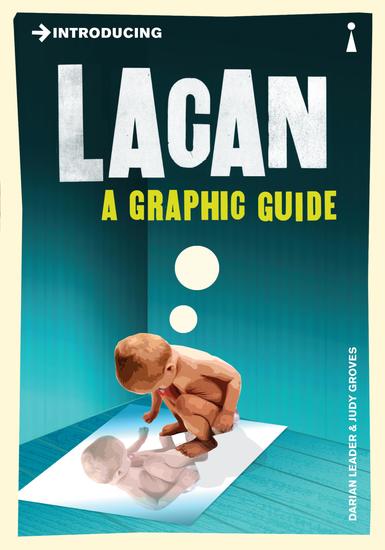
Introducing Lacan - A Graphic Guide - cover

Introducing Lacan - A Graphic Guide

Darian Leader

Publisher: Icon Books

  • 0
  • 1
  • 0

Summary

Jacques Lacan is now regarded as a major psychoanalytical theorist alongside Freud and Jung, although recognition has been delayed by fierce arguments over his ideas. Written by a leading Lacanian analyst, "Introducing Lacan" guides the reader through his innovations, including his work on paranoia, his addition of structural linguistics to Freudianism and his ideas on the infant 'mirror phase'. It also traces Lacan's influence in postmodern critical thinking on art, literature, philosophy and feminism. This is the ideal introduction for anyone intrigued by Lacan's ideas but discouraged by the complexity of his writings.
Available since: 12/01/2014.
Print length: 176 pages.

Other books that might interest you

  • America: Standing Strong - cover

    America: Standing Strong

    Robert J. Emery

    • 0
    • 0
    • 0
    America: Standing Strong, from award-winning author Robert J. Emery (www.robertjemeryauthor.com) 
    In 1920, while campaigning for the office of president, Warren G. Harding said in a campaign speech, “America’s present need is not heroics, but healing; not nostrums, but normalcy.” 
    That is where America finds itself today. 
    “America: Standing Strong” brings together investigative reporters, scholars, scientists, philosophers, medical professionals, elected officials across the political spectrum and an endless string of quotes from respected voices, past and present, to examine the events of recent years, not what we already know, but what we may not, or have yet to acknowledge, in our quest for reformation. Every voice counts. 
     
    Show book
  • The Reading Life - The Joy of Seeing New Worlds Through Others' Eyes - cover

    The Reading Life - The Joy of...

    Anonymous

    • 0
    • 0
    • 0
    The revered teacher and bestselling author reflects on the power, importance, and joy of a life dedicated to reading books in this delightful collection drawn from his wide body of writings. 
    More than fifty years after his death, revered intellectual and teacher C. S. Lewis continues to speak to readers, thanks not only to his intellectual insights on Christianity but also his wondrous creative works and deep reflections on the literature that influenced his life. Beloved for his instructive novels including The Screwtape Letters, The Great Divorce, and The Chronicles of Narnia as well as his philosophical books that explored theology and Christian life, Lewis was a life-long writer and book lover. 
    Cultivated from his many essays, articles, and letters, as well as his classic works, The Reading Life provides guidance and reflections on the love and enjoyment of books. Engaging and enlightening, this well-rounded collection includes Lewis’ reflections on science fiction, why children’s literature is for readers of all ages, and why we should read two old books for every new one. 
    A window into the thoughts of one of the greatest public intellectuals of our time, this collection reveals not only why Lewis loved the written word, but what it means to learn through literature from one of our wisest and most enduring teachers.
    Show book
  • Confronting Saddam Hussein - George W Bush and the Invasion of Iraq - cover

    Confronting Saddam Hussein -...

    Melvyn P. Leffler

    • 0
    • 0
    • 0
    America's decision to go to war in Iraq in 2003 is arguably the most important foreign policy choice of the entire post–Cold War era. Nearly two decades after the event, it remains central to understanding current international politics and US foreign relations. 


    In Confronting Saddam Hussein, the eminent historian of US foreign policy Melvyn P. Leffler analyzes why the US chose war and who was most responsible for the decision. Employing a unique set of personal interviews with dozens of top officials and declassified American and British documents, Leffler vividly portrays the emotions and anxieties that shaped the thinking of the president after the shocking events of 9/11. He shows how fear, hubris, and power influenced Bush's approach to Saddam Hussein's Iraq. At the core of Leffler's account is his compelling portrait of Saddam Hussein. Rather than stressing Bush's preoccupation with promoting freedom or democracy, Leffler emphasizes Hussein's brutality, opportunism, and unpredictability and illuminates how the Iraqi dictator's record of aggression and intransigence haunted the president and influenced his calculations. Throughout, Leffler highlights the harrowing anxieties surrounding the decision-making process after the devastating attack on 9/11 and explains the roles of contingency, agency, rationality, and emotion.
    Show book
  • The Napoleonic War In 100 Facts - cover

    The Napoleonic War In 100 Facts

    Jem Duducu

    • 0
    • 0
    • 0
    Sparked by the French Revolution, the Napoleonic Wars became one of the largest European conflicts in history as Napoleon fought to expand his French Empire. The wars were instrumental in the formation of Europe as we know it today, and confirmed Britain's dominance as a seafaring nation. It was a period famous for strategic warfare and cunning battle tactics. From this background emerged Nelson as national hero and politician. The Napoleonic Wars in 100 Facts covers the twenty-five years of war from the 1790s to the final victory in 1815 at the Battle of Waterloo. Jem Duducu guides us through some of the key figures and their stories, for example Wellington, Napoleon and Nelson, as well some of the major battles and tactics in this era of epic conflict that took British troops to Egypt, Argentina, America and of course a little town in Belgium called Waterloo.
    Show book
  • How It Feels To Be Colored Me - cover

    How It Feels To Be Colored Me

    Zora Neale Hurston

    • 0
    • 0
    • 0
    How It Feels To Be Colored Me was first published in "The World Tomorrow" in May 1928. In this autobiographical piece that focuses on race and 1920s America, Hurston reflects on her early childhood in an all-black Florida town and her first experiences in life where she felt "different."Hurston focuses on the similarities we all share and on her own self-identity in the face of difference. "Through it all," she says, "I remain myself."
    Show book
  • Battle of Fornovo The: The History of the Italian Wars’ First Major Battle - cover

    Battle of Fornovo The: The...

    Editors Charles River

    • 0
    • 0
    • 0
    In 1494, there were five sovereign regional powers in Italy: Milan, Venice, Florence, the Papal States and Naples. In 1536, only one remained: Venice. These decades of conflict precipitated great anxiety among Western thinkers, and Italians responded to the fragmentation, forevermore, of Latin Christendom, the end of self-governance for Italians, and the beginning of the early modern era in a myriad of ways. They were always heavily influenced by the lived experience of warfare between large Christian armies on the peninsula. 
    The diplomatic and military history of this 30-year period was a complex situation that one eminent Renaissance historian, Lauro Martines, has described as "best told by a computer, so many and tangled are the treatises, negotiations and battles." At the same time, the fighting went in tandem with the Renaissance and was influenced by it. Most historians credit the city-state of Florence as the place that started and developed the Italian Renaissance, a process carried out through the patronage and commission of artists during the late 12th century. If Florence is receiving its due credit, much of it belongs to the Medicis, the family dynasty of Florence that ruled at the height of the Renaissance. The dynasty held such influence that some of its family members even became Pope. 
    Meanwhile, plans for a French invasion were years in the making, and France’s young King Charles VIII, heavily influenced by chivalric tales and his men of finance, had begun his preparations for conquering Naples as a base from which to launch a crusade in 1491. Two key events were the catalysts for these plans. The first was the arrival of Cardinal Giuliano della Rovere at Avignon in May 1494.
    Show book