Join us on a literary world trip!
Add this book to bookshelf
Grey
Write a new comment Default profile 50px
Grey
Subscribe to read the full book or read the first pages for free!
All characters reduced
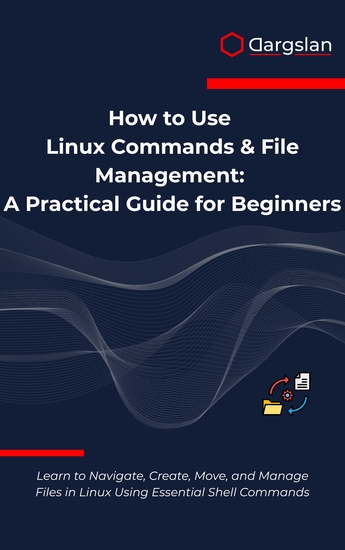
How to Use Linux Commands & File Management - A Practical Guide for Beginners - cover

How to Use Linux Commands & File Management - A Practical Guide for Beginners

Dargslan

Publisher: Dargslan s.r.o.

  • 0
  • 0
  • 0

Summary

Learn Essential Linux File Management & Command Line Skills - Complete Beginner's Guide to Navigation, File Operations & System Administration
 
Master Linux commands and file management with this comprehensive beginner's guide designed specifically for aspiring system administrators, developers, and Linux enthusiasts. This practical handbook teaches you everything you need to know about navigating, creating, moving, and managing files using essential Linux command line tools.
 
What You'll Learn:
 
Linux terminal basics and command-line interface mastery
 
Essential Linux file system navigation and directory structures
 
File creation, editing, copying, and deletion techniques
 
Directory management and organization best practices
 
Linux file permissions and ownership concepts
 
File compression, archiving, and backup strategies
 
Advanced search and file-finding techniques
 
Symbolic and hard linking operations
 
Real-world Linux system administration scenarios
 
Perfect For:
 
Complete Linux beginners seeking practical skills
 
IT professionals transitioning to Linux environments
 
Developers wanting command-line proficiency
 
Students preparing for Linux certifications
 
Anyone working with Linux servers or development environments
 
Key Features: ✓ Step-by-step tutorials with clear explanations ✓ Hands-on examples and practical exercises ✓ Linux-specific commands and best practices ✓ Progressive learning from basic to advanced concepts ✓ Real-world practice projects ✓ Comprehensive command reference sheets ✓ Troubleshooting guides for common issues ✓ Keyboard shortcuts and efficiency tips
 
Book Highlights: The guide covers fundamental Linux shell operations including pwd, ls, cd, mkdir, rm, cp, mv, chmod, chown, tar, gzip, find, locate, grep, and many more essential commands. Each chapter builds upon previous knowledge, ensuring solid foundation development.
 
Special emphasis on Linux file system hierarchy (/, /home, /usr, /var, /etc) helps readers understand system organization. File permissions section covers read, write, execute permissions for user, group, and others - critical for security and system administration.
 
Advanced topics include file compression with tar and gzip, powerful search capabilities using find and grep commands, and linking concepts for efficient file organization. Ten real-world practice projects reinforce learning through practical application.
 
Why Choose This Book: Unlike generic Unix guides, this book focuses exclusively on Linux environments, ensuring every command, example, and technique follows Linux conventions. The author's clear, jargon-free explanations make complex concepts accessible to beginners while providing depth needed for practical application.
 
Perfect companion for Linux distributions including Ubuntu, CentOS, Red Hat, Debian, and others. Whether you're managing personal Linux systems, working with cloud servers, or developing in Linux environments, these skills form the foundation of effective Linux usage.
 
Start your Linux journey today and gain the confidence to work efficiently in any Linux environment. Transform from command-line novice to proficient Linux user with practical skills that directly translate to real-world scenarios.
 
Transform your Linux skills and unlock the power of command-line file management with this essential beginner's guide.
Available since: 08/22/2025.
Print length: 314 pages.


Other books that might interest you

  • Cosmos Issue 99 - Ancient Insights - cover

    Cosmos Issue 99 - Ancient Insights

    The Royal Institution of Australia

    • 0
    • 0
    • 0
    From the nanoscale to the planetary, Issue 99 goes on an adventure across space and time:In the Top End, David Hancock documents ancient rock art as it’s renewed by a new generation of people on Country.From the shores of Botany Bay, Drew Rooke reports on the epic bird migrations turning avian science on its head.Ella Finkel documents a decade of brainwaves in neuroscience, a field already being revolutionised by AI.Plus zombies in real life, the science of fake meat, hope in the ocean and the Aussie mozzies defeating dengue at a global scale. 
    Dive in – a universe of science is waiting for you. 
    This is Issue 99 of Cosmos, a quarterly science print magazine. 
    Produced by The Royal Institution of Australia, Cosmos aims to inspire curiosity in 'The Science of Everything' and make the world of science accessible to everyone.
    Show book
  • DevOps and Agile Development - Transforming Software Development The Synergy of DevOps and Agile Principles Part 3 - cover

    DevOps and Agile Development -...

    Simon Winston

    • 0
    • 0
    • 0
    In the rapidly evolving world of software development, where speed, efficiency, and collaboration are paramount, the synergy between DevOps and Agile principles has emerged as a game-changer. " DevOps and Agile Development: Transforming Software Development. The Synergy of DevOps and Agile Principles" is a comprehensive guide that unravels the power of combining DevOps and Agile methodologies, empowering organizations to deliver high-quality software at an unprecedented pace. 
    In this insightful book, industry experts dive into the core concepts of DevOps and Agile and demonstrate how their integration revolutionizes the software development lifecycle. From project inception to deployment and beyond, the authors showcase how DevOps and Agile principles work in harmony, driving continuous integration, continuous delivery, and continuous improvement. 
    Readers will embark on a journey through the key pillars of Agile development, such as iterative and incremental delivery, cross-functional teams, and customer collaboration. They will gain a deep understanding of the Agile mindset, empowering them to embrace change, prioritize customer value, and foster a culture of transparency and adaptability within their organizations. 
    Building upon the Agile foundation, the authors then introduce the principles and practices of DevOps, which emphasize automation, collaboration, and feedback loops. They explore the crucial role of infrastructure as code, continuous integration and deployment pipelines, and the importance of monitoring and observability in achieving operational excellence. 
    Embrace the transformative potential of DevOps and Agile, unlock the synergy between these methodologies, and propel your software development initiatives to new heights of speed, collaboration, and customer satisfaction. Revolutionize your approach and be at the forefront of software development in the digital age. 
     
    Show book
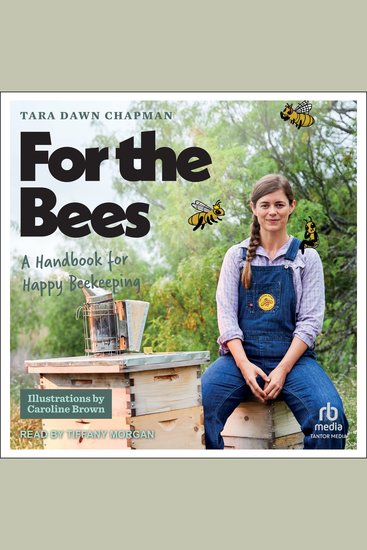
  • For the Bees - A Handbook for Happy Beekeeping - cover

    For the Bees - A Handbook for...

    Tara Dawn Chapman

    • 0
    • 0
    • 0
    A handbook for what to expect the first year of beekeeping and beyond. 


    The path to becoming a successful beekeeper begins with a deep understanding of the bees themselves. Taking an approach that is both holistic and practical, Tara Chapman, founder and operator of Austin's beloved Two Hives Honey, begins with a primer on honey bee biology and nutrition as well as beehive architecture. (Did you ever wonder why honey combs are composed of tiny hexagons?) A little scientific knowledge goes a long way: a beekeeper who understands how these fascinating creatures work will be better equipped to recognize a particular colony's needs, make sound decisions when the unexpected happens, and adapt their care regimen to changing conditions. Moving beyond the basics, Chapman shows potential beekeepers how to spot pests and diseases; manage swarms (those bees aren't angry; they're just looking for a good home); and, of course, harvest delicious homegrown honey. 


    Imbued with the joy of the beekeeping journey, For the Bees provides practical visual explanations through appealing illustrations, that, alongside Chapman's own stories from the bee yard, share the charms of these essential insects.
    Show book
  • The Water Vole Book - cover

    The Water Vole Book

    Hugh Warwick

    • 0
    • 0
    • 0
    Water voles are a newly endangered species. Through informative chapters ranging from the physiological and environmental to the water vole's inclusion in myth, legend, art and literature, The Water Vole Book is an ideal guide to its subject for all nature lovers, beautifully illustrated throughout with new photography and artwork.
    Show book
  • William Stanek's The Living Great Smoky Mountains Biography - Ancient Peaks Living Forests and the People of the Mountains - cover

    William Stanek's The Living...

    The Editors of Our American...

    • 0
    • 0
    • 0
    The Smokies are ancient mountains covered by forests that are never still.
    
    Ridges erode. Streams cut hollows. Trees fall and return. Fire, insects, weather, migration, and human use continually reshape a landscape often romanticized as timeless.
    
    William Stanek's The Living Great Smoky Mountains Biography follows ancient geology, extraordinary forest life, Cherokee continuity, mountain communities, logging, land acquisition, displacement, national-park creation, ecological restoration, wildlife return, and the continuing pressures placed upon America's most familiar Appalachian park.
    
    This is not a story of empty wilderness finally saved.
    
    It is a biography of mountains long inhabited, worked, loved, altered, protected, and remembered-and of forests whose apparent permanence is built from constant renewal.
    Show book
  • Other Axis & Allied Armored Fighting Vehicles - World War II AFV Plans - cover

    Other Axis & Allied Armored...

    George Bradford

    • 0
    • 0
    • 0
    This fully illustrated volume presents an authoritative and highly detailed study of WWII’s lesser-known armored fighting vehicles.   The iconic tanks of WWII, such as America’s Shermans and the Germany’s Panzers, have been exhaustively studied. In Other Axis & Allied Armored Fighting Vehicles, military historian and technical artist George Bradford offers an in-depth look at a range of significant yet often-overlooked models.    This volume is filled with fine-scale drawings of Australian, Belgian, Canadian, Czech, French, Hungarian, Italian, Japanese, Polish, Romanian, and South African armored vehicles, including: ·       Centauro Tank Destroyer (Italy) ·       TKS Light Reconnaissance Tank (Poland) ·       Ram “Kangaroo” Personnel Carrier (Canada) ·       Renault R-35 Light Tank (France) ·       Type 3 Chi-nu Heavy Tank (Japan) ·       Scorpion AC1 Cruiser Tank (Australia) ·       TACAM R-2 Tank Hunter (Romania) ·       And many, many more . . .
    Show book