Begleiten Sie uns auf eine literarische Weltreise!
Buch zum Bücherregal hinzufügen
Grey
Einen neuen Kommentar schreiben Default profile 50px
Grey
Jetzt das ganze Buch im Abo oder die ersten Seiten gratis lesen!
All characters reduced
Has Populism Won? - The War on Liberal Democracy - cover

Has Populism Won? - The War on Liberal Democracy

Daniel Drache, Marc D. Froese

Verlag: ECW Press

  • 0
  • 1
  • 0

Beschreibung

In the shadow of the Russian invasion of Ukraine, two experts show us how and why global populism has taken root and what it will take to turn the tide
		 
From Trumpian America to Putin’s nationalist Russia, and from Poland to the Philippines, rapid change and rising inequality have fueled a retreat into tribalist nationalism fed by a fear of being left behind. Populist leaders reach into this fear, using it as a lever to power with empty promises of looking out for the little person and promising a return to national greatness. This is happening in countries spread across the globe and the political spectrum, arising in the right and the left alike, and recently brought into harsh relief against Putin’s brutal invasion of Ukraine. So why are we so susceptible to this pernicious political style at this moment? How did we get here? And more importantly, will we get back to more even-handed governments?
		 
Filled with original research, political scientists Drache and Froese have written a chilling, compelling analysis of the rise of populism, and reveal what it will take to douse the flames. This is an essential read for anyone concerned about the encroachments on freedom and the rule of law around the world.
Verfügbar seit: 18.10.2022.
Drucklänge: 256 Seiten.

Weitere Bücher, die Sie mögen werden

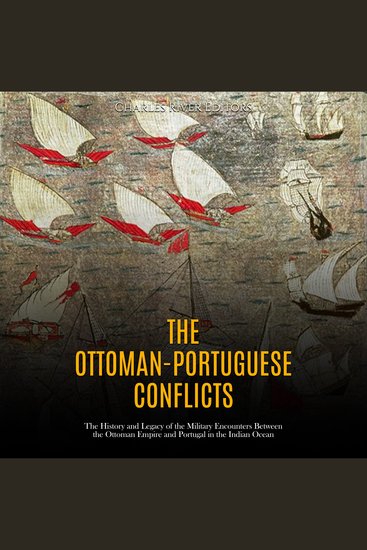
  • Ottoman-Portuguese Conflicts The: The History and Legacy of the Military Encounters Between the Ottoman Empire and Portugal in the Indian Ocean - cover

    Ottoman-Portuguese Conflicts...

    Editors Charles River

    • 0
    • 0
    • 0
    The Ottoman conquest of Constantinople played a decisive role in fostering the Renaissance in Western Europe. The Byzantine Empire’s influence had helped ensure that it was the custodian of various ancient texts, most notably from the ancient Greeks, and when Constantinople fell, Byzantine refugees flocked west to seek refuge in Europe. Those refugees brought books that helped spark an interest in antiquity that fueled the Italian Renaissance and essentially put an end to the Middle Ages altogether.  
    	It was also roughly around this time that a period of European exploration began, and major factors that contributed to this period of exploration were introduced by the Chinese, albeit indirectly. The magnetic compass had already been developed and used by the Chinese sailors since the 12th century, although it had first been created in the 3rd century BCE as a divination device. The Song Dynasty then began using the device for land navigation in the 11th century and sailors began using it shortly after. The technology slowly spread west via Arab traders, although a case can be made for the independent European creation for the compass (Southey 1812: 210). Regardless, by the 13th century the compass had found its way to Western traders, coming at a time that trade had been increasing across Europe.  
    	The Portuguese started exploring the west coast of Africa and the Atlantic under orders from Prince Henry the Navigator. At this point, Europeans had not yet been capable of navigating completely around Africa since the ships being built were not yet fully capable of being able to sail very far from the coast and navigation in open waters was difficult, but the Portuguese continued pushing down the western African coast looking for ways to bypass the Ottomans and Muslims of Africa who had been making overland trade routes difficult. .
    Zum Buch
  • Right Down + Circle: Tony Hawk's Pro Skater - cover

    Right Down + Circle: Tony Hawk's...

    Cole Nowicki

    • 0
    • 0
    • 0
    An exuberant, incisive look at how Tony Hawk’s Pro Skater transformed a culture 
     
    Going from a hobby toy for surfers to an Olympic sport, skateboarding has had a tumultuous history. Today, professional skateboarders land endorsement deals with Nike and Adidas, while popular television series like HBO’s Betty tell the stories of diverse crews of skaters living in New York City. So how did a fledgling subculture rise from its near-death knell in the ’90s to become ubiquitous today? It was simply a matter of finding the right messenger. 
     
    In 1999, the bestselling video game Tony Hawk’sPro Skater was released, and a new generation was exposed to skateboarding culture right in their very own homes. Kids and adults alike could now spend hours playing as actual skateboarders, learning the vernacular, listening to the music skateboarders loved, and having fun onscreen before trying to skate IRL in the driveway. 
     
    Right, Down + Circle explores how a video game starring the most famous pro skater in the world brought skateboarding culture ― and its ever-shifting markers of music, subversion, and coolness ― to the masses and ultimately transformed the culture it borrowed from in the process.
    Zum Buch
  • Triggered Literature - Triggered Literature: Cancellation Stealth Censorship and Cultural Warfare - cover

    Triggered Literature - Triggered...

    John Sutherland

    • 0
    • 0
    • 0
    Amid the flames of the culture wars, politicians have taken up arms over controls on literary culture, spurred on in part by universities 'triggering' canonical texts. Jonathan Swift's 'Battle of the Books' has flared up again. But is 'triggering' utter wokery or responsible pedagogic practice?
    Through dozens of case studies of triggered works, from Romeo and Juliet to Gender Queer, John Sutherland explores the recent phenomenon of triggering and its consequences for university English departments and literature itself. He maintains that what is routinely overlooked in the heat of polemic is that triggering is categorically different from traditional institutional (religious, educational, dictatorial) controls on literature. Triggering is in essence an alert. Done responsibly it does not erase or meddle; it stimulates curiosity and thought. It honours the fact that great literature is great because it is, as Franz Kafka says, powerful.
    In this characteristically nuanced and calmly objective study, the witty literary critic guides us through the increasingly rocky terrain of triggering. His advice rings clear: literature matters, to us and what we make of our world, and it must be handled with critical care.
    Zum Buch
  • Are You Judging Me Yet? - Poetry and Everyday Sexism - cover

    Are You Judging Me Yet? - Poetry...

    Kim Moore

    • 0
    • 0
    • 0
    Five 'lyric essays' exploring the dynamics of performing poetry as a female poet – confronting the implications of being a female on public display, with the connotations of sexual objectification, in a context that traditionally disregards the body. Kim states "With the strides and gains made through the #MeToo movement, I believe the time is right for a book like this to make an impact. As a female poet, I know there is a need for such a book to examine the intersection between writing, performing, feminism and sexism. I wish this book had been written when I first started working as a freelance writer and I've had many conversations with other female poets who have also confirmed my thinking – that female poets are navigating these things regularly, and yet nobody is really writing or talking about them."
    The book draws on her experiences of writing and performing the poems in her second collection All the Men I Never Married. It is a balance of memoir, academic treatise and poetry, though the author's emphasis is on writing in a popular way and making the subject accessible to a wide audience. To achieve this her models have been Maggie Nelson's Bluets, Claudia Rankine's Citizen and Sarah Ahmed's Living a Feminist Life. 
    The book's subjects include heckling at poetry readings and other interactions; problems with the 'male gaze' and what the 'female gaze' might look like in poetry; 'guilty for being a man': how guilt can be useful if it can bring about change; how writing poetry about sexism can shed add meaning to the term; the objectification of men and women, and 'bad faith' arguments.
    Are You Judging Me Yet?, by Kim Moore, is a remarkable collection of essays and poetry that explore, as the tagline suggests, everyday sexism. – neverintimate
    '…Moore's work becomes an even more vital tool in the work being done to challenge everyday sexism. Reading her work is not only a window into her own experiences, but may also act as a means of education, and that's something we all need to see more of.' – Wales Arts Review
    Zum Buch
  • The Shortest History of Democracy - 4000 Years of Self-Government-A Retelling for Our Times - cover

    The Shortest History of...

    John Keane

    • 0
    • 0
    • 0
    From The Shortest History series comes the complete history of democracy, its champions, and its detractors—from the assemblies of ancient Mesopotamia to present perils 


    This tumultuous global story begins with democracy's radical core idea: We can collaborate, as equals, to determine our own lives and futures. John Keane traces how this concept emerged and evolved, from the earliest "assembly democracies" to European-style electoral democracy to our present system of "monitory democracy." Today, governments answer not only to voters on Election Day, but to intense public scrutiny (monitoring) every day. Keane calls this media- and communication-driven system "the most complex and vibrant form of democracy yet"—but it is not invulnerable. 


    We live in an age of political and environmental crisis, when despots in China, Russia, Saudi Arabia, and elsewhere reject the promises of power-sharing. At this urgent moment, Keane's book mounts a new defense of a precious global ideal.
    Zum Buch
  • 1880 Queen’s Speech - cover

    1880 Queen’s Speech

    Queen Victoria

    • 0
    • 0
    • 0
    As per tradition, Queen Victoria’s throne speech marked the start of the annual legislative session. 1880 held a general election in which Gladstone beat out Disraeli for prime minister, much to Victoria’s disappointment. She addresses this change with class in her speech, as well as discussing the state of foreign affairs in India, Afghanistan, and South Africa. The speech ends with a list of matters to be debated in Parliament in the forthcoming session and a blessing from the queen.   
    Zum Buch