Join us on a literary world trip!
Add this book to bookshelf
Grey
Write a new comment Default profile 50px
Grey
Subscribe to read the full book or read the first pages for free!
All characters reduced
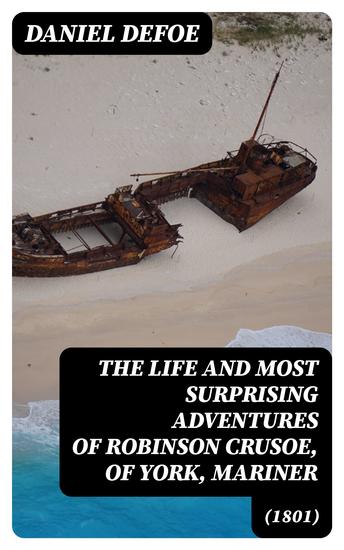
The Life and Most Surprising Adventures of Robinson Crusoe of York Mariner (1801) - Enriched edition - cover

The Life and Most Surprising Adventures of Robinson Crusoe of York Mariner (1801) - Enriched edition

Daniel Defoe

Publisher: DigiCat

  • 0
  • 0
  • 0

Summary

In his seminal work, "The Life and Most Surprising Adventures of Robinson Crusoe, of York, Mariner," Daniel Defoe crafts a captivating tale of survival and self-discovery that epitomizes the spirit of the early 18th century. Through the protagonist, Robinson Crusoe, Defoe explores themes of isolation, human resilience, and the intricate relationship between man and nature. The novel's vivid narrative style, characterized by detailed descriptions and a sense of immediacy, aligns with the emerging sentimental literature of its time and reflects the growing interest in individualism and adventure. As readers traverse the challenges of Crusoe's solitary existence on a desert island, they are invited to contemplate profound philosophical questions about civilization and self-governance amidst an engaging maritime adventure. Daniel Defoe, a pioneering figure in the realm of the English novel, drew inspiration from his diverse experiences, including his early life as a merchant and his encounters with economic tumult. His writing often intertwines personal and societal reflections, evident in Crusoe's journey, which mirrors the aspirations and anxieties of a nation navigating its colonial ambitions and moral dilemmas. Defoe's unique perspective as an early capitalist thinker adds a compelling layer to the text, enriching its narrative depth. For readers seeking an immersive exploration of human tenacity and ingenuity, Defoe's "Robinson Crusoe" remains an indispensable classic. The novel not only entertains through its engaging plot but also provokes thought about the nature of identity, civilization, and the human spirit. It is a must-read for those interested in the foundational works of English literature, the evolution of the novel, and the timeless themes that resonate through the ages.

In this enriched edition, we have carefully created added value for your reading experience:
- A succinct Introduction situates the work's timeless appeal and themes.
- The Synopsis outlines the central plot, highlighting key developments without spoiling critical twists.
- A detailed Historical Context immerses you in the era's events and influences that shaped the writing.
- An Author Biography reveals milestones in the author's life, illuminating the personal insights behind the text.
- A thorough Analysis dissects symbols, motifs, and character arcs to unearth underlying meanings.
- Reflection questions prompt you to engage personally with the work's messages, connecting them to modern life.
- Hand‐picked Memorable Quotes shine a spotlight on moments of literary brilliance.
- Interactive footnotes clarify unusual references, historical allusions, and archaic phrases for an effortless, more informed read.
Available since: 09/15/2022.
Print length: 898 pages.
Other books that might interest you

  • The Jest of Droom-avista - cover

    The Jest of Droom-avista

    Henry Kuttner

    • 0
    • 0
    • 0
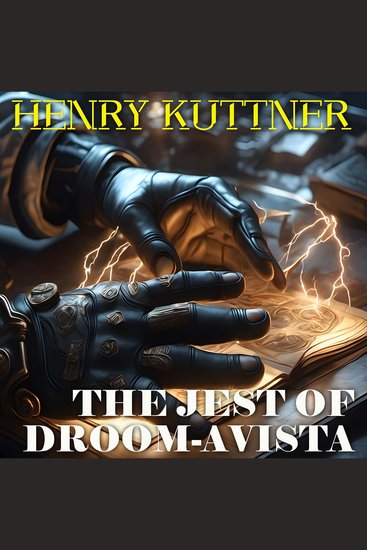
    The Jest of Droom-Avista is a very short Cthulhu Mythos story by Henry Kuttner, first appearing in Weird Tales in August 1937."The Jest of Droom-Avista" by Henry Kuttner is a short, poetic story set in the alien city of Bel Yarnak. It tells of a metallic doom that spreads from a single point, transforming the city's glory and beauty into a cold, lifeless state. The story evokes a sense of melancholic beauty and the irreversible nature of change.
    Show book
  • Twenty-Six Men and a Girl - From their pens to your ears genius in every story - cover

    Twenty-Six Men and a Girl - From...

    Maxim Gorky

    • 0
    • 0
    • 0
    Alexei Maximovich Peshkov was born on 28th March 1868, in Nizhny Novgorod, Russia. 
    Better known as Maxim Gorky he was orphaned at 11 and ran away from home at 12.  At 19 he had already attempted suicide and thereafter travelled, by foot, across the Russian Empire for 5 years. 
    His first book ‘Essays & Stories’ in 1898 was a sensation and so began a long career as an author of short stories, novels and plays.  Gorky saw writing as a moral and political act that would help to change the unjust world around him.  He was an ardent early advocate of the emerging Marxist movement and publicly opposed the Tsarist regime leading several times to his arrest.  
    In 1904 he began his own theatre but the censor banned every play and Gorky was forced to abandon the project. 
    But Gorky was a financially successful author, editor, and playwright and gave monies to political parties as well as for civil rights and social reform.  The brutal shooting of workers, which set in motion the Revolution of 1905, pushed Gorky more decisively toward radical solutions.  
    In 1906 he went to the United States to raise funds for the Bolsheviks. Those experiences including a scandal over travelling with his lover and not his wife deepened his contempt for the ‘bourgeois soul.’ 
    Gorky now moved to Capri in Italy, both for health reasons and to escape the increasingly repressive times in Russia.  
    An amnesty for the 300th anniversary of the Romanov dynasty saw him return to Russia in 1914. His politics remained close to the Bolshevik cause.  But soon, after the 1918 revolution, his essays referred to Lenin as a tyrant for his senseless arrests and repression.  He was soon appealing to the outside world for food aid after the catastrophic crop failure. 
    In October 1921 Gorky returned to Italy, now in Fascist hands, and settled in Sorrento until 1932.  His health worsened with the onset of tuberculosis. 
    He wrote several successful books there but now decided to find an understanding with the communist regime. Stalin invited him home and his return was hailed as a major propaganda victory.  He was decorated with the Order of Lenin, and a province, a park, and various streets re-named in his honour. 
    But he had his faults too.  In 1933, Gorky co-edited a book on the White Sea-Baltic Canal and denied even a single prisoner died during its construction, but thousands had. As well, knowing that some Nazis were homosexual, a phrase was attributed to him that said ‘exterminate all homosexuals and fascism will vanish’.  Although he was himself was quoting another he was decidedly homophobic. 
    With the increase of Stalinist repression in 1935 Gorky was placed under unannounced house arrest. 
    Maxim Gorky died on the 18th June 1936 from pneumonia.  He was 68. 
    Stalin and Molotov were among those who carried Gorky's urn of ashes at his funeral.
    Show book
  • The Jungle - cover

    The Jungle

    Upton Sinclair

    • 0
    • 0
    • 0
    "The Jungle" is a novel written by Upton Sinclair and published in 1906. The book is a work of fiction but is based on Sinclair's own experiences working in the meatpacking industry in Chicago during the early 1900s. 
    The story follows the life of Jurgis Rudkus, a Lithuanian immigrant who comes to America with his family seeking a better life. However, he soon discovers the harsh realities of working in the meatpacking industry, where dangerous working conditions, low wages, and exploitative practices are the norm. 
    Through Jurgis's experiences, Sinclair exposes the corrupt practices of the meatpacking industry, including unsanitary working conditions, unsafe food handling, and the mistreatment of workers. The novel also touches on issues such as poverty, political corruption, and the struggle for workers' rights. 
    "The Jungle" had a profound impact on American society and led to the passage of the Pure Food and Drug Act and the Meat Inspection Act in 1906, which aimed to improve the safety and quality of food products in the United States. 
    Overall, "The Jungle" is a powerful work of social criticism that exposes the harsh realities of industrial capitalism and the impact it has on workers and their families
    Show book
  • From Here to Eternity - cover

    From Here to Eternity

    James Jones

    • 1
    • 9
    • 0
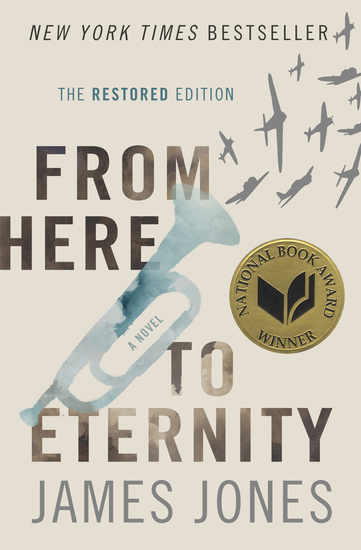
    A novel of army life in the calm before Pearl Harbor: A New York Times bestseller, a National Book Award winner, and “one of the great books of our time” (Newsday).  At the Pearl Harbor army base in 1941, Robert E. Lee Prewitt is Uncle Sam’s finest bugler. A career soldier with no patience for army politics, Prewitt becomes incensed when a commander’s favorite wins the title of First Bugler. His indignation results in a transfer to an infantry unit whose commander is less interested in preparing for war than he is in boxing. But when Prewitt refuses to join the company team, the commander and his sergeant decide to make the bugler’s life hell.    An American classic now available with scenes and dialogue considered unfit for publication in the 1950s, From Here to Eternity is a stirring picture of army life in the months leading up to the attack on Pearl Harbor. This ebook features an illustrated biography of James Jones including rare photos from the author’s estate.
    Show book
  • Dhoya - From their pens to your ears genius in every story - cover

    Dhoya - From their pens to your...

    W B Yeats

    • 0
    • 0
    • 0
    William Butler Yeats was born in Sandymount in County Dublin, Ireland on 13th June 1865. 
    His early years moved between Ireland and England. By his mid-teens he was writing but those works were described as ‘entirely Un-Irish’.  With Ernest Rhys he founded the Rhymers Club. Based at Ye Olde Cheshire Cheese in Fleet Street it’s best described as a drinking club for performing poets.  Yeats later cited them as ‘The Tragic Generation’.  By now Yeats was writing and publishing poetry and stories that were profoundly based in Irish folklore.   
    Yeats is perhaps best described as Ireland’s national poet in addition to being one of the major twentieth-century literary figures of the English tongue. He represents the ‘Romantic poet of modernism,’ with an extraordinary style created from the outward emphasis on the expression of emotions and the extensive use of symbolism, imagery and allusions.  
    In 1923 his fame was brought to an even wider audience when he received the Nobel Prize in Literature.  
    His personal life was driven by his many relationships in love and by his great interest in oriental mysticism and occultism.  Yeats also wrote prose and drama and, as an ardent Nationalist, established himself as a spokesman of the Irish cause and served as an Irish senator for two terms.  
    W B Yeats died at the Hôtel Idéal Séjour, in Menton, France, on 28th January 1939.  He was 73.
    Show book
  • The Lady or the Tiger? and Other Stories - cover

    The Lady or the Tiger? and Other...

    Frank R. Stockton, Washington...

    • 0
    • 0
    • 0
    Embark on a captivating journey through the realms of mystery, suspense, and imagination with our exclusive digital audiobook collection featuring timeless tales by some of literature's greatest storytellers. 
     
    "The Lady or the Tiger" by Frank R. Stockton: Dive into this enigmatic classic that leaves readers pondering the ultimate choice between love and jealousy. 
     
    "The Devil and Tom Walker" by Washington Irving: Join Tom Walker on a Faustian journey through New England's eerie forests as he encounters the sinister figure of the Devil himself. 
     
    "Markheim" by Robert Louis Stevenson: Explore the depths of human nature and morality in this haunting tale of a man's encounter with his own conscience on a fateful Christmas Eve. 
     
    "Marjorie Daw" by Thomas Bailey Aldrich: Delve into the world of mistaken identity and whimsical romance as a chance encounter sets off a chain of delightful events.
    Show book