Join us on a literary world trip!
Add this book to bookshelf
Grey
Write a new comment Default profile 50px
Grey
Subscribe to read the full book or read the first pages for free!
All characters reduced
Second Thoughts are Best: Or a Further Improvement of a Late Scheme to Prevent Street Robberies - cover

Second Thoughts are Best: Or a Further Improvement of a Late Scheme to Prevent Street Robberies

Daniel Defoe

Publisher: DigiCat

  • 0
  • 0
  • 0

Summary

Daniel Defoe's "Second Thoughts are Best: Or a Further Improvement of a Late Scheme to Prevent Street Robberies" intricately weaves together elements of socio-political discourse and early 18th-century urban experience. In this pamphlet, Defoe adopts a pragmatic style that reflects his keen understanding of the complexities surrounding crime and safety in the burgeoning streets of London. By exploring practical solutions to prevent street robberies, Defoe not only engages with contemporary debates on law enforcement but also delves into the psychological ramifications of urban fear, making it a crucial piece in the literary context of the period known for its growth of public consciousness and civic responsibility. As a prominent figure in early English literature and journalism, Defoe's own experiences as a merchant and his brushes with the law have undoubtedly influenced his perspective on crime and societal improvement. His background provides a unique lens through which he examines the moral and economic dimensions of urban life, drawing on both personal ventures and broader societal concerns. This blend of personal reflection and social commentary enriches the text, placing it among pivotal works that address the human condition in an evolving society. Readers seeking a nuanced understanding of early modern social issues will find Defoe's insights both timeless and prescient. His arguments not only resonate with contemporary audiences grappling with crime and urban safety but also serve as an important historical document, enhancing our understanding of the socio-economic dynamics of 18th-century London. "Second Thoughts are Best" is a significant read for those interested in literature, history, and the intersections between them.
Available since: 09/15/2022.
Print length: 13 pages.

Other books that might interest you

  • Soldiers - A Global History of the Fighting Man 1800–1945 - cover

    Soldiers - A Global History of...

    John A Haymond

    • 0
    • 0
    • 0
    A global study of how soldiers lived, worked, and fought, and how many died, spanning from the Napoleonic War to World War II. No matter the war, no matter the army, no matter the nationality, common threads run through the experiences of men at war. Soldiers highlights these shared experiences across 150 years of warfare, from the Napoleonic Wars through World War II and everything in between, such as the Mexican and Crimean Wars, the American Civil War, the U.S. Indian Wars and Britain’s imperial bush wars, the Boxer Rebellion, the Boer War, the First World War, and more. Haymond explores the experiences that connect soldiers across time and space and draws heavily from firsthand accounts to craft a narrative with flesh-and-blood immediacy. Soldiers is entertaining and informative: history at its best. Praise for Soldiers“What makes Soldiers an interesting read is Haymond’s writing style and technique of comparing the common experiences of fighting men regardless of uniform and time served during the period.... Highly recommended for both scholars and students alike. It is a must for readers interested in the experience and psychology of being a warrior during this period.”—Military Review: The Professional Journal of the United States Army
    Show book
  • The Comanche Perspective - A New Lens on the Council House Fight - cover

    The Comanche Perspective - A New...

    Davis Truman

    • 0
    • 0
    • 0
    "The Comanche Perspective" illuminates one of the most infamous events in early Texas history—the Council House Fight. Traditionally portrayed through a narrow, one-sided lens, this book challenges the conventional narrative by exploring the complex web of cultural misunderstandings and mounting tensions between the Penateka Comanche and the Texians. Drawing on diverse perspectives and in-depth research, it reveals how mutual distrust and hostility led to the tragic clash on March 19, 1840. By shedding light on the shared responsibilities and deep-seated grievances that fueled this violent encounter, "The Comanche Perspective" provides a fresh and balanced understanding of a crucial moment in the history of the American frontier.
    Show book
  • Black Africa - The Economic and Cultural Basis for a Federated State - cover

    Black Africa - The Economic and...

    Cheikh Anta Diop

    • 0
    • 0
    • 0
    In "Black Africa: The Economic and Cultural Basis for a Federated State," Senegalese scholar Cheikh Anta Diop boldly calls for the unification of Black African nations. He argues that colonial borders fractured regions with shared cultures and economies, hindering progress. Diop proposes a unified state for greater global influence, emphasizing cultural revival and a common African language. Though debated, his vision continues to inspire Pan-Africanism and discussions on African unity and development.
    Show book
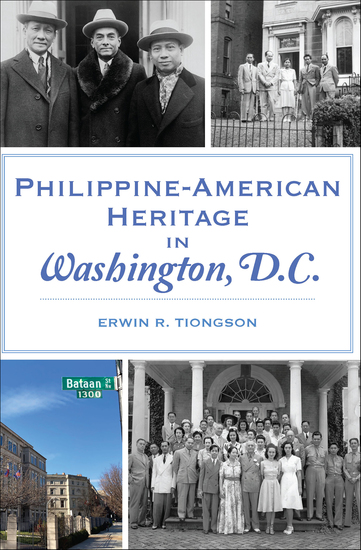
  • Philippine-American Heritage in Washington DC - cover

    Philippine-American Heritage in...

    Erwin R. Tiongson

    • 0
    • 0
    • 0
    Journey into the Philippine-American experience in Washington, DC. Washington is famed for its place in the history of the United States, but few know its close connections with the Philippines. Trace the intertwined histories of the two countries along the streets of Washington, from the end of the Spanish American War in 1898 through Philippine independence in 1946, and the many years since. West Potomac Park was inspired by Manila's Luneta, and District streets are named after pivotal Philippine battle grounds. These landmarks are often unmentioned in guidebooks. Hidden in plain sight are the stories of the fascinating figures that once inhabited these spaces. Professor and community historian Erwin Tiongson offers a first account of the city's Philippine heritage.
    Show book
  • The Relevance of Buddhism in the Modern World - cover

    The Relevance of Buddhism in the...

    Princess Poon Pismai Diskul

    • 0
    • 0
    • 0
    This is an audiobook of Bodhi Leaves No. 43 by Princess Poon Pismai Diskul, The Relevance of Buddhism in the Modern World narrated by Gregory M. Dams. The print edition can be found in the Pariyatti Edition of Collected Bodhi Leaves Vol. 2. The eBook of Bodhi Leaves No. 43 can be downloaded from the BPS website.
     
    Excerpt:
     
    Throughout history, the practice, adherence and belief in religion has been a virtually universal aspect of human society. And as a rule, the increase in complexity and sophistication of a given culture has borne with it an accompanying increase in the level of ethical and philosophical development of that society’s religious thought.
     
    Today, however, the world witnesses a level of civilization and social complexity far surpassing that of any previous era. Yet out of the great thoughts and discoveries of our time, no new major religion has evolved. Whatever new religious concepts may have appeared, they have failed to reach the masses of humanity in the form of altering basic beliefs and practices. Most of the new reforms that modern institutions sometimes announce with pride are actually negative in character; that is, the termination of outmoded practices and the relinquishment or reinterpretation of embarrassing dogmas. ...
    Show book
  • How to Be Open-Minded - cover

    How to Be Open-Minded

    Olivia Werner

    • 0
    • 0
    • 0
    [How to Be Open-Minded] unfolds as an intimate exploration of consciousness, where certainty dissolves into curiosity and rigid thinking transforms into fluid understanding. Through delicate prose that traces the architecture of thought, this meditation on mental flexibility reveals how our preset notions sit like familiar furniture in darkened rooms of the mind, waiting to be rearranged. At its heart, this work isn't just about changing what we think—it's about transforming how we think, offering readers a profound journey through the landscapes of belief, doubt, and the spaces between. Like a carefully crafted map of consciousness, it guides us through the subtle art of holding ideas lightly, showing how true strength lies not in the rigidity of our convictions but in their capacity to evolve.
    Show book