Begleiten Sie uns auf eine literarische Weltreise!
Buch zum Bücherregal hinzufügen
Grey
Einen neuen Kommentar schreiben Default profile 50px
Grey
Jetzt das ganze Buch im Abo oder die ersten Seiten gratis lesen!
All characters reduced
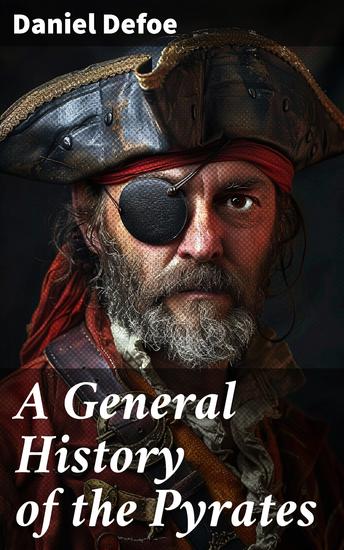
A General History of the Pyrates - From their first rise and settlement in the island of Providence - cover

A General History of the Pyrates - From their first rise and settlement in the island of Providence

Daniel Defoe

Verlag: Good Press

  • 0
  • 0
  • 0

Beschreibung

Daniel Defoe's 'A General History of the Pyrates' is a compelling narrative that delves into the lives and exploits of infamous pirates from the late 17th and early 18th centuries. Written in a direct and engaging prose style, Defoe employs a mix of historiography and sensational storytelling, blending factual accounts with anecdotal tales. The book presents a wealth of biographical sketches on notable figures, such as Blackbeard and Captain Kidd, framing piracy within the broader socio-economic contexts of colonialism and maritime law, thus eliciting both fascination and critical reflection on the nature of freedom and lawlessness at sea. Daniel Defoe, an English writer renowned for his pioneering contributions to the novel, had a tumultuous life that included incarceration for political reasons and a diverse range of occupations'Äîexperiences that sensitized him to themes of rebellion and individualism. His firsthand encounters with the vagaries of fortune in a mercantile society might have inspired his fascination with the rogue lifestyles of pirates, reflecting the tension between civic responsibility and the allure of freedom in his literary works. Readers seeking a historical account infused with vivid storytelling will find 'A General History of the Pyrates' an indispensable addition to any literary collection. Defoe's unique perspective not only recounts thrilling tales of piracy but also invites readers to examine the complexities of morality and authority through the adventures of those who claimed the ocean as their realm.
Verfügbar seit: 18.09.2023.
Drucklänge: 351 Seiten.

Weitere Bücher, die Sie mögen werden

  • The Holy Trinity - cover

    The Holy Trinity

    Prana Govinda Das

    • 0
    • 0
    • 0
    Noted internationally known Self-help advocate and teacher of devotional yoga Prana Govinda Das was born in Liverpool, England in 1968 admittedly a pretty good year for all things bright and beautiful. He says, "From as early as I can remember I had a unquenchable thirst for knowledge, and a desire to understand the true nature of man and this world we live in. I was also always seeking out people who could answer all the questions I had about life, the universe and everything." After studying film production in the early nineties Prana was able to fulfill his lifelong desire to travel to India. admittedly his first trip changed his life completely and forever. "At that point," He recalls, "my thirst for material knowledge turned to desire to understand the spiritual side of life. For the next six years I returned frequently to, where I studied many different paths of Hinduism, Buddhism and other forms of yoga and meditation. However, even after learning and experiencing so much I was still left incomplete." in 2001 during the young man's sixth trip to India, he travelled to Vrindavan, a holy town associated with Lord Krishna south of Delhi. It was there he met his spiritual guide, and mentor Srila Bhaktivedanta Naryana Goswami. Some twenty years on, Prana has been resident in his teacher's temples all over the world, particularly India, Australia, America, and Europe. Welcome then to the inspirational, engrossing, all-inclusive teachings of Prana Govinda Das.
    Zum Buch
  • Emotional Intelligence - Mastering Self-Awareness and Relationship Building - cover

    Emotional Intelligence -...

    Coral Nunez

    • 0
    • 0
    • 0
    In a world that is constantly evolving, the ability to understand and manage emotions has become an essential skill, both in our personal lives and professional careers. Emotional intelligence (EI) is the key to unlocking deeper self-awareness, stronger relationships, and more effective communication. Yet, while intelligence and technical skills can open doors, it is emotional intelligence that determines how far you can go in truly connecting with others, leading with empathy, and navigating life's challenges. 
      
    This book, Emotional Intelligence: Mastering Self-Awareness and Relationship Building, is designed to guide you through the transformative journey of developing your emotional intelligence. Whether you're seeking to strengthen personal relationships, enhance your leadership abilities, or simply become more attuned to your emotional landscape, this guide will provide the tools and insights needed to understand the fundamental aspects of EI. 
      
    From recognizing and managing your own emotions to understanding the emotions of others, each chapter will explore practical strategies for improving emotional awareness, building meaningful connections, and fostering emotional resilience. As you explore these concepts, you will discover how emotional intelligence can empower you to handle stress, resolve conflicts, and cultivate healthier, more rewarding interactions in all areas of your life.
    Zum Buch
  • Memory - How to Develop Train and Use It - cover

    Memory - How to Develop Train...

    William Walker Atkinson

    • 0
    • 0
    • 0
    An in-depth exploration of the human memory, providing an analysis of how it works and how to improve it. The work is heavily rooted in Atkinson's neurological and psychological research, providing a comprehensive overview of the neural pathways, synaptic networks, and biochemical processes associated with memory formation. He additionally touches on the cognitive strategies that can be utilized to hone one's memory recall capabilities. Read in English, unabridged.
    Zum Buch
  • The Seven Years’ War - History of the 18th-Century War between France and Great Britain - cover

    The Seven Years’ War - History...

    Kelly Mass

    • 0
    • 0
    • 0
    The Seven Years' War (1756–1763) marked a global struggle for supremacy between two major powers of the time: Great Britain and France. This conflict unfolded across continents and influenced various colonial and European theaters, laying the groundwork for modern geopolitics. In Europe, tensions stemmed from unresolved disputes left over from the War of the Austrian Succession (1740–1748), with Prussia and Austria both vying for dominance in the region. At the heart of the European conflict was Prussia's ambition to expand its territories, particularly in Silesia, a region it had claimed during the previous war but which Austria hoped to reclaim. This struggle for control in Central Europe was entangled with the broader power plays of Britain, France, and Spain, who were clashing both on land and at sea in the Americas, the Caribbean, and beyond. 
    This era saw an unusual shift in traditional alliances, known as the Diplomatic Revolution of 1756, which realigned European powers in surprising ways. Britain, traditionally at odds with Prussia, now found itself allied with its former rival, forming a coalition that included the German region of Hanover, which was united with Britain through the British royal family. Austria, in turn, formed a new alliance with France, its former adversary, bringing along Saxony, Sweden, and Russia in a united front against Prussian and British expansion. This shift altered the balance of power and further complicated the war’s dynamics, as each nation was not only defending its territories but also striving to outmaneuver and contain its rivals.
    Zum Buch
  • Critias - cover

    Critias

    Plato

    • 0
    • 0
    • 0
    Plato’s Critias is the foundational source of one of the most enduring mysteries in human history: the lost civilization of Atlantis. In this unfinished dialogue, Plato unveils a majestic tale passed down through Solon from ancient Egyptian priests—of a powerful empire beyond the Pillars of Heracles, rich in technology, beauty, and ambition. 
    But this is no mere fantasy. Critias blends myth, philosophy, and political allegory to offer a cautionary vision: the rise and fall of a mighty civilization undone by its hubris. Through detailed descriptions of Atlantis’s geography, military power, and social organization, Plato reveals not only a mythic past but a philosophical warning to the future. 
    Why did Atlantis fall? What makes a society just or unjust? What happens when divine order is abandoned for mortal pride? Though the dialogue ends abruptly, its impact has echoed through millennia—fueling imaginations, explorations, and philosophical debates ever since. 
    This audiobook delivers Critias in its full glory: a glimpse into Plato’s unfinished vision of a civilization that may have once been—or was meant to be a mirror of our own.
    Zum Buch
  • An Ethics for Today - Finding Common Ground Between Philosophy and Religion - cover

    An Ethics for Today - Finding...

    Richard Rorty

    • 0
    • 1
    • 0
    One of the most widely discussed philosophers of the 21st century finds common ground between spiritual and secular ethics in this provocative book.As controversial and he was influential, Richard Rorty developed a brand of philosophical pragmatism that rejects all theories of truth. His groundbreaking work also dismisses modern epistemology and its preoccupation with knowledge and representation. Though he was a strict secularist, Rorty believed there could be no universally valid answers to moral questions. This led him to a surprisingly complex view of religion rarely expressed in his writings. In this posthumous publication, Rorty finds in the pragmatic thought of John Dewey, John Stuart Mill, William James, and George Santayana, among others, a political imagination shared by religious traditions. Rather than promote belief or nonbelief, Rorty seeks to locate patterns of similarity and difference so an ethics of decency and a politics of solidarity can rise. He particularly responds to Pope Benedict XVI and his campaign against the relativist vision. Whether holding theologians, metaphysicians, or political ideologues to account, Rorty remains steadfast in his opposition to absolute uniformity and its exploitation of political strength.
    Zum Buch