¡Acompáñanos a viajar por el mundo de los libros!
Añadir este libro a la estantería
Grey
Escribe un nuevo comentario Default profile 50px
Grey
Suscríbete para leer el libro completo o lee las primeras páginas gratis.
All characters reduced
The Beginner's American History - cover

The Beginner's American History

D. H. Montgomery

Editorial: DigiCat

  • 0
  • 0
  • 0

Sinopsis

In "The Beginner's American History," D. H. Montgomery presents an engaging and accessible exploration of the formative events and figures in American history, tailored specifically for young readers. The book employs a straightforward narrative style, rich with anecdotes and vivid descriptions, which brings the past to life while maintaining an informative essence. Set against the backdrop of early 20th-century education reforms, Montgomery's work aims to instill a sense of patriotic pride and historical awareness in the nation's youth, making history both enjoyable and enlightening. D. H. Montgomery, an educator and author, was deeply influenced by the educational philosophies of his time, which emphasized the importance of making learning engaging. His background in teaching informed his approach, as he sought to demystify American history for his students. Montgomery's own curiosity about America's diverse heritage and commitment to fostering a well-rounded understanding of national identity is evident throughout this enlightening text. Readers seeking a refreshing introduction to American history should not overlook Montgomery's work. "The Beginner's American History" serves as an invaluable resource for young learners and adults alike, encouraging them to embark on a journey through the nation's past, fostering both knowledge and appreciation for the rich tapestry that is America.
Disponible desde: 17/05/2022.
Longitud de impresión: 155 páginas.

Otros libros que te pueden interesar

  • Stroll updated edition - cover

    Stroll updated edition

    Shawn Micallef

    • 0
    • 0
    • 0
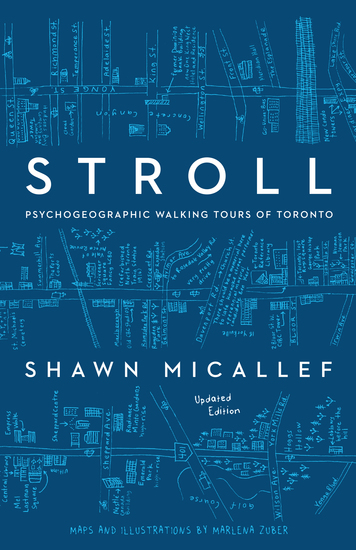
    THE TORONTO STAR'S  "30 BOOKS WE CAN'T WAIT TO READ THIS SPRING"The updated edition of a Toronto favourite meanders around some of the city’s unique neighborhoods and considers what makes a city walkableWhat is the 'Toronto look'? Glass skyscrapers rise beside Victorian homes, and Brutalist apartment buildings often mark the edge of leafy ravines, creating a city of contrasts whose architectural look can only be defined by telling the story of how it came together and how it works, today, as an imperfect machine.Shawn Micallef has been examining Toronto’s streetscapes for decades. His psychogeographic reportages situate Toronto's buildings and streets in living, breathing detail, and tell us about the people who use them; the ways, intended or otherwise, that they are being used; and how they are evolving. 
    Stroll celebrates Toronto's details – some subtle, others grand – at the speed of walking and, in so doing, helps us to better get to know its many neighbourhoods, taking us from well-known spots like the CN Tower and Pearson Airport to the overlooked corners of Scarborough and all the way to the end of the Leslie Street Spit in Lake Ontario 
    "Shawn Micallef offers an alternative perspective on the shape of neighbourhoods with an updated edition of Stroll, which originally appeared fifteen years ago. His 'psychogeographic walking tours' take us through what he calls the Middle, Westish, Northish, Eastish, and Eastest areas of Toronto, showing us the known and sometimes obscure buildings and features that define Canada’s largest city." – Pamela Divinsky, Literary Review of Canada 
    "Shawn Micallef is the unofficial mayor of Toronto, the genial ambassador the city needs and deserves. As he strolls Toronto’s broad avenues and its little streets, he finds hidden pockets of delight – and weirdness, too. Join him and fall in love with the city again." – Liz Renzetti, author of Bury the Lead 
    "When I moved to Toronto in 2011, Stroll was the first book I added to my library and course reading lists. My students and I get lost in the PATH, sneak into lobbies, and visit the archives with this book as our guide. Micallef’s friendly voice invites us to slow down and notice not just a few landmark buildings but the city’s built fabric as a whole. This updated version offers our collective memory a much-needed affectionate yet critical view of recent changes to the city." – Erica Allen-Kim, Author of Building Little Saigon 
    "Stroll is a delightful and eccentric guidebook, full of clever writing, amusing stories and charming maps that will make you want to strap on your walking shoes and head into the streets of Toronto." – Carol Off, Author/Broadcaster"Shawn Micallef looks at the city in a way we all should more often – he sees it as a living book that is alive with stories just waiting to be told to the attentive observer. In Stroll, he gives us an introduction to just how interesting and surprisingly dramatic those stories are, and how exciting our city is when we hear them." – David Crombie, former mayor of Toronto"A smart and intimate guide to the city that makes you feel like an insider from start to finish." – Douglas CouplandThis new edition updates things in the city that have changed and includes several new walks.
    Ver libro

  • Decolonization Movements - The Struggle for Independence and Post-Colonial Challenges - cover

    Decolonization Movements - The...

    Arlo Holders

    • 0
    • 0
    • 0
    Decolonization refers to the process through which colonies gained independence from colonial powers, transitioning from subjugation to self-rule. This process unfolded across the globe, but particularly after the end of World War II, when the political, economic, and social landscapes of the world were rapidly changing. Decolonization was not merely a political transition; it also involved profound shifts in cultural, economic, and social structures. It marked the end of European empires, the dismantling of colonial systems, and the establishment of new nation-states. The effects of decolonization were not only seen in the immediate transfer of power but also in the long-lasting impacts on national identity, social cohesion, and global politics. 
    Historically, colonialism began in the 15th century as European powers, driven by the desire for resources, land, and global dominance, began to expand across the world. Colonies were established in Africa, Asia, the Middle East, and the Americas, often resulting in the exploitation and oppression of indigenous populations. Colonialism shaped the economies and cultures of colonized countries, as the colonial powers imposed their own systems of governance, language, and religion. 
    World War II played a significant role in the rise of decolonization movements. The war weakened the colonial powers, both economically and militarily, while at the same time igniting new ideas about self-determination and sovereignty. The brutal realities of war exposed the contradictions of imperialism, and the idea of a free and independent world began to gain ground. Additionally, the United Nations (UN) emerged after the war as an international body that championed the principles of self-determination and human rights, further encouraging movements for independence.
    Ver libro
  • Essays on Political Economy: Book Summary & Analysis - cover

    Essays on Political Economy:...

    Briefly Summaries

    • 0
    • 0
    • 0
    This is a concise summary and analysis of Essays on Political Economy, by Frédéric Bastiat.
     
    It is not the original book and is not affiliated with or endorsed by Frédéric Bastiat.
     
    Ideal those seeking a quick and insightful overview.
     
    Essays on Political Economy presents a series of timeless essays exploring the principles of economics, society, and governance. Through clear reasoning and vivid analogies, this book critiques government interventions, examines the nature of free markets, and advocates for individual liberty as the foundation of prosperity. With its accessible style, it continues to inspire economists, policymakers, and readers seeking to understand the dynamics of political economy.
    Ver libro
  • Dream States - Smart Cities and the Pursuit of Utopian Urbanism - cover

    Dream States - Smart Cities and...

    John Lorinc

    • 0
    • 0
    • 0
    "John Lorinc’s incisive analysis in Dream States reminds us that the search for urban utopia is not new. Throughout the book, Lorinc underscores the fact that a gamut of urban innovations – from smart city megaprojects to e-government to pandemic preparedness tools – only provide promise when scrutinized together with the political, economic, social, and physical complexities of urban life." – Shauna Brail, University of Toronto
       
    "Dream States: Smart Cities, Technology, and the Pursuit of Urban Utopias takes us on a fascinating journey across world cities to show how technology has shaped them in the past and how smart city technology will reshape them in the future. This book is essential reading for policy makers, researchers, and practitioners interested in understanding the opportunities and challenges of smart city technology and what it means for city building." – Enid Slack, University of Toronto School of Cities
       
    "“Utopia may be the oldest grift in the city-building business, but Dream States shows that technology is a timeless tool for turning the most ordinary of urban dreams – clean air and water, safe streets, and decent homes – into reality. As digital dilettantes try to sell us on a software overhaul, John Lorinc provides us an indispensable and flawless guide to the must-haves and never-agains of the smart city.” – Anthony Townsend, Urbanist in Residence, Cornell Tech, author of Smart Cities
    Ver libro
  • Calling in Context - Social Location and Vocational Formation - cover

    Calling in Context - Social...

    Susan L. Maros

    • 0
    • 0
    • 0
    "I don't care for vocational books written in the United States; they're too American." When Susan Maros heard this comment from a Malaysian colleague, she was initially taken aback. Isn't the concept of calling universal? Why wouldn't resources with a biblical perspective on vocation apply to everyone?The reality is that each of us encounters our questions of calling from within a particular context. In this paradigm-shifting book, Maros explores how various dimensions of social location—including race, ethnicity, culture, socioeconomic status, and gender—shape our assumptions and experiences with vocation. Maros helps Christians in the United States in particular see how ideas about calling that emphasize certainty, career paths, and personal achievement arise from cultural priorities that shouldn't go unexamined, such as individualism, productivity, and meritocracy. She explains how unexamined "mental maps" can distort our perspective and refocuses our attention on biblical insights about calling as a lifelong journey. In the process, she helps us find both clarity and encouragement to explore the paths before us.God calls all people, yes—but calling is not a monolithic concept. Filled with numerous stories from Christians in diverse communities, Calling in Context invites anyone exploring questions of calling to find fresh possibilities in their own identity and engagement with God's mission. Reflection questions and Bible study prompts are included throughout.
    Ver libro
  • Authoritarianism and Totalitarianism - Examining the Structure and Influence of Authoritarian Regimes (3 in 1) - cover

    Authoritarianism and...

    Arlo Holders

    • 0
    • 0
    • 0
    This bundle consists of the following books: 
      - Totalitarianism Unmasked: Totalitarianism is a political system in which the state holds total control over every aspect of public and private life, leaving no room for opposition or individual freedoms. Unlike other forms of governance, where political competition and individual rights are somewhat preserved, totalitarianism demands absolute loyalty and conformity. The concept of totalitarianism emerged in the early 20th century, though its roots can be traced back to ancient and medieval periods. In its modern form, it is most closely associated with dictatorial regimes that arose in the aftermath of World War I and throughout the 20th century. 
      - Kleptocracy: Kleptocracy, derived from the Greek words kleptēs (thief) and kratos (rule), refers to a system of governance where leaders exploit their positions of power to enrich themselves at the expense of the public. It is a regime of theft, where corruption is not merely an incidental byproduct of governance but a fundamental aspect of its operation. In kleptocratic systems, the state becomes a tool for personal and collective gain for a small elite, often at the cost of societal well-being and economic development. 
      - Corporatism: Corporatism, as a political and economic system, refers to the integration of corporate and governmental interests, where the lines between the state and private enterprises often blur. It involves the collaboration of various sectors, such as businesses, government, and occasionally labor unions, to form policies and frameworks that benefit the economy and society, but sometimes at the expense of democratic processes. 
    Take advantage of this discounted box set right now!
    Ver libro