Join us on a literary world trip!
Add this book to bookshelf
Grey
Write a new comment Default profile 50px
Grey
Subscribe to read the full book or read the first pages for free!
All characters reduced
The White Peacock - cover

The White Peacock

D. H. Lawrence

Publisher: DigiCat

  • 0
  • 0
  • 0

Summary

D. H. Lawrence's debut novel, "The White Peacock," unfolds in the pastoral landscapes of rural England, where the themes of love, nature, and social class intertwine with a distinct and evocative literary style. With rich descriptions and a keen psychological insight, Lawrence explores the lives of the three central characters—including the conflicted protagonist, Gerald—and their tumultuous relationships against the backdrop of a changing society. The natural world functions as a critical component of the narrative, symbolizing the characters' inner turmoil and their quest for identity amidst the conventional constraints of Edwardian England. Lawrence, born in 1885 in the coal mining town of Eastwood, Nottinghamshire, was intimately familiar with the struggles of the working class and the complexities of human relationships. His upbringing in a working-class family and his observations of social disparities significantly influenced his literary voice. "The White Peacock" emerges from the author's desire to challenge societal norms and to articulate the emotional undercurrents of human experience, reflecting his belief in the interconnectedness of nature and humanity. This novel is a must-read for those interested in early 20th-century literature, as it not only introduces readers to Lawrence's profound themes but also showcases his innovative narrative style. Readers seeking to understand the complexities of love and the impact of the environment on human connections will find "The White Peacock" a compelling exploration of these enduring themes.
Available since: 10/11/2022.
Print length: 317 pages.

Other books that might interest you

  • Piping Hot! - Pot-Bouille - cover

    Piping Hot! - Pot-Bouille

    Emile Zola

    • 0
    • 0
    • 0
    A respectable Paris apartment house where every family on every floor is doing something they would deny, and the servants on the back stairs know all of it. Zola's assault on bourgeois respectability, and the funniest thing in the cycle. This edition is bound with 24 plates of painting by Caillebotte, Renoir, Gill and Sisley, and includes 15 illustrations restored and coloured for the first time.
    Show book
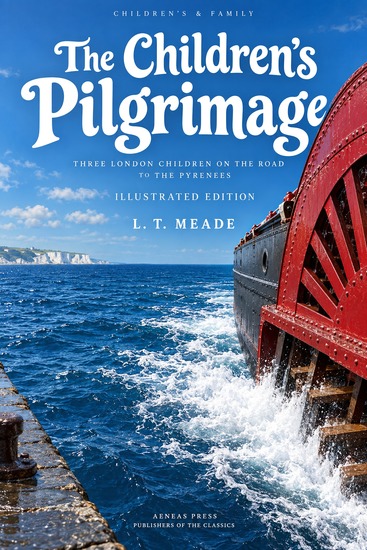
  • The Children's Pilgrimage - Three London Children on the Road to the Pyrenees - cover

    The Children's Pilgrimage -...

    L. T. Meade

    • 0
    • 0
    • 0
    Two London orphans, Cecile and Maurice D'Albert, children of a French father and a Spanish mother, set out from London for the Pyrenees to find the grandmother they have never seen. L. T. Meade wrote for a Victorian public that liked its poverty rescued in the last chapter, and she gives them the rescue — after two hundred pages that are exact about hunger, cold and the price of a night's shelter. Cecile is ten, and the book knows what it is asking of her. Thirty-seven plates of London streets and hard roads by Luke Fildes and Thomas Creswick carry the children's journey out of the city and onto the open road.
    Show book
  • Walking and Other Excursions - cover

    Walking and Other Excursions

    Henry David Thoreau

    • 0
    • 0
    • 0
    IN THE SPIRIT OF UNDYING ADVENTURE!    Sauntering through natural landscapes is a noble art; and one that Henry David Thoreau held in the highest regard.     Though he is perhaps best known for Walden: Life in the Woods and his essay “Civil Disobedience,” Thoreau was an early advocate of recreational hiking, canoeing, and conserving natural resources. A passionate nature writer, he penned many articles that shared these philosophies and perspectives.    This carefully restored re-creation of the 1863 essay collection Excursions features the nine original essays that were published posthumously:    “Natural History of Massachusetts”    “A Walk to Wachusett”    “The Landlord”    “A Winter Walk”    “The Succession of Forest Trees”    “Walking”    “Autumnal Tints”    “Wild Apples”    “Night and Moonlight”    This revised special edition also includes the original detailed biographical sketch of Thoreau by fellow transcendentalist and friend Ralph Waldo Emerson. Featuring a brand-new foreword by J.F. Penn, best-selling author of PILGRIMAGE: Lessons Learned from Walking Three Ancient Ways, and a fresh introduction from editor Mark Leslie.    ______    "In these ever more fast-moving times, as the constant noise of media in every form buffets us, and bad news from across the world shakes our sense of well-being daily, we can find truth in Thoreau’s words that 'in society you will not find health, but in nature.'" - J.F. Penn
    Show book
  • When The World Shook - cover

    When The World Shook

    H. Rider Haggard

    • 0
    • 0
    • 0
    Out-of-print for many years, When the World Shook is a classic text which tells of the terror of a ghost town. The streets were empty, and so were the buildings, this city could not have been more dead had it been on the moon.
    Show book
  • Too Gentlemanly - An Elizabeth and Darcy Story - cover

    Too Gentlemanly - An Elizabeth...

    Timothy Underwood

    • 0
    • 0
    • 0
    Mr. Darcy: Controlling, arrogant, enraging… unfairly handsome. 
    Fitzwilliam Darcy had grown unused to female society during his five years of seclusion since Georgiana had her illegitimate child. That was why he accidentally insulted Mrs. Bingley’s sister. And why he kept thinking about her. When Georgiana became pregnant with Wickham’s child, Darcy had not made her marry the man Colonel Fitzwilliam found to preserve her reputation. She had begged him not to, and Darcy would do anything for his sister. He would even attend the Hertfordshire assembly with Mr. Bingley, because Georgiana wanted him to enjoy society. Bingley’s neighbors had refused to let a fallen woman like Georgiana amongst them. Darcy would not pretend to be pleased to meet them. 
    Elizabeth thought Mr. Darcy was a grand philanthropist: His rudeness provided everyone with a handsome and rich man to hate. But why, if he was actively determined to sneer at all the company, had he bothered to attend their assembly? Still, he was a very handsome man. 
    Darcy needed to overcome his bad first impression if he wanted Elizabeth. But he was rich, handsome and clever. It would be easy.
    Show book
  • Underground man - cover

    Underground man

    GABRIEL TARDE

    • 0
    • 0
    • 0
    It reflects not at all on Mr Cloudesley Breretons admirable work of translation to remark how subtly the spirit of such work as this of M. Tardes changes in such a process. There are certain things peculiar, I suppose, to every language in the world, certain distinctive possibilities in each. To French far more than to English, belong the intellectual liveliness, the cheerful, ironical note, the professorial playfulness of this present work.
    Show book