Join us on a literary world trip!
Add this book to bookshelf
Grey
Write a new comment Default profile 50px
Grey
Subscribe to read the full book or read the first pages for free!
All characters reduced
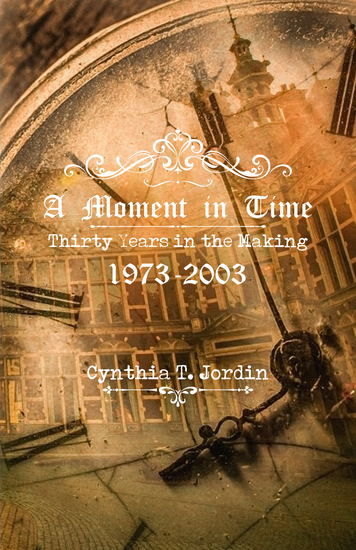
A Moment in Time Thirty Years in the Making 1973-2003 - cover

A Moment in Time Thirty Years in the Making 1973-2003

Cynthia T. Jordin

Publisher: Proisle Publishing Services

  • 0
  • 0
  • 0

Summary

A Moment in Time: Thirty Years in the Making is about the evolution of the Georgia Tech Placement Center into the current Georgia Tech Career Services Office. The idea behind this book is to commemorate the past thirty years, 1973-2003, and highlight the changes that have evolved over time within this environment. This book is easy to read, fun and enjoyable. It is about a group of people in one place, and in one occupation. Topics covered in this book are real events, written by real people, illustrating the best practices of the time. I hope that this book will illuminate Career Services as a unique department. The focus of this book is to highlight the many facets of the Placement Center/Career Services operation while incorporating the many historical events that took place during these years, including the manual or technical writing processes (in choosing different types of stylistic choices and/or different types of audiences) used to accomplish these jobs, and the immense technological changes that truly revolutionized the way we conduct business. The design, format, style and idea behind this book were created by me. However, I am not the sole author of this piece. I invited a number of people to contribute their insight to this work as well
Available since: 01/05/2023.
Print length: 232 pages.
Other books that might interest you

  • Hide And Seek - From their pens to your ears genius in every story - cover

    Hide And Seek - From their pens...

    Fyodor Sologub

    • 0
    • 0
    • 0
    Fyodor Kuzmich Teternikov was born on 1st March 1863 in St. Petersburg into the family of a poor tailor.  When his father died of tuberculosis in 1867, his illiterate mother was forced to become a servant in the home of an aristocrat, where Sologub and his younger sister grew up.  
    Seeing how difficult his mother's life was, Sologub was determined to rescue her from it, and after graduating from the St. Petersburg Teachers' Institute in 1882 he took his mother and sister with him to his first teaching post in Kresttsy.  It was here he began his literary career in 1884 with his poem ‘The Fox and the Hedgehog’ under the name Te-rnikov. 
    It would be another decade before he could escape his various jobs to move to Moscow and begin his literary career on what would be his most famous novel, ‘The Petty Demon’.  It was now suggested that he use a pseudonym and so Sologub became his new identity. 
    In 1896 he published a book of poems, a collection of short stories, and his first novel, ‘Bad Dreams’, which is considered one of the first decadent Russian novels. 
    In 1905 ‘The Petty Demon’, was published, initially in serial form. But life was still difficult unrewarding jobs, little time to write and a small, cramped apartment lightened only by gatherings of friends, poets and writers. 
    By the October Revolution his work was becoming popular and with the novel of ‘The Petty Demon’, finally published as a book, he now had a growing income. 
    His sister's tuberculosis could now be more easily treated with treatments in proper sanitoria, even as far away as Finland, but in June 1907 she passed. 
    He returned to St. Petersburg and retired.  The following year he married the translator Anastasia Chebotarevskaya who reordered his life.  A big new apartment was rented, small gilt chairs were bought, and the walls of the large cold office were decorated with paintings. 
    Sologub continued to write and publish poems, plays, and translations and in 1914 he started a magazine, Writers' Journals, but the outbreak of World War I put an end to it.  
    The October Revolution, with publishing under Bolshevik control, ensured he now had no outlets for his writing and could only lecture. 
    His wife’s suicide in September 1921, mainly due to deprivation and uncertainty, as they prepared for a new life abroad, grieved him for the rest of his life. 
    In May 1927 Sologub became seriously ill, and by summer he could leave his bed only rarely.  
    After a long struggle, Fyodor Sologub died on 5th December 1927 in Leningrad.  He was 64.
    Show book
  • Bob Dylan in the Attic - The Artist as Historian - cover

    Bob Dylan in the Attic - The...

    Freddy Cristóbal Domínguez

    • 0
    • 0
    • 0
    Bob Dylan is an iconic American artist, whose music and performances have long reflected different musical genres and time periods. His songs tell tales of the Civil War, harken back to 1930s labor struggles, and address racial violence at the height of the civil rights movement, helping listeners to think about history, and history making, in new ways. While Dylan was warned by his early mentor, Dave Van Ronk, that, "You’re just going to be a history book writer if you do those things. An anachronism," the musician has continued to traffic in history and engage with a range of source material—ancient and modern—over the course of his career. 


    In this beautifully crafted book, Freddy Cristóbal Domínguez makes a provocative case for Dylan as a historian, offering a deep consideration of the musician's historical influences and practices. Utilizing interviews, speeches, and the close analysis of lyrics and live performances, Bob Dylan in the Attic is the first book to consider Dylan's work from the point of view of historiography.
    Show book
  • Amazing Grace - A Cultural History of the Beloved Hymn - cover

    Amazing Grace - A Cultural...

    James Walvin

    • 0
    • 0
    • 0
    A fascinating journey through the history of one of the transatlantic world’s most popular hymns 
     
    Sung in moments of personal isolation or on state occasions watched by millions, “Amazing Grace” has become an unparalleled anthem for humankind. How did a simple Christian hymn, written in a remote English vicarage in 1772, come to hold such sway in all corners of the modern world? With this short, engaging cultural history, James Walvin offers an explanation. 
     
    The greatest paradox is that the author of “Amazing Grace,” John Newton, was a former Liverpool slave captain. Walvin follows the song across the Atlantic to track how it became part of the cause for abolition and galvanized decades of movements and trends in American history and popular culture. By the end of the twentieth century, “Amazing Grace” was performed in Soweto and Vanuatu, by political dissidents in China, and by Kikuyu women in Kenya. No other song has acquired such global resonance as “Amazing Grace.” Behold a compelling story of music and social change.
    Show book
  • Top 10 Short Stories The - The Mad Scientist - The top ten short stories about mad scientists - cover

    Top 10 Short Stories The - The...

    Robert Louis Stevenson, Jack...

    • 0
    • 0
    • 0
    Short stories have always been a sort of instant access into an author’s brain, their soul and heart.  A few pages can lift our lives into locations, people and experiences with a sweep of landscape, narration, feelings and emotions that is difficult to achieve elsewhere. 
     
    In this series we try to offer up tried and trusted ‘Top Tens’ across many different themes and authors. But any anthology will immediately throw up the questions – Why that story? Why that author?  
     
    The theme itself will form the boundaries for our stories which range from well-known classics, newly told, to stories that modern times have overlooked but perfectly exemplify the theme.  Throughout the volume our authors whether of instant recognition or new to you are all leviathans of literature. 
     
    Some you may disagree with but they will get you thinking; about our choices and about those you would have made.  If this volume takes you on a path to discover more of these miniature masterpieces then we have all gained something. 
     
    In this volume the Mad Scientist takes centre stage.  Naturally the stories come in all shapes and sizes and in the pens of our classic authors the scientists more usually arrive as dark, twisted and evil as they go about their work illuminating humanity as only a mad scientist can. 
     
    1 - The Top 10 Short Stories - Mad Scientists - An Introduction 
    2 - The Strange Case of Dr Jekyll & Mr Hyde - Part 1 by Robert Louis Stevenson 
    3 - The Strange Case of Dr Jekyll & Mr Hyde - Part 2  by Robert Louis Stevenson 
    4 - A Thousand Deaths by Jack London 
    5 - A Diagnosis of Death by Ambrose Bierce 
    6 - The Facts In The Case of Monsieur Valdemar by Edgar Allan Poe 
    7 - The Mortal Immortal by Mary Shelley 
    8 - Carnivorine by Lucy Hamilton Hooper 
    9 - The Man Without a Body by Edward Page Mitchell 
    10 - Rappaccini's Daughter - Part 1 by Nathaniel Hawthorne 
    11 - Rappaccini's Daughter - Part 2 by Nathaniel Hawthorne 
    12 - The Blue Laboratory by L T Meade 
    13 - Herbert West - Reanimator - Part 1 by H P Lovecraft 
    14 - Herbert West - Reanimator - Part 2 by H P Lovecraft
    Show book
  • علي فارس الإسلام ورجل الحكمهالجزء 1 - علي بن ابي طالب شجاعة بساله حكمة السلامي تاررر - cover

    علي فارس الإسلام ورجل...

    محمد الصوياني

    • 0
    • 0
    • 0
    رحلة صوتية تأملية في شخصية علي بن أبي طالب، أحد أعظم رموز الإسلام في الشجاعة والعدالة والحكمة. هذا العمل يجمع بين السرد التاريخي والتأمل الروحي، ليقدم صورة متكاملة لرجل حمل السيف والقرآن، وواجه تحديات الدنيا بثبات الإيمان ونور البصيرة. 
    من ولادته في بيت النبوة، إلى مواقفه البطولي في الميدان، ومن كلماته الخالدة إلى لحظات الصمت المملوءة بالحكمة، يأخذك هذا الكتاب في رحلة داخل روح فارس لم يكن فقط محاربًا، بل معلمًا للإنسانية 
    الكتاب مكتوب بأسلوب بسيط وعميق، يناسب كل من يبحث عن الإلهام، عن المعنى، وعن القدوة. الأداء الصوتي الهادئ يحمل المستمع إلى أجواء من الخشوع والتأمل، حيث يجتمع التاريخ مع الإيمان في لحظة استماع صادقة. 
    هذا الكتاب الصوتي ليس سردًا تقليديًا، بل تأمل في قيم الرجولة، ومعاني القيادة، وعمق الروح
    Show book
  • Truth and Fantasy - cover

    Truth and Fantasy

    Joram Piatigorsky

    • 0
    • 1
    • 0
    The 67 essays in Truth and Fantasy explore diverse themes from different perspectives based on the author's and narrator's experiences. The essays are neither comprehensive nor meant to argue forcefully for any single viewpoint. Rather, they are meant to stimulate and inspire additional thoughts and ideas. Beginning essays include musings on random thoughts on the power of silence and neutral and indifference. Subsequent essays emerge from a lifelong career in biology research and touch on whether the ability to evolve is an evolutionary trait. Other essays argue that the nature of intelligence and aesthetics can be traced throughout the animal kingdom, including even so-called "mindless" invertebrates. Challenging subjects are covered in essays about the foundations and meaning of creativity, considering even the role of boredom and imperfections as sources of creativity. Other essays deal with ambition and the relative significance of the buried streams of time between the specific, visible, highlighted episodes in life. The essays include reflections relating competitive tennis to general issues of life, express gratitude for 50 years of marriage, the miracle of having children and grandchildren, the positive nature of kindness, the despondence of losing a treasured wedding ring, and relief when it's found; art: how it's valued, the significance of authenticity, the importance of ambiguity, and the experiences of amassing a world-class collection of Inuit sculptures. Essays describe uplifting experiences and broadening horizons by traveling to exotic places – Israel, Iceland, Greenland, Portugal, and West Africa – and the nostalgia of returning after 40 years to the science laboratories in Puget Sound as a writer instead of a science student. Finally, essays maintain that aging need not dampen ambition and creative efforts but do not ignore the inevitability of death and its value in defining the marvel and privilege of life.
    Show book