Join us on a literary world trip!
Add this book to bookshelf
Grey
Write a new comment Default profile 50px
Grey
Subscribe to read the full book or read the first pages for free!
All characters reduced
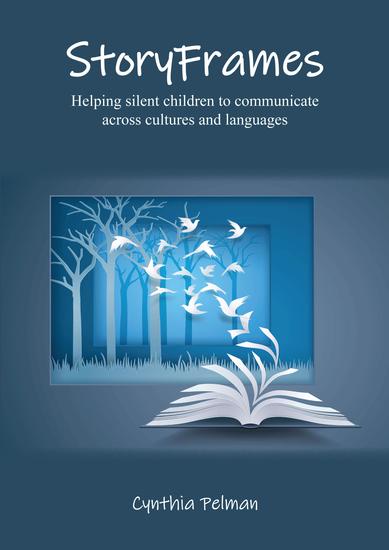
StoryFrames - Helping Silent Children to Communicate across Cultures and Languages - cover

StoryFrames - Helping Silent Children to Communicate across Cultures and Languages

Cynthia Pelman

Publisher: Grosvenor House Publishing

  • 0
  • 0
  • 0

Summary

StoryFrames: supporting silent children in the classroom.
How does a teacher support a child who has recently arrived at school, speaking another language, and who remains completely silent at school for weeks or months, not participating in class and not even playing with other children?
The child's parents often report that the child speaks and plays normally at home, with their family and with other children who speak the child's language. These children, undergoing the "Silent Period", are usually children who have relocated from another country, either voluntarily or as refugees or migrants. For a variety of reasons, these children do not have the resilience needed to cope with the many changes and anxieties they have experienced. The losses for these children are more than the loss of familiar faces, places and conversations; the loss of their home language is experienced as a loss of the self they had known before the relocation. The psychoanalytic theories of Colette Granger provide a way to understand the experiences of these migrant children.
The StoryFrames book sets out an easy-to-follow, low-cost method of supporting these children, enabling them to emerge from their silence, and to play with other children. The book is written by a speech and language therapist, but any teacher, social worker or volunteer, who is experienced in working with young children, can run this programme.
The methodology of this programme is grounded in the developmental theories of Winnicott and Vygotsky and as such it stresses the nature and quality of the teacher/child relationship which is at the core of this kind of work. The book explores the feelings not only of the child in this situation, but also of the teacher working with such a child; such a teacher must deal with their own anxieties about what the child is experiencing, and about whether they, as the teacher who is expected to solve these problems, could be doing something different.
The StoryFrames method is not only for second language learners. It has been successfully used with children who have a wide range of communication disabilities. Children with Developmental Language Disorder, children who stutter, children with intellectual disabilities and Highly Sensitive Children have all benefited from the use of this programme, which uses narrative and pretend play to help the child to develop linguistic and cognitive skills, as well as to have the confidence needed to communicate with others, in spite of the difficulties.
This book is an invaluable source of information for anyone wanting to understand the nature of the teacher or speech therapist's relationship with children with communication difficulties, and should be essential reading for trainee speech and language therapists, as well as for teachers training in early years education.
Available since: 12/07/2023.
Print length: 144 pages.
Other books that might interest you

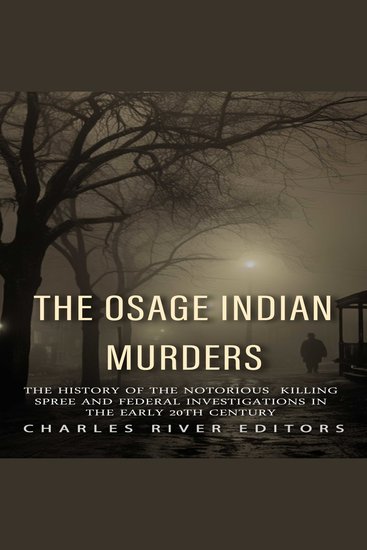
  • Osage Indian Murders The: The History of the Notorious Killing Spree and the Federal Investigations in the Early 20th Century - cover

    Osage Indian Murders The: The...

    Editors Charles River

    • 0
    • 0
    • 0
    In the late 19th century, Indian Territory became part of the new State of Oklahoma and tribal lands were gradually reduced in size, but on some of the lands assigned to the Osage, which became Osage County, something very dramatic happened: oil was discovered. At first, that didn’t seem too important - in the 1880s, oil was useful but wasn’t the source of wealth it would later become. However, the rise of the automobile changed everything. In 1900, there were only around 4,000 automobiles registered in America, but by 1908, there were over 60,000, and by the early 1920s, there were over 15 million. Every single one needed fuel and lubricants that came from oil, and as a result, “black gold” became one of the most valuable commodities on Earth.  
    	For the Osage, the explosion in demand for oil brought unimaginable wealth. In 1923 alone, the Osage Nation received over $30 million in oil revenue, worth over $400 million in current value, and individual members of the tribe became extremely wealthy. Unscrupulous people began to plot how they could get their hands on some of this wealth.  
    	Then the murders began. 
    	In the early 1920s, members of the Osage Nation and others began to turn up dead, and in many cases, the proceeds of oil revenue owned by these people passed to white “Guardians” appointed by the federal government. By 1925, at least 24 Osage had died in unexplained circumstances, and some accounts suggest that the actual number may have been over 100. Local law enforcement seemed unable (or perhaps unwilling) to investigate effectively, and it was left to a small bureau in Washington to undertake their first homicide investigation under the leadership of a dynamic and ambitious young lawyer named J. Edgar Hoover. As a result, the horrifying true story of the Osage County murders became one of the first assignments for the federal agency that would later become the FBI. 
    Show book
  • After Botham - Healing From My Brother's Murder by a Police Officer - cover

    After Botham - Healing From My...

    Allisa Charles-Findley, Jeremiah...

    • 0
    • 0
    • 0
    On September 6, 2018, White Dallas police officer Amber Guyger opened the door of Apartment 1478. Inside, Botham Jean lay on his couch, having hung up from his daily call with his sister, Allisa. She’d encouraged her brother to stay home for the night’s opening Dallas Cowboys game as sports bars would be too dangerous. Guyger instantly assumed the large black man watching the game was a burglar in her home. She shot him, then failed to render aid as he succumbed to the wound she’d inflicted. Officer Guyger forever altered the lives of the hundreds who knew and loved this kind-hearted young man who lead worship at his church and worked diligently at Price Waterhouse Cooper. Botham's murder shocked the nation. And it devastated his sister. After Botham is Allisa’s story of what happened to her brother and how she fought through the aftermath to find life.
    Show book
  • King Arthur - His Life Authenticity Historicity and Legacy - cover

    King Arthur - His Life...

    Kelly Mass

    • 0
    • 0
    • 0
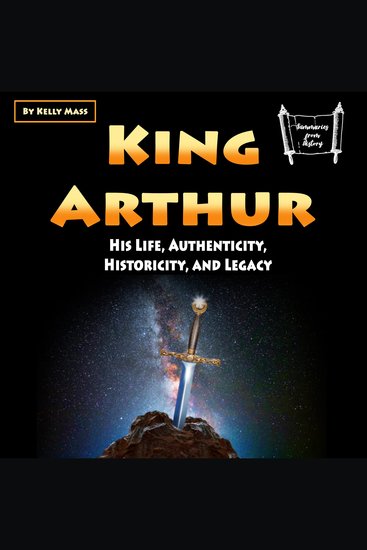
    King Arthur, a legendary figure rooted in medieval history and romance, is often depicted as the British leader who defended Britain against Saxon invaders in the late 5th and early 6th centuries. However, the story of King Arthur is primarily a blend of Welsh and English mythology with elements of literary invention. Most modern historians agree that Arthur is more of a mythical construct than a historical figure. Early sources such as the Annales Cambriae, the Historia Brittonum, and the works of the monk Gildas provide glimpses into Arthur's supposed historical context. Additionally, references to Arthur appear in early poetic works like Y Gododdin, though these allusions remain ambiguous and open to interpretation. 
    Arthur’s significance as a cultural and legendary figure solidified in the corpus of stories known as the "Matter of Britain." Geoffrey of Monmouth’s 12th-century Historia Regum Britanniae (History of the Kings of Britain) was instrumental in elevating Arthur to international fame. Geoffrey’s imaginative narrative portrayed Arthur as a heroic warrior who defended Britain from both human and supernatural foes. Earlier Welsh and Breton tales, predating Geoffrey’s work, often described Arthur as a semi-magical figure associated with the Welsh otherworld, Annwn. However, the extent to which Geoffrey relied on earlier sources versus his own creativity remains unclear.
    Show book
  • A Rare Recording of Boxer Jack Johnson - cover

    A Rare Recording of Boxer Jack...

    Jack Johnson

    • 0
    • 0
    • 0
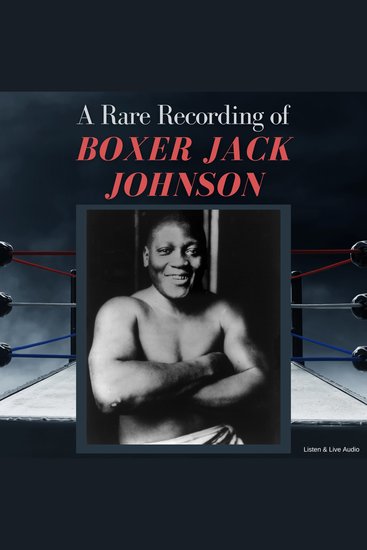
    In this recording, Johnson discusses his July 4, 1910, "Fight of the Century" victory over former undefeated heavyweight champion James J. Jeffries, in front of 20,000 people, at a ring built just for the occasion in downtown Reno, Nevada.
    Show book
  • Purpose of Love - The Brain’s Psychology of Love Clarity Depth Courage Growth Mystery Sacrifice - cover

    Purpose of Love - The Brain’s...

    Usha Topalkatti

    • 0
    • 0
    • 0
    Purpose of Love is a bold, unfiltered journey into the raw emotions, choices, and consequences that shape our deepest connections. From the opening chapter, “Pain: The Secret Ingredient for Greatness,” the book challenges the reader to see heartbreak not as an ending, but as the beginning of transformation. It asks the timeless question “Love. What’s that?” and guides you toward  “The Ultimate Purpose of Love” with clarity and honesty. 
    As you uncover   
    “Understanding How to Love,”the book dives into the delicate moments we rarely talk about like  how to react when someone you cherish says they feel numb. It fearlessly explores betrayal in  “Cheating: A Conscious Crossroad,”  
    digging into the human psyche in  “Why Do People Cheat? A Psychological Lens Beyond Relationships.”  
    But the story doesn’t stop with couples. It exposes the hidden collateral damage in “Cheating’s Silent Victims: Parents, Children, and the PTSD of Broken Families.” 
    Provocative, insightful, and emotionally charged, Purpose of Love is a guide, a mirror, and a wake-up call for anyone searching for truth in love’s chaos
    Show book
  • The Burns Supper Companion - The Complete Pocket Guide - cover

    The Burns Supper Companion - The...

    Nancy Marshall

    • 0
    • 0
    • 0
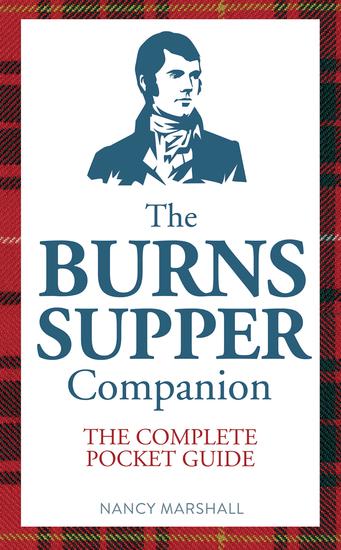
    In 1801, some five years after Robert Burns' death, nine of his friends sat down to dinner in what is now known as Burns Cottage in Alloway to celebrate his extraordinary life and to give thanks for his friendship. Over the years the informal theme from that evening has developed into the ritual known as Burns Night.
    This best-selling book is the essential guide for anyone intending to hold or attend a Burns Night of any size. In addition to setting out the order of events for the evening, the Burns Supper Companion also offers fascinating insights into the traditions surrounding Burns Night.
    Nancy Marshall has spent a large part of her life living and working in Edinburgh. She read English Literature and Medieval History at Edinburgh University, going on to write widely about Scottish song and the poems and songs of Robert Burns.
    Show book