Join us on a literary world trip!
Add this book to bookshelf
Grey
Write a new comment Default profile 50px
Grey
Subscribe to read the full book or read the first pages for free!
All characters reduced
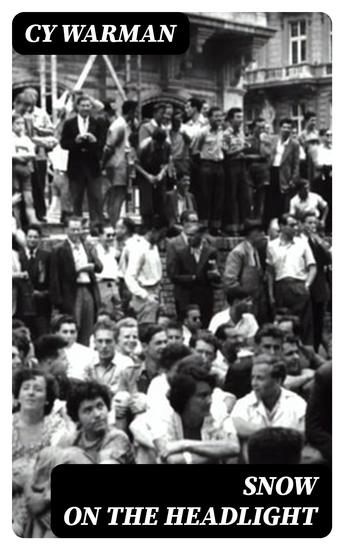
Snow on the Headlight - A Story of the Great Burlington Strike - cover

Snow on the Headlight - A Story of the Great Burlington Strike

Cy Warman

Publisher: DigiCat

  • 0
  • 0
  • 0

Summary

In "Snow on the Headlight," Cy Warman presents a masterful collection of stories that illuminate the rugged and often perilous life of early 20th-century railroad workers in the American West. Known for his evocative prose and rich imagery, Warman deftly combines elements of realism with lyrical descriptions of the natural landscape, vividly portraying not only the physical trials these men faced but also their emotional struggles. The narrative is steeped in the authenticity of personal experience and a deep admiration for the railroads, reflecting the era's cultural and technological shifts. A prominent figure in the literary domain of railroad literature, Cy Warman himself worked as a railway employee, which informs the authenticity and depth of his characters and settings. Born in 1855, Warman was an active participant in the transformative rail expansion across the United States. His unique firsthand experiences allowed him to chronicle the lives and aspirations of those who toiled in the shadows of industry, offering insightful reflections on the societal turmoil of his time. This book is highly recommended for readers interested in Americana, as well as those drawn to stories of resilience and camaraderie. Warman's prose not only entertains but also serves as a crucial historical document, shedding light on a once-great American endeavor. "Snow on the Headlight" is not merely a collection of stories, but a poignant homage to an era that shaped the nation.
Available since: 09/16/2022.
Print length: 96 pages.
Other books that might interest you

  • Lincoln's Rivals: The Political Genius Unveiled - "Master Lincoln's Rivals: Dynamic Audio Lessons Unveil Political Brilliance!" - cover

    Lincoln's Rivals: The Political...

    Duncan Hawthorne

    • 0
    • 0
    • 0
    Explore Lincoln's Mastery: A Deep Dive into His Political Brilliance 
    ⭐⭐ Simplified Audio Guide ⭐⭐ 
    Are you eager to advance in your comprehension of Lincoln's extraordinary political capabilities? 
    Looking for a thorough guide that reveals all critical aspects of Lincoln’s strategies and leadership? 
    Your search ends here! 
    This guide stands as your essential companion for deepening your knowledge, applying historical insights, and engaging in critical thinking exercises. With this, you're poised for mastery. 
    Updated structure for enhanced understanding. 
    Key features of this enriched guide: 
    - Profound insights into Lincoln's political acumen 
    - Detailed explanation of Lincoln's strategies for navigating political adversity 
    - Effective methods for analyzing historical events and leadership styles 
    Our guide distinguishes itself through comprehensive coverage, essential for grasping Lincoln's genius. Concepts are not skimmed over; they are explored with in-depth precision. 
    Please note that this guide is not affiliated with any official historical entities and is purely an independent resource for your benefit. 
    Designed with a clear structure and easy-to-understand language, our guide on Lincoln’s Political Genius ensures smooth transitions between topics. Say goodbye to dense jargon and embrace clear, precise, and historically accurate content. 
    So, why wait? Click the BUY NOW button, secure your guide, and embark on your journey to fully understanding Lincoln's political brilliance!
    Show book
  • The Dog Who Followed the Moon - cover

    The Dog Who Followed the Moon

    James Norbury

    • 0
    • 0
    • 0
    From the international bestselling author and illustrator of Big Panda and Tiny Dragon and The Cat Who Taught Zen comes a beautifully illustrated adult fable of a lost young puppy, the old wolf who rescues her, and their journey to follow the moon—with meditations on friendship, connection, and sacrifice. 
    Deep in the mountain forests, a young pup named Amaya wanders lost and alone, until an aging wolf rescues her from a terrifying encounter with his vicious pack. To try and reunite Amaya with her parents, the unlikely pair embark on a journey to follow the moon. 
    Eerie woods, forgotten cities, and other obstacles await Amaya and the Wolf on their adventure. As they make their way through the wilderness, the two learn profound lessons about love, sacrifice, and the importance of embracing change. 
    From bestselling author and illustrator James Norbury, The Dog Who Followed the Moon is a moving, poignant reflection on love and loss, grief and growth.
    Show book
  • Reimagining Government - Achieving the Promise of AI - cover

    Reimagining Government -...

    Thomas H. Davenport, Faisal...

    • 0
    • 0
    • 0
    How AI can help the government lead with speed, trust, and impact.Artificial Intelligence is reshaping what is possible across every sector—and public service is no exception. Reimagining Government is a bold, practical playbook for harnessing AI to deliver smarter, faster, and more effective outcomes. Inside, you'll find: 
    · Clear breakdowns of AI opportunities and challenges in the government space 
    · Proven frameworks and maturity models for responsible, scalable adoption 
    · Insights and examples from real-world government innovators 
    · Strategies to transform leadership, culture, and public impactWritten for policymakers, technologists, and civic leaders, this book is a guide to making AI work—for people as well as for systems.
    Show book
  • Teotihuacan and Cholula: The History of the Most Important Mesoamerican Cities of the Preclassic Era - cover

    Teotihuacan and Cholula: The...

    Editors Charles River

    • 0
    • 0
    • 0
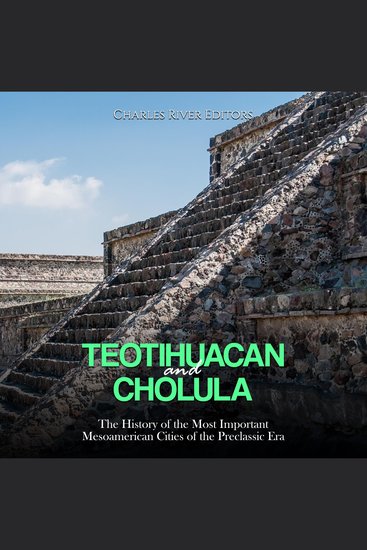
    Although Teotihuacan reached the height of its power and influence about 1500 years ago, the city is still an endless topic of fascination and debate, in addition to being Mexico’s most toured archaeological site. The origins of the city remain mysterious (as do the city’s founders), and scholars are still coming up with theories to explain the city’s demise. All the while, later Mesoamerican civilizations remembered Teotihuacan, and the Aztec even considered the city’s ruins a site of worship. 
    Cholula is one of the most interesting, enigmatic, and forgotten cities in ancient Mesoamerica, and few people are aware that it is the oldest continuously-occupied settlement in the entire Western hemisphere. The current city is known for the Great Pyramid, which has the largest base of all pyramids in the world, as well as its many colonial churches and constant religious celebrations. All of these things ensure that Cholula is heavily visited, but the tremendous importance of Prehispanic Cholula has mostly been lost in the historical accounts of Puebla and even Mexico as a whole. 
    During the height of Teotihuacan’s influence in the Classic period and the expansion of the Aztecs in the Postclassic, Cholula managed to maintain its independence and grew to become the greatest religious center in central Mesoamerica. As the main site for the cult of the god Quetzalcoatl, Cholula received pilgrims from many Prehispanic cities, and the two high priests of the Temple of Quetzalcoatl were charged with confirming the legitimacy of these foreign rulers, making their role one of the most important in the region. Most sources note that Cholula was a great religious center with a large pyramid, and that it was the site of a terrible massacre perpetrated by the Spanish, but other than that those details, the impressive city remains mostly unknown. 
    Show book
  • Rethinking Intelligence - A Radical New Understanding of Our Human Potential - cover

    Rethinking Intelligence - A...

    Rina Bliss

    • 0
    • 0
    • 0
    A genetics expert and professor challenges our understanding of intelligence, explaining what it truly means to be “smart,” why conventional assessments are misleading, and what everyone can do to optimize their potential. 
    Growing up in middle-class suburban Los Angeles in the 1980s, Rina Bliss saw intelligence as her ticket out. Like height and stature, intelligence was said to run in families. The prevailing idea was that mental capacity was determined by our DNA and could be measured; a simple IQ test could predict a child’s future. 
    Yet, once Dr. Bliss looked closer, first as a student, then as a scientist, and later as a mom of identical twins who share a genome, she began to challenge conventional wisdom about innate intelligence. In Rethinking Intelligence, she shares her findings, drawing on cutting-edge scientific research to offer a new model for how we understand, define, and assess intelligence, using a measurement that is far more flexible and expansive. 
    Intelligence has little to do with standardized test results or other conventional measures of intellect, Dr. Bliss argues. Intelligence is a process, a journey defined by change that cannot be scored or taken away. Intelligence is influenced by our surroundings in ways that are often overlooked—more than Baby Mozart or flash cards or superfoods, factors like stress, connection, and play actually sculpt young minds. 
    In Rethinking Intelligence, Dr. Bliss shares insights from the burgeoning science of epigenetics to help us harness our environments to empower our minds. If we truly want to nurture potential, we must eliminate toxic stress so that our genes can work optimally, in harmony with our environment. Dr. Bliss offers successful strategies we can use as individuals and a society, including embracing a growth mindset, prioritizing connection, becoming more mindful, and reforming systemic issues—poverty, racism, the lack of quality early childhood education—that have a negative and lasting neurobiological impact. 
    Joining acclaimed works by Carol Dweck, Amy Cuddy, and James Clear, Rethinking Intelligence reframes human behavior and intellect, offering a new perspective for understanding ourselves and our children, and the practical tools necessary to thrive.
    Show book
  • I'm a teenager and I call my shrink - cover

    I'm a teenager and I call my shrink

    Thierry Delcourt

    • 0
    • 0
    • 0
    “It's better to talk to you than to my parents; I wouldn't want to hurt their feelings. “Anguish, when it takes hold of me, is a terrible abyss! “I don't know who I am anymore. It's like voices are talking to me, it's weird; I'm scared” ... Today, teenagers dare to consult on their own. We welcome the end of the taboo, and the fact that it's easier to talk, but beware of the dizzying distress that can be caused, because it only takes a little for a teenager's life to turn upside down. The precipitous and uncertain evolution of society, of the family, of the relationship to work and to culture, upsets the reference points of the teenager and his parents. Adolescence is therefore a crucial time for talking: it's the time to make it a priority. Thierry Delcourt guides us and suggests concrete situations to help parents and teenagers find their way towards greater well-being and dialogue. Let's not forget that the teenage period is rich in creative potential, which needs to be revealed. The book is aimed at teens and parents alike. It can even be read together, as a way of talking and hearing each other differently.
    Show book