Join us on a literary world trip!
Add this book to bookshelf
Grey
Write a new comment Default profile 50px
Grey
Subscribe to read the full book or read the first pages for free!
All characters reduced
Dealing with Anger and Rage - Where to Put Your Emotions and What Helps with Anger - cover

Dealing with Anger and Rage - Where to Put Your Emotions and What Helps with Anger

Cupido A.I. Saage

Translator Cupido A.I. Saage

Publisher: Saage Media GmbH

  • 0
  • 0
  • 0

Summary

Are you struggling with overwhelming anger that disrupts your relationships, work, and inner peace? 'Dealing with Anger and Rage' offers a comprehensive approach to understanding and managing these powerful emotions through evidence-based Acceptance and Commitment Therapy (ACT) techniques.
This practical guide helps you transform your relationship with anger by first understanding its physiological and psychological foundations. You'll learn to recognize your personal anger patterns and identify specific triggers that set off your emotional responses. Rather than viewing anger as an enemy to be suppressed, this book teaches you to see it as valuable information about your needs and boundaries.
The book provides both immediate strategies for de-escalation during intense moments and long-term approaches for sustainable change:
• Discover where to put your anger through creative channeling and constructive communication
• Learn what helps with anger through specific ACT techniques that create space between you and your emotions
• Develop mindfulness practices that allow you to observe anger without being consumed by it
• Explore value-based responses that transform destructive impulses into meaningful action
Unlike approaches that focus solely on anger management, Acceptance and Commitment Therapy offers a unique perspective: accepting emotions while committing to behaviors aligned with your core values. This balance helps you respond to challenging situations with flexibility rather than reactivity.
Whether you're dealing with occasional irritation or struggling with rage that feels beyond control, this book provides practical tools to:
• Regulate your emotional responses in the moment
• Communicate effectively even when emotions run high
• Develop self-compassion around difficult feelings
• Build healthier relationships through improved emotional awareness
Transform your relationship with anger and reclaim your emotional well-being with this accessible guide to applying Acceptance and Commitment Therapy in your daily life.
For this book, we relied on innovative technologies, including Artificial Intelligence and tailor-made software solutions. These supported us in numerous process steps: brainstorming and research, writing and editing, quality assurance, as well as the creation of decorative illustrations.
We aim to provide you with a reading experience that is particularly harmonious and contemporary.
Available since: 05/21/2025.
Print length: 213 pages.
Other books that might interest you

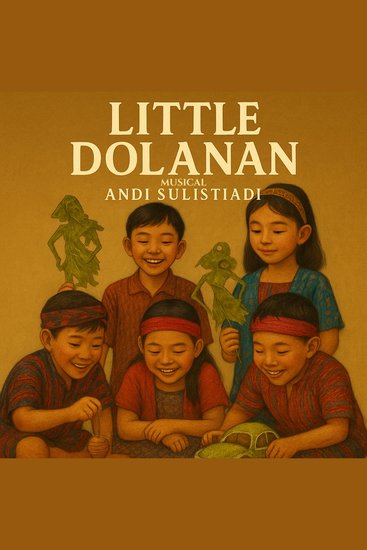
  • Little Dolanan Musical - cover

    Little Dolanan Musical

    Andi Sulistiadi

    • 0
    • 0
    • 0
    I absolutely agree a development of mental growth and intelligence skill of a child are based on the milestones of the child. Modern learning method is being used to improve child’s development in physical, psychological and spiritual. However, this method for the lower income community in Slawi, central Java is too sophisticated and expensive that they are able to acquire the benefit of the learning method. In order to connect the gap a form of facilitator is needed that has some elements of traditional values to be collaborated with the learning process, so the milestone and development can be obtained joyfully
    Show book
  • The Positive Thinking Workbook for Women - Real and Proven Ways to Keep a Positive Attitude No Matter What Build Self-Confidence and Be Happy Every Day - cover

    The Positive Thinking Workbook...

    Victoria Tyler

    • 0
    • 0
    • 0
    Hello beautiful woman! 
    Still struggling with negative thoughts, self-esteem, feelings of self-worth and that pesky negative self-talk? 
    Still struggling to feel empowered, worthy and inspired by your life… but you don’t know where to start? 
    Girl, I feel you! 
    I know what it is like to be in that place of struggle wanting to find your purpose, longing to live a life you love and to truly love yourself but not knowing what steps to take to get there. I used to be that girl too 
    This book will help you pinpoint what you must do to take back control of your life! 
    Does any of this sound familiar? 
    - All-or-Nothing Thinking 
    - Overgeneralization 
    - Mental Filter ( Of all the things going well, you pick one negative detail out and focus all your attention on it ) 
    - Discounting the Positive ( You often feel inadequate or unappreciated because you ignore positive experiences ) 
    - Jumping to Conclusions 
    - Magnification/minimization ( Your special magnifying glass can magnify an issue, making it bigger than it really is. Or you’re able to minimize the situation and your positive qualities) 
    - “Should” statements 
    - Labelling ( You label yourself in a negative way when you’ve done something you or others don’t like ) 
    - Personalization and blame 
    This is your chance to get what you’ve always wanted. 
    - Change your mind from pessimism to optimism. 
    - Live in a world of abundance instead of limiting beliefs. 
    - Change the habit of negative thinking. 
    - Truly learn self-acceptance and self-love. 
    - Stop self-doubt and gain real confidence. 
    - Learn how to get out of a funk and back on track fast. 
    - Feel strong and in control instead of weak. 
    - Discover and be your best possible self. 
    I’ll Be Your Guide To Positive Thinking!
    Show book
  • Anatolia and the Bronze Age: The History of the Earliest Kingdoms and Cities that Dominated the Region - cover

    Anatolia and the Bronze Age: The...

    Editors Charles River

    • 0
    • 0
    • 0
    While the Bronze Age is recognized as one of history’s most important phases, it’s been hard for historians to precisely date. The idea of the Bronze Age comes from a three-age system developed in the 19th century through which archaeologists and historians believe cultures evolve. These three ages are the Stone Age, the Bronze Age, and the Iron Age, and the concept of the system stems from the simultaneous development of museums in Europe during that time. In the Royal Museum of Nordic Antiquities in Denmark, Christian Jürgensen Thomsen, the director of the museum, began classifying objects of stone, bronze, or iron to better categorize and exhibit them. Each archaeological artifact was thus sorted according to their materials and further organized by shape and style. Through such methodology, working alongside archaeological reports, he was able to show how certain objects changed over time. 
    	During the Late Bronze Age, from about 1500-1200 BCE, the Near East was a time and place where great kingdoms and empires vied for land and influence, playing high stakes diplomatic games, trading, and occasionally going to war with each other in the process. The Egyptians, Hittites, Babylonians, Assyrians, and several smaller Canaanite kingdoms were all part of this system, which was one of the first true “global” systems in world history and also one of the most materially prosperous eras in antiquity. The major kingdoms are well-known to most people, but among them were powerful neighbors, many of whom have been mostly overlooked.  
    The transition from the Bronze to the Iron Age during the late 13th and early 12th centuries BCE arguably changed the structure and course of world history more fundamentally than any period before or since, and at the center of this period of turmoil was a group of people known today as the Sea Peoples, the English translation of the name given to them by the Egyptians.
    Show book
  • Thrive Hidden Insights - "Supercharge your exam preparation with Thrive Hidden Insights! Discover dynamic audio lessons for maximum performance!" - cover

    Thrive Hidden Insights -...

    Orson Grimsby

    • 0
    • 0
    • 0
    Thrive Hidden Insights: A Simplified Guide to Transform Your Connections** 
    Are you eager to advance in your career while enhancing your knowledge and skills?  
    Looking for a comprehensive guide that equips you with everything needed to transform your connections and embrace positive change?  
    Your quest ends here! 
    This audiobook acts as your ultimate companion for deepening your understanding, applying skills, and engaging in practical exercises to boost your success. 
    With updates reflective of current structural requirements, this guide includes: 
    - In-depth insights on achieving certification in transforming your connections  
    - Detailed explanations of effective strategies for fostering positive change 
    - Practical techniques for preparing for personal and professional growth 
    What sets our guide apart is its thorough and meticulous coverage, essential for achieving success. Each concept is explored with depth and clarity, ensuring a comprehensive understanding. 
    Please remember, this guide operates independently and is not affiliated with any official organization. It serves as a resource designed purely for your benefit. 
    Crafted with a straightforward structure and accessible language, our guide ensures that transitions between topics are seamless. Say farewell to complex terminology and embrace precise, clear, and technically accurate content. 
    So, why hesitate? Click the BUY NOW button, obtain your guide, and embark on your journey toward transformative success! 
    Get ready to transform your connections and embrace a brighter tomorrow!
    Show book
  • Beyond Belief: From a leading feminist journalist comes a fresh perspective on women’s chit-chat in this incisive exploration of why we gossip – new for 2026! - cover

    Beyond Belief: From a leading...

    Katie Baskerville

    • 0
    • 0
    • 0
    A celebration and exploration of gossip, reclaiming it as a powerful tool for building relationships, sharing vital information and enabling women’s voices to be heard. 
    Tittle-tattle. Hearsay. Rumours. Bitching. Tea. 
    Call it what you will: the fact remains that gossip is entwined into our daily lives. From group WhatsApp chats to click-bait headlines, social media snooping to reality television, there is nothing more devilishly delicious, scandalous, and satisfying than a juicy piece of gossip. 
    All-too-often dismissed as the past-time of silly schoolgirls and bored housewives, there’s more to gossip than meets the eye. In today’s world of misinformation, where the voices and stories of women are being silenced, gossip has the power to shatter reputations and destroy credibility. Yet it can also be a vital political tool; a communication style that strengthens relationships and can even act a life-saving measure. 
    Tracing gossip’s roots from old wives’ tales and the witch trials to reality TV, whisper networks and defamation lawsuits, Beyond Belief asks, have we lost the ability to listen; to hear, and to believe women who speak up and speak out? 
    A joyous reclamation of women’s words, this book is for anyone who’s ever uttered the words, ‘You won’t believe this…’ 
    nan
    Show book
  • Urban Poverty and Inequality - Analysis and Solutions - cover

    Urban Poverty and Inequality -...

    Lyric Vale

    • 0
    • 0
    • 0
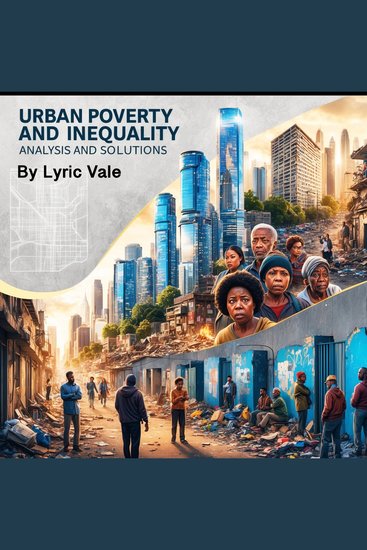
    Urban poverty is a pervasive issue that affects millions of people living in cities worldwide. As cities continue to grow at an unprecedented rate, the number of urban poor continues to rise, with large portions of the population living in conditions of extreme deprivation. The term "urban poverty" refers to the situation where individuals and families in urban areas experience a lack of access to basic resources, such as adequate housing, healthcare, education, and employment opportunities. Despite being situated in areas of economic activity and growth, urban poor populations face numerous challenges that contribute to their ongoing struggle for survival and upward mobility. 
    The growth of cities and urban centers has been accompanied by an increasing divide between the wealthy and the poor. While urban areas are often seen as hubs of opportunity, economic growth, and development, they also tend to highlight social and economic inequalities. Rapid urbanization, coupled with limited resources, leads to overcrowded slums, informal settlements, and a lack of infrastructure in many parts of cities. In such environments, the poor face challenges such as high unemployment rates, limited access to education, and poor healthcare services. These conditions create a cycle of poverty that is difficult to escape. 
    In addition, the urban poor are often excluded from key economic and social systems that would help alleviate their poverty. The concentration of wealth in urban centers disproportionately benefits the middle and upper classes, while marginalized communities remain on the periphery, unable to fully participate in the economic, political, and social life of the city. This growing inequality between different social classes exacerbates poverty and leaves the urban poor trapped in a cycle of disadvantage.
    Show book