Join us on a literary world trip!
Add this book to bookshelf
Grey
Write a new comment Default profile 50px
Grey
Subscribe to read the full book or read the first pages for free!
All characters reduced
The Death Company - cover

The Death Company

Cristoforo Baseggio

Publisher: Antelope Hill Publishing LLC

  • 0
  • 0
  • 0

Summary

Venetian front, 1915. The Austro-Hungarian army has taken control of key mountain locations facing the plains. The Fassa Alps are well guarded, and heavy casualties are expected. Mount Collo and Mount Saint Osvaldo are excellent launch points for an all-out offensive which is already in the works behind the grim vista of the Glockenthurm. The Italian High Command is paralyzed by outdated methodology, wasting precious time with failed assaults and flanking maneuvers that end with red snow. Men watch from their trenches, hiding along the parapets with their guns pointing at no man’s land, and the tension in the Italian lines has taken the form of a grim silence, as if the men already know their doom is approaching and wish only for it to envelop them quickly.
 
Colonel Baseggio of the Italian Royal Army, a veteran of many mountain engagements in Africa, creates a new section, based not on doctrinal tactics, but on intrepid actions which he calls “Ardite.” Assembled with volunteers drawn from the entire Italian Royal Army, his hastily trained company strikes deep into Austro-Hungarian lines, shocking the world with their courage and daring, often carrying the day with little more than knives and grenades. In the mud and snow of the Carso mountains, the “Arditi Company Cristoforo Baseggio”—the first of the famed Arditi formations—grows to carry the name of The Death Company.
 
This first hand historical account details one of the most fascinating military phenomena of the Great War. Antelope Hill Publishing is proud to present Cristoforo Baseggio’s The Death Company, for the first time in English, to preserve and expand access to the story of these extraordinary men.
Available since: 07/15/2022.
Other books that might interest you

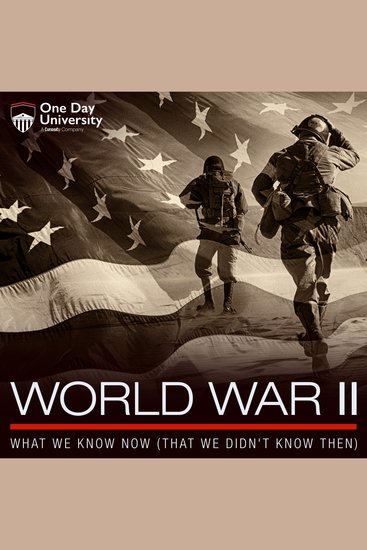
  • World War II: What We Know Now (That We Didn't Know Then) - cover

    World War II: What We Know Now...

    One Day University

    • 0
    • 0
    • 0
    Learn from five remarkable professors in this set of One Day University presentations exploring the complicated legacy of World War 2. World War II was a global war that lasted from 1939 to 1945 involving the majority of the world's countries—including all of the great powers—forming two opposing military alliances. The major participants threw their entire economic, industrial, and scientific capabilities into the war effort. It was by far the deadliest conflict in human history, resulting in 70 to 85 million fatalities, due to actual battles as well as genocides (The Holocaust), starvation, massacres, and disease. In the wake of defeat, Germany and Japan were occupied, and war crimes tribunals were conducted against German and Japanese leaders.
    Show book
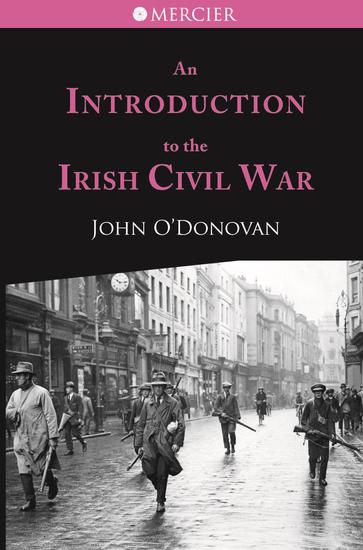
  • An Introduction to the Irish Civil War - cover

    An Introduction to the Irish...

    John O'Donovan

    • 0
    • 0
    • 0
    During the Irish Civil War, events of late 1922 and early 1923 together with waves of 'dishonourable' killings created poisoned relations between Republicans and 'Free Staters' which would last for several generations. The most enduring of these controversies, a policy of summary executions carried out by the Provisional Government from November 1922, continues to surround the argument.
    
    
    This book offers a fresh perspective on the causes, development and consequences of the Irish Civil War. Triggered by the signing of the Anglo-Treaty, there were those that would accept nothing less than complete Irish independence. Very few IRA commanders active in the field supported the Treaty and, as happens often in the dissection of civil wars, controversy over the conduct of both sides figures heavily within the text, where,  at a local and national level, it left bitter legacies.
    
    
    This book offers an overview of the war in all regions of Ireland.
    Show book
  • The Performer - Art Life Politics - cover

    The Performer - Art Life Politics

    Richard Sennett

    • 0
    • 0
    • 0
    An acclaimed sociologist's exploration of the connections among performances in life, art, and politics 


    In The Performer, Richard Sennett explores the relations between performing in art (particularly music), politics, and everyday experience. It focuses on the bodily and physical dimensions of performing, rather than on words. Sennett is particularly attuned to the ways in which the rituals of ordinary life are performances. 


    The book draws on history and sociology, and more personally on the author’s early career as a professional cellist, as well as on his later work as a city planner and social thinker. It traces the evolution of performing spaces in the city; the emergence of actors, musicians, and dancers as independent artists; the inequality between performer and spectator; the uneasy relations between artistic creation and social and religious ritual; the uses and abuses of acting by politicians. The Janus-faced art of performing is both destructive and civilizing.
    Show book
  • After Stoicism - Last Words of the Last Roman Philosopher - cover

    After Stoicism - Last Words of...

    Thomas Ward

    • 0
    • 0
    • 0
    The Stoic philosophers of antiquity recognized something we often forget. Good fortune does not guarantee happiness, and bad fortune does not guarantee misery. Boethius was the last philosopher of ancient Rome and a Christian theologian. He was also an illustrious senator who suffered a spectacular reversal of fortune. Falsely accused of treason and sentenced to death, he spent several months in prison awaiting his execution. For consolation he turned to the Stoics he had spent his life studying. They helped him to remember that the good things he once enjoyed—wealth, power, fame—could not make him truly happy. Also, that the injustice he suffered need not make him miserable. But the Stoics were not the only philosophers Boethius sought for consolation. The Stoics had taught that the highest happiness we can hope for is tranquility—serene indifference despite all the trials of life. But for Boethius, tranquility was not enough. He reached for something beyond Stoicism. Something that promised true happiness, come what may. This book is a guide through Boethius’s The Consolation of Philosophy. It shows how Boethius, in his darkest hour, took everything noble from Stoicism and fused it with a rational and religious conviction that there is a hope for happiness through and beyond the suffering of this life.  
    Show book
  • Sun Tzu - The Art of War - cover

    Sun Tzu - The Art of War

    Sun Tzu

    • 0
    • 0
    • 0
    Unlock the strategic brilliance of The Art of War by Sun Tzu, a timeless guide to mastering conflict and achieving success. 
     
    This audiobook presents profound lessons on strategy, leadership, and decision-making that extend far beyond the battlefield. 
     
    Whether you're navigating challenges in business, personal life, or competitive environments, Sun Tzu's teachings offer clarity and wisdom to help you triumph. 
     
    This classic work remains an essential resource for anyone seeking to understand the art of strategy and the path to victory.
    Show book
  • We're Gonna Keep On Talking - How to Lead Meaningful Race Conversations in the Elementary Classroom - cover

    We're Gonna Keep On Talking -...

    Jennifer Orr, Matthew R. Kay

    • 0
    • 0
    • 0
    What should conversations about race look and sound like in the elementary classroom? And how can we build classroom communities that encourage these meaningful conversations about race? 


    Matthew Kay and Jennifer Orr take on these questions and more in We're Gonna Keep On Talking: How to Lead Meaningful Race Conversations in the Elementary Classroom. This book focuses on the unique and powerful role discussions about race can play in the elementary classroom. 


    Drawing its title inspiration from the freedom song "Ain't Gonna Let Nobody Turn Me Around," sung by hundreds of children marching against segregation in the Children's Crusade of 1963, We're Gonna Keep On Talking is written for teachers who are willing to match children's courage and brilliance. 


    Writing with the humility and honest storytelling of two career classroom teachers, Matthew Kay and Jennifer Orr share: 


    ● Strategies for building safe and supportive classroom and school spaces for productive discourse 


    ● Dozens of practical teacher moves for facilitating race conversations 


    ● Classroom stories that allow listeners to envision ways into the work through picture books, art, graphs, and current events.
    Show book