Join us on a literary world trip!
Add this book to bookshelf
Grey
Write a new comment Default profile 50px
Grey
Subscribe to read the full book or read the first pages for free!
All characters reduced
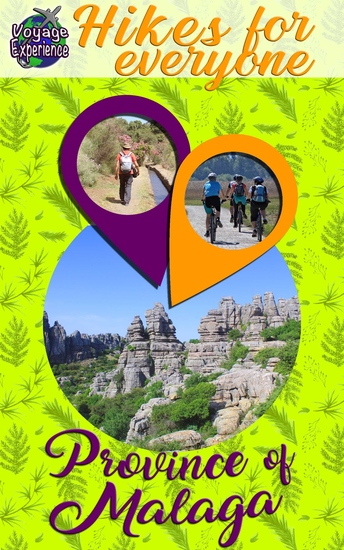
Hikes for everyone - Province of Malaga - cover

Hikes for everyone - Province of Malaga

Cristina Rebiere

Publisher: Cristina & Olivier Rebiere

  • 0
  • 0
  • 0

Summary

We welcome you to your new guide Voyage Experience: « Hikes for everyone – Province of Malaga » which will allow you to discover this beautiful province of Spain, nestled in an exceptional natural setting. It could be useful if you want to go there for one or several weeks.
 
Bathed by the Mediterranean Sea and the sun, the province of Andalusia is a real gem. It does not know winter along its coastline with its beautiful beaches (300 days of sunshine per year on average!!!). Malaga is also mountainous in the interior of its lands, where nature and its varied landscapes will surely charm you. Olive groves and almond trees as far as the eye can see, white villages nestled on the heights of hills or mountains, remote valleys where the sweetness of life is not just a concept but a way of living. We have discovered this province during the Covid-19 health crisis because Spain had the wisdom to reverse the first decisions made in panic.
 
While in several countries quarantines and hard restrictions were the norm, in Spain, the management by autonomous regions allowed people to travel within provinces with open restaurants, museums and other leisure and cultural structures. We were fortunate to see the Spaniards in a different light and to appreciate their joie de vivre. While respecting the sanitary measures, we were able to continue to live normally, to make visits and walks in nature.
 
In this little guide, we share with you the most beautiful hikes we have discovered in this magnificent province. We will be back there in autumn, and if there are other routes that have the same effect on us, we will add them to these ones. This little guide gathers above all our crushes and should save you time to choose the hikes which « call you out » or correspond to your interests.
 
There are many hikes available in the Province of Malaga, for all ages, all tastes and all levels of difficulty. We are not experienced hikers, but lovers of beautiful outings in nature, amazed by the surrounding beauties: landscapes, flora and fauna, rivers, waterfalls and lakes, caves and other geological curiosities, but also by the traces of our ancestors such as the cave paintings, the ancient necropolises, the ruins and other vestiges, witness to the passing of time.
 
We like to discover a region through the paths that crisscross it, especially since many have been traveled for hundreds of years.
 
For each hike, we will give you some information that will help you make your choice:
 
Distance in km
 
Difficulty level
 
Approximate duration
 
Nearest point of departure or commune
 
Theme – we will try to establish thematic categories such as « prehistory« , « nature », « fauna« , « forest« , « bathing« , « landscape« , « natural curiosity« , in order to guide you according to your own interests. We will accompany the description of each hike with our thematic icons of interests or affinities.
 
Necessary equipment
 
A small description with several photos to give you an idea about the track and interests
 
And if this little guide makes you want to know more about this region, the guide Province of Malaga will let you discover the gorgeous city of Malaga, but also the picturesque Antequera, Nerja with its exceptional cave and other jewels that make this province of the Costa del Sol, a great destination to visit in any season. We spent more than two months crossing through it and we will certainly return to it as it has conquered our hearts!
Available since: 07/18/2023.
Print length: 150 pages.
Other books that might interest you

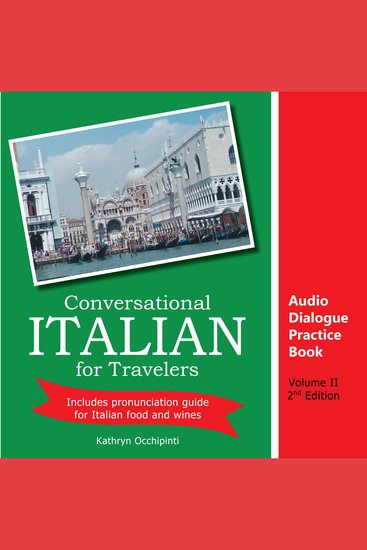
  • Conversational Italian for Travelers Audio Dialogue Practice Book Volume 2 - cover

    Conversational Italian for...

    Kathryn Occhipinti

    • 0
    • 0
    • 0
    Volumes 1 and 2 of the Conversational Italian for Travelers Audio Dialogue Practice Book are filled with useful phrases for the Italian student to read out loud. Essential Italian vocabulary and verb conjugation practice is provided with examples that can be used in real-life situations. The English translation is provided after each Italian phrase.  
    Take the mystery out of complicated Italian dishes with the list of famous Italian entrées provided in the appendix of Volume 2. Special sections in the appendix explain the different types of Italian pastas and famous regional Italian dishes found in different parts of Italy. Know what you are ordering — and how to pronounce your favorite dishes — before embarking on your trip to Italy!  
    All courses of an Italian meal are also covered in separate lists in the appendix, from popular starters like drinks and appetizers to dessert; learn how to pronounce the names of various meats, fish, fruits and vegetables, side dishes, and of course Italian coffees and wines.  
    The original Italian espresso drinks are listed so you can order “the real thing” while in Italy. Wine lovers can order any of the major Italian wines or liquors like a native by following our pronunciation guide. 
    Volume 2 of the Audio Dialogue Practice Book maintains the structure in Volume 1. However, Volume 2 contains material for the intermediate student of Italian, which is taken from Chapters 10-18 of the Conversational Italian for Travelers textbook. This includes the second half of the “City Life” and the complete “At the Hotel and Restaurant” units.
    Show book
  • Muromachi Period - Ashikaga Shoguns and the Rise of Feudal Japan - cover

    Muromachi Period - Ashikaga...

    Rolf Hedger

    • 0
    • 0
    • 0
    The Muromachi Period, spanning from 1336 to 1573, marked a significant turning point in Japanese history, characterized by the rise of the Ashikaga Shogunate and the gradual shift toward decentralized feudal rule. This period emerged following the fall of the Kamakura Shogunate, as Ashikaga Takauji established his military government in Kyoto. The political, social, and cultural transformations that unfolded during this time laid the foundation for the later Sengoku era, a period of constant warfare among regional warlords. 
    The decline of the Kamakura Shogunate stemmed from mounting dissatisfaction among the samurai class, who had grown discontent with the Hojo regents’ rule. The Mongol invasions of Japan in 1274 and 1281 had placed immense strain on the government, as victory brought no financial rewards for the warriors who had fought to defend the nation. With no lands to distribute as compensation, loyalty to the shogunate weakened, creating an opportunity for ambitious leaders to challenge its authority. Amid this unrest, Emperor Go-Daigo launched the Kenmu Restoration (1333–1336), an effort to reestablish imperial rule. However, his failure to recognize the interests of the samurai led to his downfall. 
    Ashikaga Takauji, originally a supporter of the emperor, turned against him and seized power, defeating both imperial and Kamakura loyalists. In 1336, Takauji established his own military government, known as the Muromachi Bakufu, in Kyoto. Unlike the Kamakura Shogunate, which ruled from a distant military capital, the Muromachi Shogunate was strategically located in the heart of Japan’s cultural and political sphere. Takauji’s rule was solidified in 1338 when he was officially
    Show book
  • Aokigahara - Suicide Forest of Japan And The Truth Behind It - cover

    Aokigahara - Suicide Forest of...

    Daniel Turmoil

    • 0
    • 0
    • 0
    Aokigahara, also known as the sea of trees, is a forest on the flanks of Mount Fuji on the island of Honshu in Japan, spread over 30 square kilometres of rock hard lava which was laid down during the last major eruption of Mount Fuji in 864. The western edge of Aokigahara, where there are various caves that fill with ice in winter, is a popular destination for tourists. Parts of Aokigahara are very dense, and the porous lava rock absorbs sound, all adding to a sense of solitude that some visitors decide to be the perfect place to implement their final act.
    Show book
  • Together We Can - 33 Marathons in 26 Days A Run to Remember so we never forget - cover

    Together We Can - 33 Marathons...

    Peter Baines OAM

    • 0
    • 0
    • 0
    Together We Can is the inspiring story of an amazing feat. On 1st of December 2024, at the age of 58, Peter Baines set off in the extreme heat and humidity from the north of Thailand to run 1400km over 26 days, averaging 60kms per day. Peter's goal was to raise $1 million. Peter Baines had been a leading forensic investigator with the NSW Police before he was deployed to Bali in 2002 after the bombings, and then to Thailand after the Boxing Day tsunami. It was during the aftermath of the tsunami that Peter started the Hands Across the Water charity. The biggest impact upon Peter during his work in Thailand was meeting a group of Thai children orphaned by the tsunami. Returning to Australia, Baines made a commitment to support these 32 children who were living in the tent in the grounds of a Buddhist temple. The initial objective of the Hands Across the Water was to build a home for these children, and it was this first home that marked the finishing line of the Run to Remember, exactly 20 years to the day of the tsunami. Together We Can is not a story of one man s 20-year commitment to children and communities in need. Nor is it simply a story of physical achievement the likes of which many simply cannot comprehend. It is the celebration of what can be achieved together. It is the celebration of the best of humanity, through what were often the most difficult times.One of the main learnings from this incredible feat of endurance (running the equivalent of 33 marathons in 26 days) was that although Peter was the only person who completed the run, it took a team to get him across the finishing line. The lessons are invaluable for businesses, organisations and sports teams and it is these lessons that remain with Peter (and hopefully the reader) long after the blisters have healed.
    Show book
  • Travel on a Budget - Travel on a Budget - cover

    Travel on a Budget - Travel on a...

    Will Hunter

    • 0
    • 0
    • 0
    This guide discusses three different topics:  
    Backpacking - Setting off on a backpacking adventure requires careful planning to ensure a smooth journey and maximize the experience without overspending. First, defining a destination is essential, as this will shape your entire budget and itinerary. Research the cost of living, accommodation, and local transportation options for each location to get a clear picture of potential expenses. Some destinations are significantly more affordable than others, and being flexible with timing and locations can help you find the best deals. 
    Cheap Flights - Airlines utilize a complex pricing structure influenced by multiple factors to determine ticket prices. One of the primary components is the concept of supply and demand. When demand for a particular route is high, airlines are likely to raise ticket prices to maximize revenue. Conversely, during periods of low demand, airlines may lower prices to attract more customers. 
    Family Travel - Once a destination is selected, establish a realistic budget. This should encompass not only transportation and accommodation but also activities, meals, and any unexpected expenses. Engaging your children in the budgeting process can be both educational and fun. Teach them about making choices and compromises based on what is feasible within your budget.
    Show book
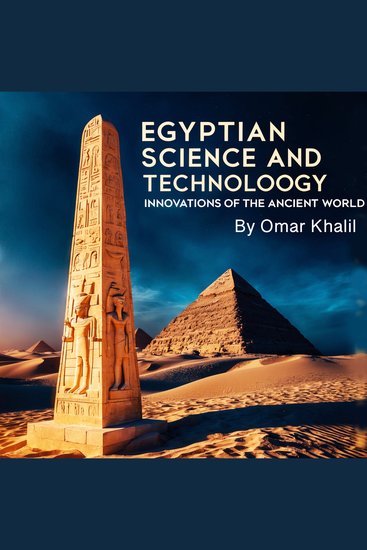
  • Egyptian Science and Technology - Innovations of the Ancient World - cover

    Egyptian Science and Technology...

    Omar Khalil

    • 0
    • 0
    • 0
    Ancient Egypt, renowned for its monumental architecture and sophisticated culture, was also a hub of intellectual and scientific advancements. At the heart of Egyptian knowledge was a unique blend of practical experience, religious beliefs, and cultural traditions. Understanding the foundations of their knowledge requires examining the interplay between mythology, early scientific thought, and the ways this knowledge was transmitted through generations. 
    The role of religion and mythology in ancient Egypt cannot be overstated. Egyptian cosmology deeply influenced how people understood the world around them. Deities associated with creation, the afterlife, and natural phenomena shaped the Egyptians' perception of science and technology. For example, the god Thoth was believed to be the deity of wisdom, writing, and mathematics, and his influence permeated educational practices. Priests and scribes, who were often part of temple schools, acted as custodians of this sacred knowledge. Their training combined religious teachings with practical subjects like astronomy, mathematics, and medicine. 
    Early scientific thought in ancient Egypt was pragmatic rather than theoretical. Egyptians were skilled observers, and much of their knowledge arose from practical problem-solving. Whether it was calculating the Nile's flooding patterns or designing complex irrigation systems, their science emerged from the need to manage everyday challenges. For instance, their understanding of geometry developed out of the necessity to remeasure fields after the annual inundation of the Nile. Similarly, medical practices were rooted in practical observations of ailments and their treatments, blending empirical knowledge with spiritual beliefs.
    Show book