Join us on a literary world trip!
Add this book to bookshelf
Grey
Write a new comment Default profile 50px
Grey
Subscribe to read the full book or read the first pages for free!
All characters reduced
In Good Company - Some personal recollections of Swinburne Lord Roberts Watts-Dunton Oscar Wilde Edward Whymper S J Stone Stephen Phillips - cover

In Good Company - Some personal recollections of Swinburne Lord Roberts Watts-Dunton Oscar Wilde Edward Whymper S J Stone Stephen Phillips

Coulson Kernahan

Publisher: DigiCat

  • 0
  • 0
  • 0

Summary

In "In Good Company," Coulson Kernahan crafts a rich narrative that explores the complexities of human relationships through a lens of wit and societal critique. The novel, written in a fluid and engaging prose style, delves into the lives of its characters, showcasing their interactions within the social fabric of the late 19th century. Kernahan's keen observations bring forth themes of morality, companionship, and the search for authenticity amid the trappings of societal expectations. The literary context of this work is reflective of a post-Victorian era, wherein the nuances of interpersonal relationships are examined against the backdrop of changing social norms. Coulson Kernahan, an author and playwright born in 1860, was significantly influenced by the societal shifts of his time, including the advent of modernity and urbanization. His experiences navigating both the literary and social scenes of England infused his writing with a blend of humor, charm, and critical insight. Having been involved in various theatrical pursuits, Kernahan possessed a unique ability to create vibrant characters that resonate with readers on multiple levels. This novel is a compelling read for those who appreciate nuanced explorations of character and society. Readers interested in the intersections of humor and critique in literature will find "In Good Company" both thought-provoking and entertaining, making it a significant addition to the canon of late Victorian literature.
Available since: 09/16/2022.
Print length: 193 pages.
Other books that might interest you

  • Legends of the Iron Age: Book summary & analysis - cover

    Legends of the Iron Age: Book...

    Margot Langley

    • 0
    • 0
    • 0
    This content is an independent and unofficial summary created for informational and educational purposes only. It is not affiliated with, authorized, approved, licensed, or endorsed by the original author or publisher. All rights to the original work belong to its respective copyright holders. This summary is not intended to substitute the original book, but to offer a concise overview and interpretation of its main ideas. 
     
    Forged in fire and bound by honor, Legends of the Iron Age brings to life an era where warriors rose, kingdoms clashed, and destinies were shaped by sword and spirit. Through battles fought and alliances tested, timeless stories emerge from the mists of history, weaving a vivid tapestry of courage, ambition, and survival. Rich in atmosphere and raw emotion, this unforgettable journey captures the fierce spirit and enduring legacy of a world carved in iron.
    Show book
  • What the Hart Wants - cover

    What the Hart Wants

    Emily Royal

    • 0
    • 0
    • 0
    Five lessons in pleasure. One lesson in love. 


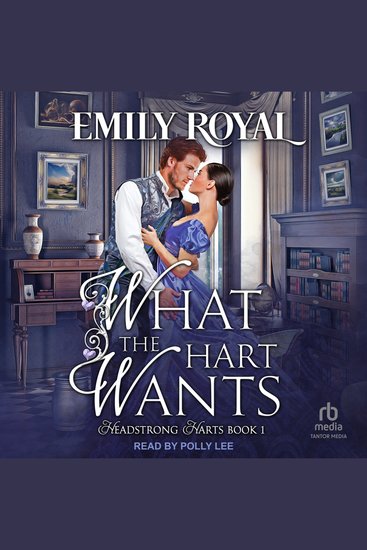
    Fraser MacGregor, thirteenth Duke Molineux, seizes the opportunity to use the title he unexpectedly inherited, to further his whisky business. He leaves his Highland home and heads for London where he's accosted by a feisty lass, who smashes a vase over his head. 


    Delilah Hart should be relishing her first London season. But she'd rather be a writer than a bland society wife. Her secret occupation of writing anonymous, inflammatory articles about the notorious Molineux family, is the first step to realizing her dream. 


    But when the new duke makes her an offer she can't refuse—to learn about her cause for social justice in exchange for five lessons in the art of pleasure—she begins to question her beliefs and desires. Before long, Delilah realizes that her heart, as well as her career, is at stake. 


    Contains mature themes.
    Show book
  • Fearful Breakers - cover

    Fearful Breakers

    Janice Sebring

    • 0
    • 0
    • 0
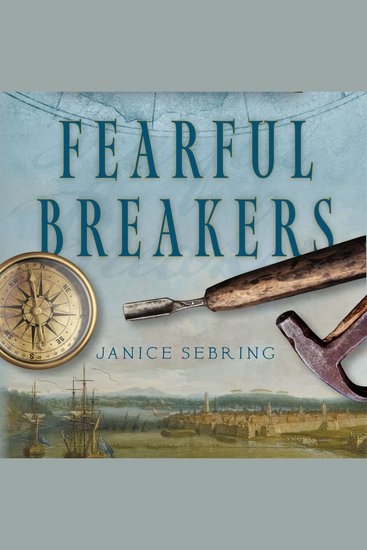
    Will José be drawn into the dangerous life of a smuggler? Or settle down to a quiet life in his father’s shop in Havana? 
    In 1760 Cuba, José Albañez, a free boy of color, resents his charming but unprincipled uncle Domingo’s pressure to join him to sea on one of his smuggling ventures. He would rather continue his studies at the Jesuit school and then follow his father into the joiner’s trade. 
    Instead, he finds himself struggling to master seamanship, lodging with a Jewish trading family on Jamaica in the aftermath of a slave revolt, and confronting kidnappers on Saint-Domingue. The arrival of a British fleet off of Cuba in 1762 forces him to decide where his future lies.
    Show book
  • The Death Room - Former soldier and journalist that became a revered author and screenwriter - cover

    The Death Room - Former soldier...

    Edgar Wallace

    • 0
    • 0
    • 0
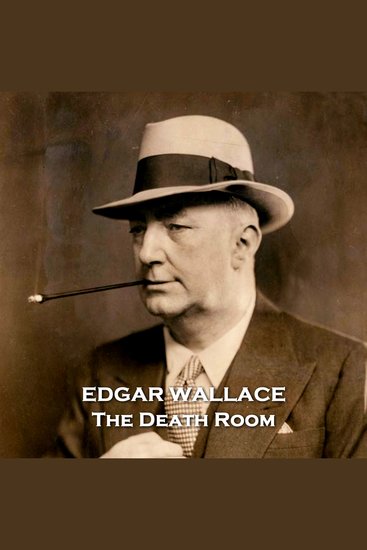
    Richard Horatio Edgar Wallace was born on the 1st April 1875 in Greenwich, London.  Leaving school at 12 because of truancy, by the age of fifteen he had experience; selling newspapers, as a worker in a rubber factory, as a shoe shop assistant, as a milk delivery boy and as a ship’s cook.  
     
    By 1894 he was engaged but broke it off to join the Infantry being posted to South Africa. He also changed his name to Edgar Wallace which he took from Lew Wallace, the author of Ben-Hur.  
     
    In Cape Town in 1898 he met Rudyard Kipling and was inspired to begin writing. His first collection of ballads, The Mission that Failed! was enough of a success that in 1899 he paid his way out of the armed forces in order to turn to writing full time.  
     
    By 1904 he had completed his first thriller, The Four Just Men. Since nobody would publish it he resorted to setting up his own publishing company which he called Tallis Press. 
      
    In 1911 his Congolese stories were published in a collection called Sanders of the River, which became a bestseller. He also started his own racing papers, Bibury’s and R. E. Walton’s Weekly, eventually buying his own racehorses and losing thousands gambling.  A life of exceptionally high income was also mirrored with exceptionally large spending and debts.  
     
    Wallace now began to take his career as a fiction writer more seriously, signing with Hodder and Stoughton in 1921. He was marketed as the ‘King of Thrillers’ and they gave him the trademark image of a trilby, a cigarette holder and a yellow Rolls Royce. He was truly prolific, capable not only of producing a 70,000 word novel in three days but of doing three novels in a row in such a manner. It was estimated that by 1928 one in four books being read was written by Wallace, for alongside his famous thrillers he wrote variously in other genres, including science fiction, non-fiction accounts of WWI which amounted to ten volumes and screen plays. Eventually he would reach the remarkable total of 170 novels, 18 stage plays and 957 short stories. 
     
    Wallace became chairman of the Press Club which to this day holds an annual Edgar Wallace Award, rewarding ‘excellence in writing’.  
     
    Diagnosed with diabetes his health deteriorated and he soon entered a coma and died of his condition and double pneumonia on the 7th of February 1932 in North Maple Drive, Beverly Hills. He was buried near his home in England at Chalklands, Bourne End, in Buckinghamshire.
    Show book
  • David Copperfield - cover

    David Copperfield

    Charles Dickens

    • 0
    • 0
    • 0
    "David Copperfield," often referred to as "The Personal History, Adventures, Experience and Observation of David Copperfield the Younger of Blunderstone Rookery," is a novel by Charles Dickens, first published as a book in 1850. It follows the life journey of David Copperfield, from his birth and idyllic early childhood through trials and tribulations in youth, to his eventual success and happiness as an adult. The story is written in the first person and has been described by Dickens himself as his "favorite child" among his works. Throughout the narrative, Dickens addresses themes like class, family, and the challenges and rewards of personal development.
    Show book
  • Farewell to Arms A - Unabridged - cover

    Farewell to Arms A - Unabridged

    Ernest Hemingway

    • 0
    • 0
    • 0
    "A Farewell to Arms" was Ernest Hemingway's first best-seller and the acclaim garnered by this book put his name on the 20th century literary map. The novel is based on Hemingway's own experiences serving as an ambulance driver during the Italian campaign in World War I and has often been cited as one of the best war novels ever written.   
    The story follows the service of Frederic Henry, an American medic serving in the Italian army during the First World War. Frederic meets and falls in love with an English nurse named Catherine Berkley. Catherine has lost her fiancé in battle and initially rebuffs Frederic's advances, but when he is wounded at the Italian front and sent to her hospital for treatment, their romance blossoms, leading the two lovers to attempt to flee the conflict and start a life together.   
    A blockbuster literary achievement for Hemingway, "A Farewell to Arms" has become a classic of American fiction. It is presented here in its original and unabridged format.
    Show book