Join us on a literary world trip!
Add this book to bookshelf
Grey
Write a new comment Default profile 50px
Grey
Subscribe to read the full book or read the first pages for free!
All characters reduced
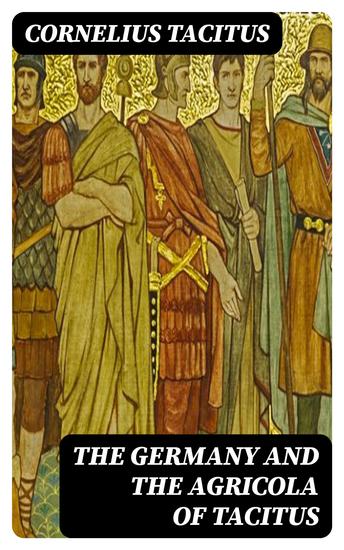
The Germany and the Agricola of Tacitus - Enriched edition - cover

The Germany and the Agricola of Tacitus - Enriched edition

Cornelius Tacitus

Publisher: DigiCat

  • 0
  • 0
  • 0

Summary

In "The Germany and the Agricola of Tacitus," the Roman historian Cornelius Tacitus presents a penetrating examination of the Germanic tribes and a biographical account of his father-in-law, Gnaeus Julius Agricola, the Roman governor of Britain. Written in the early second century CE, these texts employ a concise yet profound literary style, combining vivid descriptive imagery with incisive commentary. Tacitus contrasts the primitive virtues of the Germanic peoples, perceived as noble and unsullied by luxury, with the moral decay of Roman civilization, thus engaging in a subtle critique of imperialism and cultural corruption. This dichotomy underscores the themes of valor and savagery, revealing insights into both the barbaric and civilized worlds of antiquity. Tacitus, born around 56 CE into a prominent Roman family, was deeply influenced by a political climate marked by tyranny and corruption, particularly during the reign of the Emperor Domitian. His heightened sense of moral integrity and desire for historical justice permeate his writings, prompting a thorough analysis of the dynamics between Rome and the cultures on its fringes. Such experiences provided Tacitus with a unique perspective, allowing him to navigate complex cultural narratives with both empathy and critical distance. Readers of history, literature, or anthropology will find "The Germany and the Agricola" an invaluable resource, offering rich insights into the socio-political dynamics of Rome and its provinces. Tacitus's eloquent prose invites readers to not only witness but also reflect upon the cultural complexities of the ancient world, making this work a timeless classic still relevant in contemporary discourse.

In this enriched edition, we have carefully created added value for your reading experience:
- A comprehensive Introduction outlines these selected works' unifying features, themes, or stylistic evolutions.
- The Author Biography highlights personal milestones and literary influences that shape the entire body of writing.
- A Historical Context section situates the works in their broader era—social currents, cultural trends, and key events that underpin their creation.
- A concise Synopsis (Selection) offers an accessible overview of the included texts, helping readers navigate plotlines and main ideas without revealing critical twists.
- A unified Analysis examines recurring motifs and stylistic hallmarks across the collection, tying the stories together while spotlighting the different work's strengths.
- Reflection questions inspire deeper contemplation of the author's overarching message, inviting readers to draw connections among different texts and relate them to modern contexts.
- Lastly, our hand‐picked Memorable Quotes distill pivotal lines and turning points, serving as touchstones for the collection's central themes.
Available since: 09/04/2022.
Print length: 130 pages.

Other books that might interest you

  • Airplanes and the history of aviation - cover

    Airplanes and the history of...

    KidsChoice

    • 0
    • 0
    • 0
    KidsChoice: World knowledge for Children is an engaging audiobook series that takes young listeners on a fascinating journey to explore and understand the world around them. Aimed at curious children aged 7 to 99, this series dives into a variety of topics in science, society, and culture, making complex ideas accessible and exciting.  Each episode brings a unique theme to life—whether exploring the mysteries of space, uncovering the secrets of the human body, or discovering the diversity of cultures and traditions worldwide. With lively narration, interesting facts, and interactive elements, the series guides young listeners on an adventure full of discovery, encouraging them to ask questions and expand their understanding in a fun way.  In the scientific world of KidsChoice, children learn about the wonders of nature and the universe. Concepts like the solar system, animal behavior, the human body, and Earth's various ecosystems are explained in a way that is easy for kids to grasp and find fascinating. Exciting analogies and vivid examples help spark curiosity, turning learning into an adventure.  Societal topics also have a special place in the series. KidsChoice introduces young listeners to the basics of community, compassion, and making a positive impact. Children learn what it means to be a good citizen and how they can make small, meaningful contributions to their communities.  Additionally, KidsChoice opens a window to the vibrant world of global cultures. Through a virtual journey around the globe, children discover how people in other countries live, the customs and traditions they follow, the languages they speak, and the foods they enjoy. This fosters understanding and respect for diverse ways of life, celebrating the richness of human experience as a beautiful, valuable part of the world.  With its vivid language and captivating soundscapes, "KidsChoice: World knowledge for Children" turns learning into an exciting experience, sparking a lifelong curiosity and a deeper understanding of the world around them.
    Show book
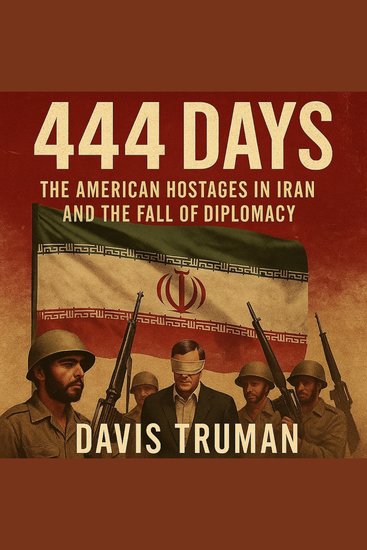
  • 444 Days - The American Hostages in Iran and the Fall of Diplomacy - cover

    444 Days - The American Hostages...

    Davis Truman

    • 0
    • 0
    • 0
    It is an explosive true story of survival, betrayal, and the moment America lost its grip on the Middle East. 
    On November 4, 1979, 52 Americans were taken hostage inside the U.S. Embassy in Tehran, an act that stunned the world and sparked a 444-day standoff that shattered U.S. diplomacy and changed global politics forever. 
    In this pulse-pounding narrative, acclaimed historian Davis Truman pulls back the curtain on the backroom deals, psychological torment, and international missteps that defined one of the longest hostage crises in modern history. Drawing from declassified documents, secret cables, and firsthand interviews, 444 Days brings to life the human drama at the heart of a geopolitical disaster. 
    When diplomacy fails, what remains: bluster, betrayal, or a better way forward?
    Show book
  • Antheoze Theory - cover

    Antheoze Theory

    Andi Sulistiadi

    • 0
    • 0
    • 0
    In the intricate tapestry of our modern world, where the digital and the human are woven ever more tightly, a profound new framework has emerged to illuminate the nexus of our existence. This is the realm of the Antheoze Theory, a radical departure from traditional thought that dares to place the subjective, the embodied, and the spiritual at the very heart of our understanding. It is a theory born not from the cold, objective analysis of data, but from a deep, empathetic engagement with lived experience. As we stand at the precipice of an increasingly complex technological landscape, the Antheoze Theory offers a vital compass, guiding us to look inward and to consider the ethical and existential implications of our digital lives. It challenges us to move beyond the superficial and to explore the hidden depths of our relationship with technology, and in doing so, to redefine what it means to be human in the digital age. This is not merely an academic exercise; it is a call to consciousness, a plea for a more humane and meaningful future.
    Show book
  • Supporting Student Executive Functions - Insights and Strategies for Educators - cover

    Supporting Student Executive...

    Lisa Carey, Alexis Reid

    • 0
    • 0
    • 0
    In Supporting Student Executive Functions, two clinical and classroom experts deliver an insightful and accessible guide to executive functioning skills. Lisa Carey, Ed.D., and Alexis Reid, M.A., explain how these skills develop, how executive functioning challenges show up in the classroom, and how, if unaddressed, those challenges interfere with student learning. 
    Part I builds an understanding of the science of executive functioning and how it develops during the K–12 years. Part II offers a practical, example-rich approach to help educators develop and support students’ executive functions with tips, suggestions, and action steps.  
    Building on the research-backed Universal Design for Learning (UDL) Guidelines, the authors pay special attention to the Guideline “Provide options for Executive Functions” to show which types of supports are most meaningful at different stages of a student’s K–12 journey. 
    Educators—but also medical professionals, caregivers and parents, and students themselves—will gain a deeper understanding of the latest science on executive functioning as well as valuable, easy-to-implement strategies to use in the classroom today.
    Show book
  • Transform for Lasting Impact: Secrets to Empowering Every Child - "Elevate your approach! Discover transformative audio lessons that empower every child for lifelong success!" - cover

    Transform for Lasting Impact:...

    Malcolm Arkwright

    • 0
    • 0
    • 0
    Transform for Lasting Impact: Secrets to Empowering Every Child 
    ⭐⭐ Simplified Guide & Explanations Included ⭐⭐ 
    Are you eager to advance your career and enhance your understanding of educational practices to empower future generations?  
    Are you in search of a comprehensive resource that encompasses all the essential components for effective educational strategies? 
    Your quest ends here! 
    This guide is your ultimate resource for deepening your insights, applying your techniques, and engaging in meaningful exercises. With this book, you are set for success. 
    Updated for the latest educational practices. 
    Key features of this enriched guide: 
    - In-depth insights about empowering future generations through thoughtful education practices 
    - Comprehensive explanations of various educational methodologies 
    - Effective strategies for successful implementation and engagement with children 
    Our guide stands out with its thorough exploration, which is vital for your success. Concepts are not merely touched upon; they are examined with clarity and depth. 
    Crafted with a structured approach and user-friendly language, our guide on empowering future generations provides smooth transitions between topics. Say goodbye to complicated jargon and embrace clear, concise, and accurately presented content. 
    So, why wait? Click the BUY NOW button, secure your guide, and embark on your journey to empower future generations through transformative educational practices! 
    Transform for Lasting Impact and make a difference today!
    Show book
  • Formation of the United Nations The: The History of the Negotiations that Brought About the World’s Biggest International Organization - cover

    Formation of the United Nations...

    Charles River Editors

    • 0
    • 0
    • 0
    On November 29, 1943, as the Allies’ primary leaders met in Tehran, Roosevelt described to Stalin his idea for the organization that would become the United Nations. The American president suggested that the active arm of the organization be “the Four Policemen”: the U.S., USSR, UK, and China. Stalin agreed with much of the framework in principle, but asserted that China likely would not possess the strength after the war to assist. He also noted that the “Policemen” must hold a series of strong points, putting Germany and Japan at too much of a disadvantage to attempt military adventurism again. Roosevelt, eager to please his “friend,” agreed with everything Stalin said.  
    	That exchange might be considered the origin of the United Nations, one of the most famous bodies in the world, but the concept was already in existence in the form of its predecessor, the League of Nations. At the end of World War I, President Woodrow Wilson's pleas at the Paris Peace Conference relied on his Fourteen Points, which included the establishment of a League of Nations, but while his points were mostly popular amongst Americans and Europeans alike, leaders at the conference largely discarded them and favored different approaches. British leaders saw their singular aim as the maintenance of British colonial possessions. France, meanwhile, only wanted to ensure that Germany was weakened and unable to wage war again, and it too had colonial interests abroad that it hoped to maintain. Britain and France thus saw eye-to-eye, with both wanting a weaker Germany and both wanting to maintain their colonies. Wilson, however, wanted both countries to rid themselves of their colonies, and he wanted Germany to maintain its self-determination and right to self-defense. Wilson totally opposed the “war guilt” clause, which blamed the war on Germany.
    Show book